.JPG)
Question? Comment? Write me at jim@jhmeyer.net
OCCASIONAL POSTINGS
Press the "Back" Button to Return to Top of Page
Hey! This page has moved. Check out the blog's new address here.
Loose Balls. December 28, 2008
Job Application Biz. December 27, 2008
From Ann Arbor II. December 1, 2008.
From Ann Arbor. November 27, 2008
The News in Turkey. November 9, 2008
Film Review: "Mustafa." November 9, 2008
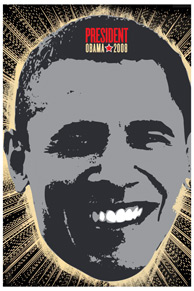
Obama in Turkey. November 5, 2008
Upcoming Events. October 30, 2008
Turkey: Proxy Battles. October 28, 2008
Ergenekon: Turkey's Troubling Trial of the Century. October 20, 2008
From Istanbul. October 16, 2008
Sıhhatler Olsun! October 9, 2008
Debate? What Debate? October 3, 2008
Shaimiev Lives. September 28, 2008
The Debate. September 27, 2008
McCain Jumps the Shark. September 26, 2008
Back in Istanbul. September 25, 2008
Where is Shaimiev? September 23, 2008
Two Takes on Iraq. September 22, 2008
Volga-Ural Conference in Kazan. September 21, 2008
More on Shaimiev. September 18, 2008.
Rumors of Shaimiev's Demise. September 13, 2008
Recent Events in the Caucasus and Russia's Mini-Republics. September 12, 2008
Trouble in Ukraine. September 12, 2008
More Thoughts on South Ossetia. August 26, 2008
Beating the War Drums Again. August 23, 2008
Sweet Home Esperanto. August 17, 2008
South Ossetia and the Fate of the "Mini-Republics." August 13, 2008
Georgia is not Czechoslovakia. August 12, 2008
A Little Bleary in the Archives. August 11, 2008
The Surge: Defining Success in the Long-Term. August 9, 2008
Russian Media Coverage of the Fighting in South Ossetia. August 9, 2008
Ufa Weather Report. August 7, 2008
Pudgeless in Tigertown. August 5, 2008
Book Review: Robert D. Crews' For Prophet and Tsar. July 28, 2008
Hostel Territory. July 19, 2008
From Providence. June 28, 2008
From Providence. June 27, 2008
When do we get to stop hearing 'God Bless America?' June 27, 2008
'Secularism' and Turkish Democracy. June 26, 2008
From Providence. June 21, 2008
Bold Tiger Talk. June 19, 2008
The Oil Companies and Iraq. June 19, 2008
From Providence. June 17, 2008
From Providence. June 17, 2008
Privatizing Profit, Socializing Loss. June 16, 2008
From Providence. June 16, 2008
From Providence. June 15, 2008
Last Day in Morningside Heights. June 13, 2008
End of the Exile? June 13, 2008
More on America's Proposed Long-Term Alliance with Iraq. June 10, 2008
Recent Events in Turkey. June 6, 2008
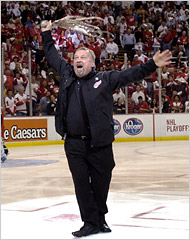
Detroit Sports Round-Up. June 5, 2008
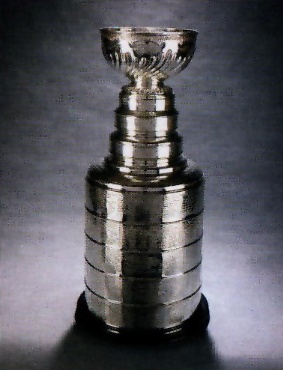
Today is all about the Wings, but I'm wearing a Nordiques shirt. June 2, 2008
The Non-Legacy of Larry Brown. May 31, 2008
Iraqi Protest against Security Deal. May 31, 2008
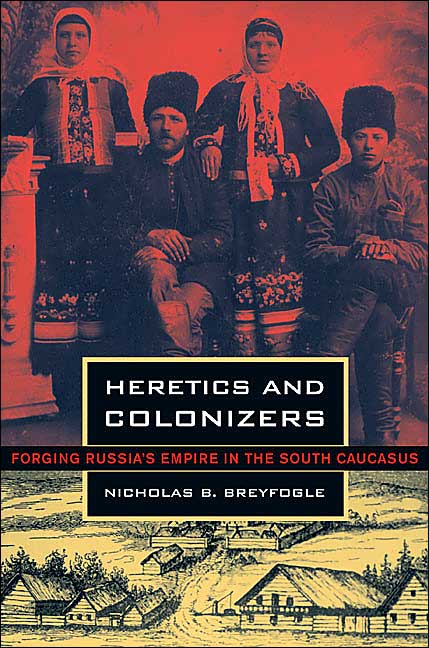
Book Review: Nicholas Breyfogle's Heretics and Colonizers. May 30, 2008
Edwards and Obama. May 13, 2008
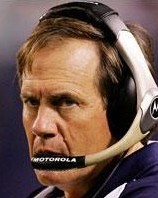
Nixon in Foxboro. May 13, 2008
More on the Dem Race. May 8, 2008
Contact your elected superdelegates. May 7, 2008
What is 'moderate Islam' supposed to mean? May 4, 2008
"That'll be one million seven hundred thousand" said the man in the shop, charging me an amount which, if calculated literally, would come out to a little more than one million US dollars. I was purchasing a small box of band-aids.
On January 1st of this year, the government of Turkey replaced the currency, which previously had been called the New Turkish Lira. The new currency is just called the Turkish Lira, minus the 'new.'
So the old currency is called the New Lira, and the new currency is just called the Lira. This is because, in the bad old days of 100% annual inflation the (old) Turkish Lira (not the old New Turkish Lira) was devalued so much against the dollar that it had to be replaced by the New Turkish Lira, which is now old. Now, they're dropping the 'New' and going back to the old. This of course is not the old Lira, but a new Lira entirely. But not, mind you, the New Lira.
When I first moved to Turkey in 1992, there were 6700 Turkish Liras to the dollar. My first private lesson paid 150,000 TL (Turkish Lira) an hour. I earned about four million Liras a month working part-time at a high school.
But inflation and devaluation took their toll on the currency, and by the time I moved back to the United States in 1999, there were hundreds of thousands of Turkish Liras to the dollar. Fortunately, in Turkish, the words for 'hundred' and 'thousand' are short. "One hundred" in Turkish is yüz (they don't say "one hundred," but rather simply "hundred). "One thousand" is bin. So, if a loaf of bread cost four hundred thousand liras, for example, you could just say "d
ört yüz bin" which is a lot shorter and easier than saying "four hundred thousand." This was obviously one of the main reasons behind Turkey's rampant inflation back then.
By the early 2000s, there were more than a million Turkish Liras to the dollar. In time, however, the government got inflation largely under control, so they were able to drop six zeroes from the money and introduce a new currency. On January 1, 2005, the New Turkish Lira was introduced, which was called the Yeni Türk Lirası, or Y.T.L. ("yay, tae, lay") for short.
I was living in Turkey when the Y.T.L. was introduced, and one thing I noticed early on was that shopkeepers often seemed a little reluctant to just say the number of an item, which is what they'd always done with the (old) Lira. For example, if something cost twenty-five liras, people wouldn't just say "twenty-five." Instead they'd either say "twenty-five liras" or "twenty-five Y.T.L." Under the old currency, however, nobody had ever said "lira." If something had cost twenty-five million, they'd just say "yirmibeş milyon," not "yirmibeş milyon lira."
It was as if people sensed that something was missing when they just said "twenty-five." After so many years of saying "four-hundred and fifty-thousand" when charging people for a newspaper or pack of gum, it just didn't feel right to quote a price with numbers only. More words were needed. So, when quoting prices in the new currency (both currencies co-existed throughout the calendar year of 2005), prices always preceded either "Y.T.L." or "lira," while prices quoted in the old currency never did. People weren't saying "thousand" or "million" so much anymore, but rather "Y.T.L." or "Lira." "Y.T.L." and "lira" had taken the place of "thousand" or "million" in the popular lexicon, but saying just "twenty-five" was not an option.
After the New Turkish Lira was introduced, my joke was always to ask how much things cost in "E.T.L.," which I would then explain stood for "Eski Türk Lirası," or "Old Turkish Lira." This always got a laugh. Mostly. "Ne T.L.'sı olsun?" I would ask. "Y.T.L. mi, E.T.L. mi." People thought I was incredibly witty.
Now that four years have passed since the Y.T.L. was introduced, the government felt it was safe to go back to just plain "Turkish Lira." After all, the New Lira wasn't getting any newer. So the currency is now just called the "Turkish Lira" (although, once again, both the outgoing and the incoming currencies will be in circulation for the entire calendar year--while Turks were only given six months to change from the Arabic script to the Latin script in 1928, they have twice that amount of time to change currencies).
But many people, myself included, like the old ways. Three years after the previous incarnation of the Turkish Lira was withdrawn from circulation, we still like saying "one million five-hundred thousand" to refer to the cost of a bus ticket. It shows that we've been around, that we're hold-overs from the days when someone could be earning hundreds of millions of liras a month and still not be able to pay the rent. Once 2009 is over and the Y.T.L. is no longer a circulating currency, we won't be able to say "yay, tae, lay" anymore, so it's not surprising that many of us are clinging to the old thousands and millions, tacking on an extra six zeroes to prices just because saying only "twenty-five" will seem so strange.
Ultimately, we'll have to give this up, of course. I imagine I'll switch to saying "lira" after giving the amount, but even this seems a little lame. I'm still casting about for a formal replacement, but my current idea is to call the new money the "Y.Y.T.L." (Yepyeni Türk Lirası, or "Brand New Turkish Lira).
This seems like the simplest and most practical solution, but of course only time will tell.
Ergenekon II
A new wave of arrests was carried out in Turkey yesterday under the guise of the still-unfolding Ergenekon investigation. As I've written elsewhere, the Ergenekon investigation began in 2007 as an effort to root out state involvement in death squads and drug smuggling dating back to the early 1980s, but has (since the middle of 2008) taken a dramatic turn. Since the middle of last year, dozens of prominent journalists and military figures have been arrested on charges they were plotting to overthrow Turkey's Justice and Development Party (known in Turkey as the AK Party). A trial of all of these figures began outside Istanbul last Fall, but is still in the preliminary stages.
I hate to say this, but all of this is darkly reminiscent to me of the latter years of the Adnan Menderes government, which was overthrown in 1960 (Menderes was later hanged). As was the case with the AK Party when it came to power with a large majority in 2002, Menderes' Demokrat Party also came under strident attacks from the "secular" opposition in Turkey from the very day that it came to power in 1950. In the 1950s, Menderes and his government were characterized as "Islamist" and "anti-republican" by the opposition Republican People's Party (the party first established by Atatürk in 1923-24), which is exactly what happened after the AK Party came to power earlier this decade. In both cases, the charges were unfair, and were largely a reflection of the efforts of these parties to normalize the public expression of Islamic piety in Turkey, something which has often been suppressed in Turkey.
After years of an increasingly poisoned political atmosphere and continued electoral victories, Menderes began fighting back against the political opposition, using increasingly authoritarian methods. Attempts to censor newspaper reports of anti-government demonstrations in the late 1950s invited further demonstrations, which were met with increased government violence. This ended with the coup of 1960 and, ultimately, Menderes' execution.
I could be wrong: perhaps Ergenekon really is only about investigating actual efforts by opposition figures to unlawfully overthrow the government. Maybe all of the journalists, military figures, and community activists who have been arrested over the past year are indeed plotting to overthrow the government, in which case they deserve to be put in prison. If, however, this investigation is simply a witchhunt designed to intimidate the political opposition, then the leaders of the AK Party--Prime Minister Tayyıp Erdoğan and President Abdullah Gül--would be advised to think carefully about Menderes' tragic end before carrying on this war any further.
Loose Balls
I'm reading Loose Balls right now, the story of the ABA (the American Basketball Association) that was published by Terry Pluto in 1991. The subject is a compelling one, and not only for a fan of rogue sports leagues like myself. The ABA was wide open, brand new, and experimental, with a lot of obvious criminality and exploitation (of players) also taking place. It's a classic story of an upstart league taking on an established institution, the NBA. It also tells us a lot about the era in which all of this takes place, the early 1970s.
Loose Balls was not so much 'written' by Terry Pluto as edited. The book is mostly a collection of interviews of dozens of individuals who were involved in the ABA--players, coaches, staff, announcers, refs, and the like. The interviews are then divided up and cross referenced according to topic. So, for example, following the topic of the ABA's tricolor basketball there are snippets of interviews taken with ABA commissioner George Mikan, ABA executive Mike Storen, former Indiana Pacer center Mel Daniels, where these individuals and others discuss the ball. At its best moments, this organization makes the book feel like a conversation about basketball, rather than simply a series of parallel interviews.
At the same time, however, I find that this style gets a bit boring after a while. A lot of this just comes from my training as an historian, but I'd like to see the 'author' produce more of a narrative. Obviously, there is a narrative which emerges from the interviews, but the approach strikes me as a bit of a cop-out.
One day, I'd love to have the chance to write on sports. Rogue leages like the ABA and the USFL have always held my interest, and most of the books out there just don't work well as histories. If things don't work out with the job search, I guess it's something I can keep in mind.
Saturday, December 27, 8:39 pm
Job Application Biz
It's been a busy trip back to the US. I got back to the US on November 11, and until about a week before Christmas I had an absolutely crazy schedule involving campus visits, conference presentations, and job interviews. All of this ended just before Christmas, which meant that all of my Christmas shopping was crammed into a few very eventful days.
I've been relaxing a bit since Christmas, but there are still things to do. The final version of an article of mine needs to be sent off by January 1, and I'm doing my best to take advantage of my proximity to the University of Michigan library to catch up on some reading. For the most part, however, I'm trying to catch my breath.
The job hunt has yielded a fair bit of interest this year, which I suppose is better than the alternative. I probably applied for 25-30 jobs and received some interest from about 18-20 places. I interviewed with probably twelve or thirteen schools, and so far have been a finalist for three positions. A couple more places might still get in touch with me for a campus visit (meaning I'd be a finalist), which would be nice. All of the places for which I'm a finalist are schools where I could see myself working happily.
All the same, I must admit to being a bit fed up with the application process. I think that what bothers me about it most is the extent to which I feel like I'm being asked to fit into other people's ideas of what they need. Only rarely have people simply asked me during the course of an interview to explain to them what I could bring to their department and university. I guess that would have been too easy a question, but still. While some of the people I've met have seemed genuinely interested in listening to me explain, in my own terms, what I think I could bring to a department, in most cases I get the feeling that search committee members are mainly interested in having their doubts erased. The questions they ask reflect, I think, their own anxieties about making a mistake in the hire.
Often, people seem a little put off by my interests in both Russia and the Middle East. Charged with the task of finding a Russianist or a historian of the Middle East, search committee members (who are usually Americanists and Europeanists) are mainly interested in not screwing things up by hiring someone who is not competent to teach the given field. This is understandable, of course, but for me it's obviously a bit of a drag, because it means that a lot of folks are going to be very concerned about whether I am a 'real' Russianist or historian of the Middle East.
And, after all, I apply for both types of positions, so I guess that means I'm not a 'real' historian of either of these fields. On the Russian side, people are put off by the fact that I work on Muslims, which to an Americanist or Europeanist might not seem to be 'really' about Russia. Instead of asking me about my work or what I could do that most other Russianists can't do, I'm always asked to show that I can do everything that other Russianists ('real' Russianists) can do.
Of the five jobs for which I've been a finalist in my three years on the market, three were for Russianist positions, while the other two were for Islamic World and the 'history of International Relations' (an unusual type of job, but one which was well suited to transnational topics like my own). My hunch is that, if I ever find a job in the US, it will probably not be for a straightforward geographical category like 'Russia,' but rather something more comparative. But the job I'm interviewing for in February is a Russianist one, so I suppose I should maintain a positive outlook on things.
And if I don't find a job in the US? I guess I'll try to stay in Turkey somehow. If I could find a job at one of the universities in Istanbul, it would probably give me a platform from which I could move on to bigger and better things.
While it's great spending the holidays in Ann Arbor, I'm looking forward to getting back to Istanbul. I'm returning to the US in February for yet another campus visit, which frankly is the last thing that I want to do. All I really want to do is get back to my research, and actually accomplish something this year other than finding a job. While I'm excited about the job for which I'll be interviewing, I really wish I'd had the time to just get it over with during this visit.
All of the time and energy involved in applying for jobs feels like a lot of work and very little intellectual activity--a total contrast from the way I spent my summer. Indeed, this summer was awesome because--especially when I was in Ufa--I was able to work like a maniac. In Ufa I had a crappy little apartment that I was living in for free thanks to the friend of a friend, and there was little I felt like doing there other than work. I had no phone line, so there was no internet at home, and the TV only got a few channels. Since I'd never lived in Ufa before, I didn't know very many people and didn't feel like going out much anyway.
I spent a great deal of time working on an article that I'd sent off to the Slavic Review. I'd wake up in the morning in the fold-out bed in my one room and grab my laptop from the coffee table, sometimes writing for a couple of hours before getting up for breakfast. It was by far the most insanely productive and enjoyable time I'd spent since I'd lived in Turkey in the 1990s--the last time I'd really lived without internet at home.
After moving to Istanbul at the end of September, my life really changed. It was great to be in Istanbul again, but I basically stopped working on anything that wasn't directly related to finding a job. I don't regret knocking myself out for some places. However, I really wish I hadn't applied to a number of other schools--regional universities or small colleges with huge teaching loads and located in very uninteresting places. Applying to these schools just sucked up time that could have been spent doing more interesting things.
And now I have still more of this waiting for me, but at least in January I'll be able to spend a little bit more time on my own work. After a nice layoff for the next week or so, it'll be a nice change to actually work on my research again for a little while.
Monday, December 1, 2008, 7:53 pm
It's good to be back in Ann Arbor. My Mom and Dad still live in the house I grew up in, so it's always a bit of a trip coming back here. Still it's very nice. The first couple of weeks I was in town, I was too busy with a campus visit, interviews, and two conferences to attend to really get the feel of things much. I just had a night or two here and there, and mostly just did my laundry and had some very compressed reunions with old friends. I bought a record from my friend Matt, and even had one relaxing bike ride (up through Ann Arbor Hills, Gallup Park, back downtown and home again through Burns Park). But still, the first two weeks were mostly about work.
Then I came back from Washington on Tuesday and Thanksgiving hit followed by a visit from relatives, and only now do I feel like I'm here visiting in Ann Arbor. I went to Pinball Pete's yesterday, and saw that I still have the all-time high score on the Theater of Magic pinball game, a score three times higher than the second highest score, which is also held by me.
I've also bought a couple more records, most recently two vinyl discs by Yusuf Lateef. Being able to listen to records again is one of the nicest things about being back in the US. I love being able to shut off my computer and listen to music through a medium which reminds me of my youth. If I end up living in Turkey, I resolve to get a record player over there somehow and to start building up a collection there.
This week is a busy one. I'm going on another campus visit on Sunday, and need to prepare two talks. One of the talks is pretty much set, but I'm still struggling with the second one. All the same, it's a far more humane schedule than I've had for the last six weeks. Only two talks to prepare in five days? Oh sure, no sweat. It's still way better than it's been any time since mid-October.
Thursday, November 27, 2008, 8:09 pm
It's been a busy few weeks. Two Tuesdays ago I flew from Istanbul to Detroit, then spent a few days in Ann Arbor. From there I went out west for a campus visit, returning to Ann Arbor on Wednesday. Then, Thursday morning I flew out to the AAASS (American Association for the Advancement of Slavic Studies) conference in Philadelphia. On Saturday night I traveled to Washington, DC for the MESA (Middle East Studies Association) conference and four preliminary job interviews. Tuesday night I got back to Ann Arbor.
The traveling has been a bit much, but it's been okay. The campus visit was fun, except for when I realized that just about all of the faculty members taking me out to dinner had told me they'd been on something like eight campus visits before finally landing a job. I was on my third campus visit, and it got me wondering if I would really have to go through at least five more of these before finally getting a job. Not that the visit went badly--I had a great time. But all the same, it's a draining experience, and always involves being asked questions that I don't necessarily feel prepared to answer. As was the case with other campus visits I've been involved in over the last two years, it was a marathon. Plenty of wining and dining, plenty of one-on-one discussions, millions of questions.
After the visit I headed to Philly and the AAASS conference. I was the official organizer of the panel this year, but the idea for the panel was that of Norihiro Naganawa. Last year when I was attending a couple of conferences in Sapporo and Kyoto, Norihiro brought up the idea of putting together a panel on human mobility. So, Nori contacted Michael Khodarkovsky, who agreed to be our chair, while I contacted Adeeb Khalid (our discussant) and Lale Can (our third panelist). The panel was scheduled for the first session after lunch on Friday afternoon, the second day of the conference, which I think was a pretty convenient time. There weren't many other Russian empire panels occurring then, but the only other panel on human mobility was, unfortunately, held at the same time as ours. Anyway, I thought the panel was a really good one: all three of us talked about Muslim travelers between the two empires and how a focus on human mobility and transimperial connections can tell us things about the era which a focus on a single empire sometimes cannot do.
After doing the panel in Philadelphia, Nori, Lale and I took our transimperial manifesto to Washington, where we all gave modified versions of our papers for an audience of Middle East specialists. At MESA, Virginia Aksan was our chair and discussant. The time of our session wasn't the greatest--I had requested doing the panel on Monday or Tuesday in order to avoid a conflict with AAASS, which I think pretty much gave the MESA organizers carte blanche to stick us in the last session (after all, I'd asked for it). Nevertheless, we had a pretty decent turnout--I think our high was 13 (we probably had a maximum of 25-30 at AAASS). At MESA, Marina Apaydin joined us to give a paper on Russian Orientalism.
And the work doesn't cease. Ever since getting back to Ann Arbor from Washington I've been working on still more job applications and a couple of fellowship applications.
That's what I've got to get back to now.
The News in Turkey
*** The residents of the village of Çavuştepe, in the eastern province of Van, Turkey, have sacrificed 44 sheep in honor of Barack Obama becoming the forty-fourth president of the United States.
*** Hürriyet reports (in Turkish) that group of several thousand Alevis took to the streets of Ankara on Sunday in protest against the AK (Justice and Development) Party of Prime Minister Tayyıp Erdoğan and President Abdullah Gül. The Alevis, who comprise perhaps as much as 20% of Turkey's population, are Shiite Muslims who have traditionally had a reputation for being strong supporters of the Republican People's Party, currently in opposition. Photos of the protest can be seen here.
*** Sex workers in Turkey are seeking to establish a union. Prostitution is legal in Turkey, although only a small percentage of sex workers officially register with government offices as required. The goal of the union is to help make work conditions safer for prostitutes.
*** A police station in Hakkari, on the border with Iraq, was attacked yesterday by PKK guerillas coming over the border from Iraq. Turkish military helicopters pursued the guerillas into Iraqi territory.
Film Review: "Mustafa"
Earlier this week I went to see "Mustafa," Can Dündar's controversial new documentary about Mustafa Kemal Atatürk, the founder of modern Turkey.
I have always considered Dündar a rather bland figure, well-known for his vaguely liberal left-of-center and very uncontroversial views. Dündar is a newspaper columnist who has written a number of books on contemporary affairs, but he'd always struck me as someone who was more interested in asking questions than in staking out an opinion. Fifteen years ago he came out with an earlier documentary of Atatürk which I have never seen, but which was tame enough to have served as standard fare for Turkish elementary school classrooms every since. It was therefore surprising to hear that many people had found his latest endeavor insulting to Atatürk, even in a country where hagiography often passes for history when it comes to Turkey's first president.
I found the first half of 'Mustafa' much less interesting than the second. Indeed, Dündar is mainly concerned with the Turkish War of Independence and subsequent years, so the parts of the film detailing Mustafa Kemal's childhood and early career offer little excitement. Indeed, Dündar seems to be in a bit of a hurry to get on to the War of Independence, skipping over major events like the Unionist takeover in 1908 and Kemal's activities in Libya. There is, in fact, much about Kemal's life during these years that I think audiences would find interesting, but Dündar doesn't stray far from the general outlines of Kemal's life that are already of general knowledge in Turkey. As a result, the film feels like it is simply going through the motions at this stage while Dündar looks ahead to the second half of the film.
The second half of 'Mustafa' is indeed much more interesting, and is controversial because these parts of the movie depict Atatürk in ways that Turkish audiences are not used to seeing. Dündar is careful here, and much of the film's narration does not extend beyond reading quotations from Atatürk's notebooks and proclamations and reciting facts that are undisputably true yet frequently ignored. When it comes to Atatürk, though, even this relatively low-key approach is enough to unsettle some people. At one point, for example, a discussion of Atatürk's jailing of political opponents is followed by the observation that "now, in Turkey, there would be no opposition party, there would only be one party," as ominous music is played in the background and viewers are shown a succession of imperious-looking statues of Atatürk of the sort that exist everywhere in Turkey today. No one, of course, can really contradict this charge, but often the lack of an opposition party in for most of Atatürk's tenure as president is portrayed as evidence of the universal support Atatürk is supposed to have enjoyed during these years. For people who have grown up learning this version of history in school, Dündar's film can be quite jarring.
It seemed to me that the aspects of Atatürk's life that Dündar really wanted to engage were from the War of Independence onwards, and this part of the documentary exudes an energy that was missing earlier on.
'Mustafa's soundtrack is by Goran Bregovic, which I found a lot more suitable for the earlier parts of the film than the latter ones. After all, Mustafa Kemal was born in the Balkans (Thessaloniki), so Bregovic's Balkan tunes fit in well with the mood and the scenery of Kemal's early days. As the film proceeds, however, this music becomes a little more distracting. Why are we listening to Balkan music as we watch Atatürk in Istanbul or Ankara in the 1920s and 1930s? I guess Dündar wanted to suggest that, at heart, Atatürk remained a lad from the Balkans. Nevertheless, it seemed to me that a more diverse soundtrack--perhaps employing some Münir Nurettin Selçuk for the Istanbul scenes in the early republic--would have worked a bit better at this point.
When the film was over, the (Turkish) friends that I had seen 'Mustafa' with were visibly upset. They didn't disagree with the veracity of what was said, but questioned Dundar's motives in focusing on 'negative' aspects of Atatürk's life. "Atatürk looked like a dictator," said one friend, while others were bothered by a scene in which he had appeared rather callous in describing the attachment to Islam of the soldiers he had commanded in the War of Independence. My friends felt that Dündar had ignored Atatürk's positive contributions while selectively using unflattering and unrepresentative samples from his diaries in an effort to make Atatürk look bad.
Frankly, I don't think 'Mustafa' is a movie that anyone outside of Turkey would consider controversial. But for a movie like this to be shown in theatres in this country is, I think, quite noteworthy, given the way in which his reputation has been idealized for so long in this country.
Indeed, even discussing Atatürk as a human being can be difficult in this country, for the man is so usually presented mainly as a set of principles used to justify the existing political order of Turkey. And it is precisely because 'Mustafa' manages to humanize its subject somewhat that the film is worth seeing. While it would have been nice if more had been done to illustrate the social and intellectual milieux from which a person like Mustafa Kemal could emerge, I think 'Mustafa' not only provides a basis for discussing Atatürk's legacy in somewhat less idealized fashion, but it also makes it easier for an individual living in the early twenty-first century to connect with the man on a more personal level.
If I ever have the opportunity to teach a class on modern Turkish history, I would love to be able to show a subtitled version of this film to my students. Not only is the film itself enlightening, but the very fact that it would be made and the reaction it has received can tell us something about what's going on in Turkey today.
Wednesday, November 5, 4:50 pm
Obama in Turkey
Everyone is writing a lot about the elections and I don't really have much original to say. As someone who has spent much of the Bush administration in foreign countries, however, I'd like to say that it is especially gratifying that we have elected someone who not only makes me really proud to be from the US (easily the first time a presidential election result has made me feel this way), but whose election has also elicited the respect and admiration of the people I encounter on a daily basis in Turkey, where I've spent more of my adult life than anywhere else.
In Turkey, people still love Bill Clinton. While he was rather unpopular with most of the people I knew here due to his unwillingness to help the Bosnian Muslims in the first couple of years of his first term, from 1994 onwards most of the people I met here had generally good things to say about him. As was the case almost everywhere outside the United States, nobody here really cared about the Monica Lewinsky scandal, thinking instead that Americans were insane for obsessing over the story.
Then, not long after the earthquake of August 17, 1999, which killed over 20,000 people in and around Istanbul, Clinton visited Turkey. Indeed, Clinton's visit came in the wake of a second earthquake which hit the region in the second week of November. During his visit, Clinton famously sat down for tea in the tent housing a Turkish family which had lost its home in the first earthquake. The visit had an incredible impact on Turkish public opinion, and a rendition of Clinton's tea drinking session ended up on the back of a special gold coin the Turkish treasury made to commemorate the visit. Clinton pledged a billion dollars to Turkey to help the country recover--quite a sum compared to the miserly aid packages the Bush administration has come up with in response to foreign disasters. People still tell me how much they like and respect the man.
I don't really feel like going into the details of what people have told me about George W. Bush over the years. It has been extremely negative, and often angry. And rightly so.
Things aren't going to change immediately under Obama, and probably they won't change as much as I'd like. I think we'll still stay in Iraq for too long, and I still cringe when I hear him prattle on about needing to stem 'Russian aggression.'
Nevertheless, I feel quite sure that I won't end up feeling disgraced by his actions, and even hopeful that he can make me proud.
And that is change I can believe in.
New Shots
I've posted a number of new shots on the page of this website devoted to photos from my 2008-2009 travels.
Upcoming Events
I'll be giving a few talks over the next month:
* On Monday, November 3rd, I'll be giving a lecture at the American Research Institute in Turkey. The talk starts at 6:30 pm and is called "Marketing Modern Identity in the Late Imperial Era: Yusuf Akçura and Ahmet Ağaoğlu in Russia and the Ottoman Empire."
* On Friday, November 21, I'll give a presentation at the annual meeting of the American Association for the Advancement of Slavic Studies. The meeting is going to be in Philadelphia this year. The name of my talk is "The Pan-Turkist Specter: Russia and the Threatening Nature of Muslim Mobility."
* On Tuesday, November 25, I'll be giving another presentation at the annual meeting of the Middle East Studies Association, which this year is taking place in Washington, DC. The name of my presentation is "Rethinking the Intellectuals: Yusuf Akçura and Ahmet Ağaoğlu in Russia and the Ottoman Empire."
Turkey: Proxy Battles
Blogspot, the popular blog-hosting service, has been banned in Turkey. This is one of more than 1000 websites which cannot be accessed in Turkey, including YouTube. People accessing these sites get a message telling them that access to the site has been blocked by the Telecommunications Ministry. Most of the sites are blocked because they contain content which has been deemed insulting to Atatürk or to 'Turkishness.'
There are ways around the bans--anyone who is the slightest bit web savvy seems to know about the numerous proxies which can be used to access the sites. Surely the Turkish government knows about these proxies as well, yet the blocking of websites continues unabated.
For the state, it's of course a hopeless struggle to stop these websites, but I think it is felt that appearance need to be kept up. The Turkish state--the permanent establishment which exists no matter which political party is in charge--is simply unable to climb down from its Kemalist and statist worldview. Allowing YouTube, which includes postings that are meant to be insulting to Atatürk, to be accessed without proxy would constitute an admission that the state cannot, and has no right to, control people's access to information in Turkey. And the prospect of the state no longer being able to demand this control, more than the websites themselves, is what is seen as truly threatening.
In many ways, the proxy server can be seen as analagous to the way in which many taboo issues are brought up in Turkey. In the 1980s, for example, Prime Minister Turgut Özal did a lot to get people talking about issues like the Kurds, the place of Islam in Turkey, and the role of the military in society by indirect means. He talked, for example, about how is mother was a Kurd at a time when many people in Turkey denied the very existence of Kurds as a separate ethnic group. He took the Prime Minister's limousine to Friday prayers when such a public display of piety had previously been unthinkable for a Turkish Prime Minister. He played an important role in the political rehabilitation of Adnan Menderes, which contributed to the emergence of debates relating to the proper role of the military in Turkish politics.
A lot of people dislike Özal, and the many was certainly corrupt, but I think that he also did a lot to open up conversations that needed to--and still need to--be had. But rather than take on these subjects directly--and invite repurcussions from those who would feel threatened by their discussion--Özal's method was to provoke discussion through symbolic gestures. In so doing, he contributed to the emergence of a limited freedom to discuss certain taboo issues which had been largely absent in the 1970s and completely non-existent in the wake of the military takeover of September 12, 1980.
And so today people access prohibited websites by proxy. Nobody really seems interested in doing much to forcefully challenge the state's right to control the internet, yet people find a way around such restrictions anyway. On the one hand, I find this representative of a spirit of compromise--or at least of avoiding direct confrontation--which is in many ways admirable. On the other hand, as was the case with the Özal years, one of the results of this state of affairs is the emergence of a political culture in which new ways of viewing the world exist side-by-side with institutions and practices whose very premises they seem to undermine. Such is the situation in Turkey today, where lively political debate unfolds alongside a statist determination to control the web, where women wear baseball caps in university classrooms because they can't cover their heads Islamically, and where countless other rules which seem impractical are routinely flouted.
These are all proxies, and are all means through which the country continues to change despite the efforts of many people to prevent change. But the tendency for change to come through proxies in Turkey is also an important reason why some institutions in this country appear to have hardly changed at all since the 1920s.
Burying Bo
A little less than two years ago my parents and I went to Michigan Stadium to attend a memorial service for Bo Schembechler. We followed our usual routine, even tailgating in the parking lot for a little while outside Crisler Arena prior to heading over the stadium to pay tribute to the man we'd watched for so many years. The scene was a little surreal--I'd never been to a memorial service held in a football stadium before. The marching band was subdued, the stadium only one-third full, none of the charge of a football Saturday, appropriately enough. I think the only other times I'd ever been inside the stadium when the football team wasn't playing was when my cub scout troop would get free tickets to watch the Slippery Rock-Shippensburg State game. Otherwise it had always been packed, of course, and since my parents were the proud holders of four season tickets I got to go to most of the games.
The Bo Shembechler memorial tribute had its highpoints and lows. The low came when Michigan President Mary Sue Coleman mispronounced Schembechler's name, calling him 'Schlemblecher,' much to everyone's disappointment but nobody's surprise. The highpoint was without question Lloyd Carr, who quoted poetry and gave a moving, sincere eulogy about a man he obviously loved dearly. But that was no surprise, either. Lloyd Carr is a very classy guy, someone who always did Michigan and Ann Arbor proud.
Since Lloyd retired it's hard to get excited about Michigan football. Granted, some of this has to do with the team's performance, which has been terrible. But it's more than that. The Rich Rodriguez hire has been one of the two main factors turning me, a lifelong fan, off from Michigan football. Hiring the vulgar Rodriguez from West Virginia was a disservice to fans of both Michigan and UWV. It was wrong to hire away someone else's coach--the sort of shmoe move that only a poor judge of talent would feel required to do. It was also wrong to pay someone four million dollars a year to coach the football team.
Honestly, why couldn't Michigan hire a young, bright up-and-coming coach from the MAC or another second-tier conference from the midwest? Where, after all, did Michigan find Bo Schembechler? Miami of Ohio. Where did Ohio State find Jim Tressel? Youngstown State. But in order to find a diamond in the rough like those two you have to be able to make a smart hire. Because Michigan's Athletic Director, Bill Martin, clearly lacks the confidence in his ability to choose a lesser-known coach, he had to go for people who were already well established, not to mention expensive: first Les Miles, who turned him down, and then Rich Rodriguez, who notified a high school recruit, Terrell Pryor, about his departure for Michigan before he told his own players at West Virgina. Very classy.
And now, to make matters even worse, Michigan Stadium--the most beautiful stadium I've ever set foot in--is being redeveloped to look like an eight-storey mini-mall, which is hardly a surprise given the fact that Martin is himself a developer specializing in the construction of ugly shopping centers. Rodriguez will likely be gone within a few years, but the damange that Bill Martin is wreaking upon a building which should have been declared a protected architectural landmark will never be undone.
The University of Michigan Athletic Department was once run by capable of people who knew how to make a smart hire and keep the fans happy. Well, this fan is not a bit happy about Michigan Football anymore, and even a victory over Michigan State this Saturday (while nevertheless welcome!) would do little to erase the genuine sense of dismay that I feel when I think of what has happened to Bo's team and the stadium he once worked in.
Ergenekon: Turkey's Troubling Trial of the Century
The so-called 'Trial of the Century' began here today. Eight-six people, including a number of retired generals and prominent journalists, have been accused of plotting to overthrow the government. The undertaking was supposedly called 'Ergenokon.' It is so strange, so sensational, that frankly I have no idea what to believe.
It all started on June 29 of last year, when police raided a home in the Ümraniye district of Istanbul, where they found a stock of weapons. Six months later, in January of 2008, police took thirty-three suspects into custody, claiming they were part of a terrorist group that had been carrying out political assassinations in Turkey, including the January 2007 murder of Hrant Dink, editor of an Armenian-language newspaper in Istanbul. The suspects rounded up included a former Major General by the name of Veli Küçük, a retired army colonel named Fikret Karadağ, a journalist for the newspaper Akşam, Güler Kömürcü, and several other figures. One of the most intriguing names to emerge from the early investigation was Sami Hoştan, who was involved in the Susurluk scandal from the late 90s (more on that below). Police claimed that they had found a so-called 'death list' created by the group which included the names of Kurdish political figures like Ahmet Türk, Leyla Zana, Sebahat Tuncel, and Diyarbakır Mayor Osman Baydemir, as well as Nobel Prize-winning author Orhan Pamuk and Zaman newspaper journalist Fehmi Konru. The group, which police claimed was a nationalist death squad with links to the state, was called Ergenekon.
For anyone who has followed Turkish politics over the past fifteen years, all of this immediately reminded us of the Susurluk scandal, which I wrote about when I was living in Turkey back in the nineties. Susurluk had begun in 1996, when a fatal car accident close to the town of Susurluk revealed that a member of parliament, Sedat Bucak, had been riding in a car with Abdullah Çatlı, who had been a right-wing street fighter in the 1970s who was on an Interpol arrest list because of drug-running and weapons charges. Bucak was injured in the crash but Çatlı and his common-law wife were killed. Found at the crash scene were thousands of dollars in cash, numerous weapons and silencers, a cache of heroin, and a number of Turkish diplomatic passports (in fake names and bearing Çatlı's photograph) personally signed by the Turkish Interior Minister, Mehmet Ağar. The alias used in Çatlı's passport was 'Mehmet Ӧzbay," the same one used by Mehmet Ali Ağca, another right-wing murderer from Turkey's bad old days of the 1970s. Ağca is best known as the guy who shot the pope in 1981. In Turkey he is also well known for murdering Abdi İpekçi, a great journalist for the newspaper Milliyet. Ağca later 'escaped' from prison in Turkey, allowing him to return to his job as a free-lance assassin and then later take a shot at the pope under the apparent supervision of the Soviet and Bulgarian intelligence services.
It's all pretty amazing, isn't it? What's more amazing is that no one was ever brought to justice over what clearly seemed to be a case of state support for drug-running and assassination. Sedat Bucak and Mehmet Ağar both had parliamentary immunity, and so were never brought to trial for their actions. It is widely believed that the government was financing assassinations of Kurdish leaders and, possibly, other Turkish citizens. Other allegations included that the government had been involved in assassinating journalists, as well as helping to initiate the left-right violence that plagued Turkey in the 1970s and which served as the pretext for the military takeover of September 12, 1980.
So, on the one hand, the Ergenekon investigation looks promising. After all, it's a good thing to be going after what's called the 'deep state' (derin devlet) in Turkey, the spooky death squads whose existence the Susurluk scandal seemed to confirm. Yet on the other hand, the investigation has taken a strange and troubling turn.
Three days after the police took thirty-three suspects into custody in January of 2008, investigators announced that Ergenekon was not simply a right-wing death squad, but was in fact had been planning to stage a coup in Turkey. In March, police arrested two leaders of the Turkish Workers Party, Doğu Perinçek and Ferit İlsever, a former rector of Istanbul University, Kemal Alemdaroğlu, and one of the best-known journalists in the country, İlhan Selçuk. Selçuk, who is the owner and chief columnist of the venerable daily Cumhuriyet, is one of the fiercest critics of the AK Party government on a newspaper which prides itself on fiercely attacking 'Islamists' wherever it may find them in Turkey. The arrest of Selçuk led to the protest of opposition leader Deniz Baykal, who denounced the way in which the Ergenekon investigation was proceeding.
By Summer, the Ergenekon story was being referred to mainly as a plot against the government. The orginal story--that the 'deep state' had again been exposed in Turkey--was largely forgotten. On July 1, two high-ranking former generals, the Chairman of the Ankara Chamber of Commerce, and the Ankara Bureau chief of Cumhuriyet were taken into custody. One of the generals, Şener Eruygur, had been a major figure in the organization of rallies against the AK Party in the runup to the July, 2007 elections. Eruygur is also the head of the Atatürkist Thought Association--an organization with an Orwellian name but which, up to now, had mainly been known as an informal (and non-violent) branch of the opposition Republican People's Party. Several other members of the association were also arrested at this time. Once again, Deniz Baykal denounced the detentions, and as a result was himself accused of 'acting as the attorney' of the Ergenekon gang. In the days that followed, the investigation reported that coup plotters had planned to set off a bomb in Istanbul's busy Taksim Square in the hopes that it would lead to a military takeover.
Before long, police had found connections between Ergenekon and countless attacks, including the armed attack on the US consulate in July of this year. The former leader of the Kurdish Worker's Party, Abdullah Öcalan, was also reported to have been involved in Ergenekon's activities. On July 28, Cumhuriyet's Selçuk was named by investigators as the civilian wing leader of the Ergenekon conspiracy. On the same day, it was announced that Ergenekon had ties not only with the PKK, but also Hizbullah. Ergenekon, reported investigators, was responsible for planning innumerable acts of terrorism, was the hidden hand behind Turkish-Kurdish conflict, had tried to block the ascension of the AK Party's Abdullah Gül to the presidency, was responsible for the notorious Taksim Square massacre on May Day 1977, and was involved in the murder of Cumhuriyet journalist Uğur Mumcu in 1993.
My apartment in Nişantaşı was broken into in the Spring of 1994. The burglars were never apprehended. Something tells me Ergenekon must have been involved.
What to make of all this? On the one hand, nothing surprises me in Turkey. The existence of secret state-supported death squads in Turkey is not news to anyone who followed Susurluk. On the other hand, much of this seems very strange. İlhan Selçuk working with Hizbullah? Scores of social democratic left-wing republican/secularist Turks conspiring with the PKK to murder prominent left-wing republican/secularist journalists in hopes of...what? Bringing down the government? In 1997, the Turkish military effectively overthrew Prime Minister Necmettin Erbakan simply by holding a series of press conferences in which the country's leading generals announced that 1) Turkey was a secular country, 2) the Army has a responsibility for maintaining the country's secular character, and 3) the Army believed Erbakan was putting that secular character at risk. Erbakan got the message, and resigned before things got out of hand. The claims of the Ergenekon investigators that a vast conspiracy tried again and again to overthrow the government, without success, therefore strike me as very difficult to believe. And since when do plots to take overthrow the government in Turkey involve journalists and university professors?
Indeed, just as Erbakan's ouster came to be known as the 'soft coup' or 'postmodern coup' in Turkey, during the Summer of this year--at the same time in which the Ergenekon probe was transformed into an investigation into anti-government plotting--the country's Supreme Court was widely expected to hand down a verdict closing the AK Party and banning several dozen of its parliamentarians from politics. I had written about this last June, and felt quite confident that the party would be closed down. It wasn't. In a move that surprised everybody, the Supreme Court ruled that the AK Party only had to pay a fine.
Was the Ergenekon investigation a pre-emptive strike to intimidate those who would shut the AK Party down?
I truly hope that there is some basis to the Ergenekon charges. I really do hope that the AK Party has not somehow managed to hijack an investigation into the deep state and transform it into a witchhunt against its political rivals. But frankly, I find all of this too unbelievable. That a single organization is responsible for seemingly every crime ever committed in Turkey seems preposterous. That a conspiracy of academics, journalists, generals, and right-wing fascists worked together to carry out assassinations of Kurds and republican/secularists strikes me as totally unbelievable.
But like I said, I hope I'm wrong.
I guess we'll find out more as the trial unfolds.
It's been a busy week. Actually, I've been really busy ever since I arrived from Kazan. Most of my time, unfortunately, has been taken up with job applications. I say 'unfortunately' because this is without question one of the least appealing aspects of my life. Most of the time, I get to spend my time doing whatever I want--researching, writing, preparing for a talk, or relaxing. But applying for jobs takes up a lot of time and gives back very little. Sure, there are times when constantly having to summarize my research interests does help me to gain some insights about how to approach my work, but these are rare.
I mean, this summer, I worked like crazy in Ufa and Kazan. There were many days when I would just grab my computer and start writing even before I had gotten out of bed. I was like a man possessed, putting in fourteen-hour days trying to make the article I was writing come out just right. Other days I was researching in the archives. This was great--one way or another, I felt like I was learning something, developing myself.
Applying from overseas is particularly time-consuming. I have a stack of sheets with Columbia University letterhead which the Harriman Institute sent me a couple of weeks ago. Fortunately, there is a printer at ARIT--a major advantage over the little copy shop I had to go to in Kazan. After I print out the letters, copies of my CV, and copies of writing samples that I'm sending off (some schools want other documents, like statements of teaching philosophy), I send off a big package--containing maybe seven or eight applications--to my Dad in Michigan. He then sends them off individually to the schools. So far I've spent about $500 on DHL, photocopies, and costs associated with having my dossier sent out by Brown. I'll spend close to another $200 next week with a particularly big DHL package. But that's the price I pay for applying from abroad.
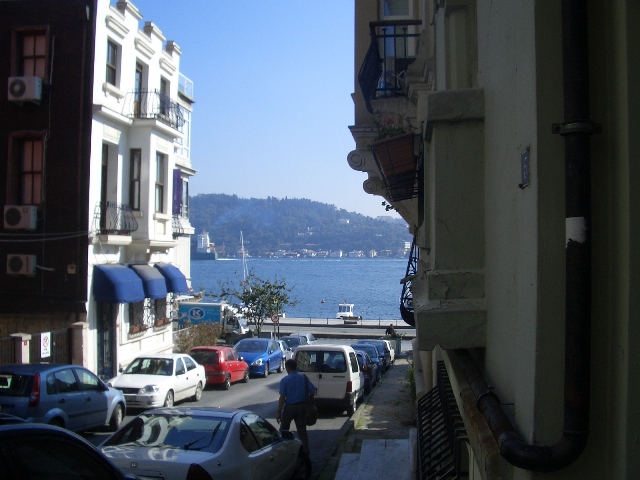
Sure, getting an apartment of my own would be cool, but it's a little hard to leave when this is the view you see upon walking out the door first thing in the morning.
I've been going out every once in a while. Last weekend I met up with some friends in Taksim, and ended up drinking a lot of rakı and smoking a nargile. I'm not a big fan of the nargile--only old men smoked them when I lived here in the nineties--but I guess I need to accommodate the new trends. At any rate, it was great to sit outside. These days even in the middle of the night the temperatures are in the mid-sixties.
Yesterday I went to the Salvador Dali exhibit at the Sakıp Sabancı museum, This afternoon I went to a lecture at the Dutch Center in Taksim. At the lecture I met the well-known historian of the Ottoman Unionist period Sina Akşın, which was for me a real pleasure.
I think that what I like most about Turkey is that people here are almost always willing to chat. Turkish people would probably say that Turks are too anxious to chat, but it's something about this country that I've always liked. No matter where I go here I always meet people who are interested in talking for a few minutes and sharing a bit of their lives. Turkey isn't the only country like this--in Azerbaijan, people chat even more than they do here--but no city in the world can match Istanbul for sheer beauty and friendliness. And, ister istemez, having spent so many years of my live in this place, the city has become a part of me.
Sıhhatler Olsun!
I guess it's a good sign that your hair is getting too long when barbers are stopping you on the street and offering to give you a trim. This happened to me the other day when I was returning home after buying some börek and poğaças from the local pastry shop here in Arnavutköy. Indeed, my hair was getting long--I hadn't had it cut since going to Ed's on Wayland Avenue in Providence last June. Ed's is a great place--he's probably the best barber I've ever had. Last year, when I was living in New York, I continued to get my hair cut at Ed's, heading back to Rhode Island every few months or so. But I'm not really in a position to do that now, and I figured that getting accosted like this was probably a sign--maybe he was a good barber.
To tell you the truth, I've never been wild about getting my hair cut in Turkey. During the course of seven years living here in the nineties, I don't think I ever once was happy with a haircut. Not everyone was up to the task. People got nervous, I think, and were maybe a bit too tentative, reluctant to put their imprint on my head. And then, looking around, I see that most guys here don't have very good haircuts--usually cut quite short, with lots of gel smeared on top.
In Russia, on the other hand, I almost always like the way people cut my hair. The barbers are always women, usually wearing identical smocks working two or three to a shop. Like so much else in the former Soviet Union, haircutting has been quite standardized there, and every haircut I get there resembles the others. The women are all serious, professional.
Prior to coming here from Russia two weeks ago I'd planned on getting my hair cut, but just didn't get around to it. There was just too much else going on. But yesterday, after sending off another pack of applications to my Dad, I felt like cleaning myself up a bit. I bought a few shirts and a pair of shoes, and by the time I got back to Arnavutköy I felt it would be good to visit the near-toothless man who had offered to cut my hair the day before.
But first I wanted to check out the competition. There are three barbers nearby, and I thought it was the least I could do to pass by their shops and see what they looked like. They were pretty much similar to the other shop, and in any case were closed. Obviously, it was fate--I headed down the hill and found the guy who'd come up to me the day before and said 'shall we cut it?'
Ömer agreed, and followed me into the shop. The shop is owned by Adil, an imposing bald man with a white beard and jet black eyebrows who likes to hold forth with political discussions. Ömer immediately went to work with a pair of scissors--a reassuring sign, as my bad barbers here had always been partisans of electric razors. Adil, meanwhile, forced Ömer to stop a couple of times so that I could better pay attention to him while he lectured me.
We were talking about the death penalty. A few years ago, Turkey got rid of the death penalty as part of their effort to get into the European Union. It didn't work, of course, and now a lot of people want to bring it back. In fact, even before the death penalty was done away with here, no one had been executed in the country since 1984. All in all, I'd always found it to be a pretty good system. Many people were sentenced to death, but it took a parliamentary vote to actually have someone executed. By sentencing someone to death and then not executing them, I always thought the state was sending a powerful message: what you have done is worthy of death, but we won't execute you because we are merciful.
Adil disagreed. Like a lot of people I know here, he thought it was silly to have a death penalty but no executions. He told me he thought George Bush was a murderer (because of Iraq), but that he liked the way Bush had executed so many people when he was governor of Texas.
Meanwhile, Ömer was doing a really good job with my hair. In fact, I don't think I've never been happier with a haircut in Turkey. He also did a lot of the small things that I'd always liked about barbershops here, things I'd forgotten about. He snipped away my nose hairs, trimmed my eyebrows, and then lit a mini-torch which had been dipped in alcohol, waving it back and forth across my ears to burn away the hairs inside. The only thing he didn't do was crack my neck, and that was just as well--I never cared much for the neck-cracking.
When people get their hair cut in Turkey, the folks around them say sıhhatler olsun, which kind of means 'wear it in health.' They say the same thing after you get out of the shower. Anyway, it was one small moment among about a thousand I've had since coming back here two weeks ago which have brought back to me how much I love living in this city, the place where I have spent more of my adult life than anywhere else.
And it was nice getting a decent haircut, too.
Debate? What Debate?
Juan Cole said it best:
She mugged for the camera, winked like a bar fly, and just went on talking and talking and talking, oblivious to whatever anyone else said. Not only did she ignore most of Gwen Ifill's questions,she paid no attention to what Joe Biden said. When he choked up over the loss of his family, she did not have the decency to express any kind of condolences. It is almost as though she is autistic and unable to connect with human beings.
I didn't stay up to watch the debate last night, but was able to watch it this afternoon on Turkish television. It's shameless, really, the way Sarah Palin just babbled through her memorized talking points rather than answering half the questions she was asked. And it's even worse that the media gives her a pass on this. Time magazine gave both Biden and Palin the same grade--a B. Frankly, I think Biden deserves better, and Palin should get nothing more than an incomplete.
Muslim Community Center in Dayton Attacked after "Obsession" is Distributed in Ohio
The Daily Kos is reporting that on Friday, September 26, a 'chemical irritant' was sprayed into a room of the Islamic Society of Greater Dayton. Over 300 people were assembled at the ISGD at the time, where they were participating in a religious service. The irritant was sprayed into a room where children and infants were being kept while their parents prayed. Friday night was kadir, one of the holiest dates on the Islamic calendar. One adult and one child were taken to the hospital while others were treated at the scene.
The attack came at the end of a week in which the notorious DVD Obsession was sent through the mail to thousands of Ohio residents. Obsession: Radical Islam's War Against the West, was originally shown on Fox News in the days preceding the 2006 mid-term elections. The movie, which has been denounced as anti Islamic-propaganda by the Council on American-Islamic Relations and other organizations, is being distributed in swing states across the south and midwest. Plans reportedly are to distribute up to 28 million copies of the DVD nationwide.
Shaimiev Lives
As I have discussed in earlier posts on this site, rumors regarding the health of Tatarstan president Mintimir Shaimiev constituted the number one topic of local political commentary in Kazan the last couple of weeks I was there. These rumors became only more pronounced after September 21, the date which Shaimiev had been scheduled to return from his vacation in Turkey. Shaimiev made no public appearances after September 21, even as the official press center of the Tatarstan government issued messages on his behalf.
On September 26 Shaimiev suddenly appeared on television, giving an interview to life.ru in which he joked at length about the rumors. No explanation was made for the extension of his holiday, or for why no effort had been made over the previous two weeks to quell the rumors. Two days later, it was announced that Shaimiev had returned to Kazan from his vacation.
Irek Murtazin, the many who first posted the rumors on his blog on September 12, is currently being investigated by the state prosecutor. Murtazin also writes that his wife, a presenter on Vesti-Tatarstan, has been fired from her job in retribution for Murtazin's postings. Murtazin also appears unconvinced that the video of Shaimiev was actually shot at his hotel in Kemer.
Indeed, it is a strange video. Shaimiev is shown in shorts and hawaiian shirt, but none of the people shown walking in the background are dressed in ways one would expect of vacationers in the south of Turkey walking around the grounds of their hotel. Shaimiev also seems uncomfortable, laughing nervously while he fiddles with his sunglasses and frequently looking behind him. Prompted by the interviewer, who tells him that he swims three kilometers a day, Shaimiev talks about how much he loves swimming and the temperature of the water.
Murtazin points out that at one point (0:42) an individual in the background appears to be wearing a white robe, at which point the scene is cut, continuing with a closeup on Shaimiev's face. Later in the interview (1:57) there is a very quick blast of ambulance sirens of the sort that is made when an ambulance approaches the doors of a hospital.
I have no idea what to make of all this. Shaimiev is clearly alive and looks okay, at least healthy enough to conduct a two-minute interview. Nevertheless, the whole episode has been very odd. While I'm sure that my friends in Kazan are delighted to see Shaimiev looking healthy and giving interviews, I don't think this video will entirely douse people's suspicions that something happened to Shaimiev during the course of his Turkish vacation.
Saturday, September 27, 12:34 pm
The Debate
Well, I sat up until 5:30 am watching the debate between Obama and McCain online. These are my impressions.
Why is CNN's sole analyst (Leslie Sanchez) a Republican advisor? Are they going to have only a Democratic analyst next time?
I thought Obama came out a lot stronger at the beginning, particularly when talking about the economy. Obama's opening salvo, enumerating his plans for the economy, stood in sharp contrast to John McCain's blather about bipartisanship and his old story about the DNA study for bears in Montana.
Things seemed to turn for McCain, however, when the debate began to focus upon foreign policy issues. Not that I felt McCain's arguments were convincing. On the contrary, I think McCain's policies on Iraq, Iran, and Russia are really wrongheaded, even dangerous. McCain, however, managed to largely define the terms of the foreign policy component of the debate, with Obama deferring far too much to McCain's supposed 'expertise' in the field. Time and again, Obama appeared to offer little more than a softer version of McCain's out-of-touch policies.
Moreover, Obama needs to make a case for himself, rather than simply pointing out all of the times in which Bush and McCain have been wrong. He came closest to doing this when he linked their bad decisions of the past to the question of who is best equipped to make future decisions. But Obama needs to do more if he is to be taken seriously in terms of a commander-in-chief. As he did with Hillary, he needs to show people that McCain's experience is part of a line of thinking that got us into the mess we're in today. Obama seemed to largely agree tonight with much of what McCain said about Georgia, Russia, and the Middle East, differing mostly with respect to tone, rather than policy substance. When discussing Iran, the two candidates simply got into a sterile disagreement regarding what 'face-to-face' contacts entail, with Obama seeming to backtrack.
Obviously, there are clear differences between the two candidates with respect to Iraq, but once again Obama seemed more interested in showing how he was right in the past than in discussing what needs to be done now.
McCain was very right in pointing out that the Crimea could end up being a very serious point of conflict with Russia, but (as I have written about earlier) his support for sped-up NATO membership for Ukraine and Georgia is a terrible idea. Obama, however, didn't come across as knowing enough about the politics of the former Soviet Union to disagree.
Fortunately for Obama, people these days seem far more concerned with domestic issues rather than foreign policy. According to a CBS poll of undecided voters taken right after the debate, McCain scored somewhat higher with respect to Iraq (56 percent thinking McCain would make the right decisions on Iraq, 48 percent thinking so of Obama). A far larger number of undecideds (66 percent) thought Obama would make the right moves on the economy than McCain (42 percent). 46 percent felt their opinion of Obama improved last night (32 percent for McCain), while 39 percent though Obama 'won' the debate (24 percent said McCain won, and 37 percent thought it was a draw). On TPM there is a breakdown of CNN polling data which showed similar numbers, including a couple of real eye-grabbers: Obama came off as far more likeable (61% to 26%) and "more in touch with the needs and problems of people like you" (62% to 32%). Ouch.
McCain Jumps the Shark
What a farce the McCain campaign has turned into. Despite finding the time to speak at Bill Clinton's Global Initiative on Thursday morning, McCain has announced that he won't find the time to appear in the presidential debate on Friday. He is instead 'suspending' his campaign in order to return to Washington to assist in the Bush administration's $700 billion bailout of Wall Street. 'Suspending' the campaign, however, does not mean suspending his ads attacking Obama or halting the appearances of surrogates appearing on his behalf on Fox News. Rather, it simply seems to mean ducking out of the debate.
Sarah Palin's obvious shakiness on matters of policy, which was on display again during her interview with Katie Couric, is undoubtedly a factor in the McCain campaign's calucations in trying to postpone both debates.
Meanwhile, McCain's sudden interest in economics accomplished the very thing he professed he was seeking to overcome, injecting partisanship into negotiations which were proceeding smoothly without him.
And for what? What contribution did he have to make? According to observers at the White House meeting, McCain sat silent while the White House negotiations that he had insisted upon fell apart. But what would he have said, anyway? By his own admission, McCain doesn't know much about the economy. He was there for a photo op, which he got, and also because he is desperate to minimize his differences with Obama regarding the economic meltdown. The politician in McCain--which is all there is left of the man now--realizes that the crisis has the potential to absolutely destroy his campaign, turning a close election into a rout.
Indeed, it is this latest stunt, not the choice of Palin, which truly represents the McCain campaign's 'Hail Mary' pass. When he chose Palin as his running mate, McCain was actually in pretty decent shape in the polls. Choosing Palin wasn't an act of desperation, but rather an expression of McCain's faulty 'gut instinct,' a totally unnecessary risk which has backfired on him. 'Suspending' his campaign--which to McCain only means taking himself out of public view because he has nothing to say--is the actual 'Hail Mary' of this campaign because this time McCain really is on the brink of total default. Lacking ideas or even a coherent understanding of what is going on, McCain's strategy at this time is to avoid answering questions on the economy altogether while pretending to place himself above politics.
McCain and Palin simply aren't ready for prime time, and they know it. Palin because she is ignorant and unprepared for the national stage, and McCain because the ideas and issues which have shaped his career--the Cold War and the Reagan Revolution--are no longer workable reference points for the problems facing the US. While Palin reminds me of an unprepared college student trying to BS her way through an answer she knows little about, McCain just seems desperate, stalling for time while he tries to figure out a response to developments which have passed him by.
Thursday, September 25, 2:43 pm
Back in Istanbul
I'm back in Istanbul now, having flown in from Kazan this morning--it's been a long day. I had a great time in Kazan and I miss it already, but it's really nice to be back here. For now I'm working mostly on job applications and my conference talks for November, but soon I hope to make my way back to the Ottoman archives. It also looks like I'll be giving a talk here at ARIT on Monday, November 3--more details to follow.
Tuesday, September 23, 12:29 pm
Where is Shaimiev?
Rumors regarding the health of Tatarstan president Mintimir Shaimiev have become so widespread that it's hard to believe that anyone in the republic hasn't heard them. On Monday night they were acknowledged on television for what I think was the first time--on the "Gorod" news show of the local channel "Efir." On "Gorod" there was a very short (approximately one minute) discussion of the prosecutor's investigation into Irek Murtazin, who first set off the rumors two Fridays ago. Gorod's report stuck very close to the basics of the case and did not go into the question of whether or not the president is in good health.
Meanwhile, Shaimiev himself has yet to appear on television, despite the fact that he was supposed to have returned from vacation in Turkey yesterday. Given the extent to which the rumors have become a distraction in the republic, Shaimiev's failure to appear publicly seems significant. On Monday afternoon, the official news organization of the Tatarstan government released an announcement by Shaimiev congratulating villagers on this year's agricultural output, but there was no appearance of Shaimiev himself. In the evening, meanwhile, both "Efir" and the Rossiia-Tatarstan channel reported on written proposals sent by Shaimiev to the government but did actually show Shaimiev doing anything. Indeed, neither channel mentioned whether or not Shaimiev had even returned from Turkey.
Shaimiev's failure to materialize on Monday has led to even more speculation regarding the state of his health.
Two Takes on Iraq
On Sunday, the New York Times ran a large piece by Dexter Filkins called "Back in Iraq, Jarred by the Calm." It's certainly a very positive portrayal of recent events in Iraq. Writes Filkins:
According to Filkins' account, "al Qaeda" has been largely defeated in Iraq, thanks to the US policy of buying off insurgents.
Meanwhile, the following was taken from today's edition of University of Michigan professor Juan Cole's Informed Content:
8 Killed, 82 Wounded in Bombings, Attacks;
Benchmark Laws Still StalledThe guerrilla war continues in Iraq. On Sunday, guerrillas blew up the general manager of the Ministry of Finance, Ihsan Ridha, and a Brigadier General, Adel Abbas, who was a manager of the ministry of the interior (which has FBI-like functions in Iraq). Ridha was injured; Abbas was killed. Police and army patrols were bombed in Baghdad, and police stations were bombed in the major northern cities of Mosul and Kirkuk. One of the police patrols in Baghdad was attacked in the Sunni enclave of al-Adhamiya (the police are mostly Shiites), suggesting that the sectarian war is still going on.
There is no point in targeting high ministry officials and security forces on the ground like that unless you are trying to cause the government to collapse. The pattern of the attacks shows that the guerrillas have by no means given up and that they are still engaged in a concerted and effective attack on the institutions of the Iraqi government.
CNN Arabic says that 8 persons were killed and 82 persons were wounded in these various attacks (see below).
Al-Zaman reports in Arabic that the parliamentary session scheduled for Sunday on the enabling law for provincial elections had to be cancelled because the Arab and Turkmen members of the committee set up to reconcile the wording of the law walked out. Kurdish MP Fu'ad Ma'sum complained bitterly that the walkout was an insult given all the extensive concessions the Kurds have made. Monday is seen as a last chance for parliament to pass the law if the elections are to be held this year.
The law has been held up because parliamentarians cannot agree on how to treat the disputed oil province of Kirkuk.
Al-Zaman also reports that Oil Minister Husain Shahrastani is complaining that the independent deals struck by the Kurdistan Regional Government with a Norwegian firm have impeded the passage in the federal parliament of an oil law.
Al-Zaman says that former interim prime minister Iyad Allawi says he insists that any security agreement between the Bush administration and the al-Maliki government be submitted to 'public opinion' in Iraq (presumably via a national referendum). He added that when he was in Washington 2 months ago he had told the Americans that they had as well give up on getting a bilateral security agreement passed. He also said he was considering pulling his party out of the Iraqi national security council, on which all major parties have seats, since it had utterly failed to deal with Iraq's problems.
McClatchy reports political violence in Iraq on Sunday:'Baghdad
- A bomb was planted under the car of the general manager of the Ministry of Finance, in Kindi street in Harthiya neighborhood on Sunday morning. Ihsan Ridha, the manager was injured in that incident.
- Gunmen assassinated Brigadier General Adel Abass, a manager in the ministry of interior in Adel neighborhood around 7:30 am. He was killed with his driver.
- Gunmen opened fire on an officer in the general inspector office in New Baghdad neighborhood. Raad Amar, the officer, was wounded and he was transferred to hospital to be treated.
- A roadside bomb targeted a police patrol at the Maghrib intersection of Waziriyah in north Baghdad. Five people were injured, including one policeman.
- A roadside bomb targeted an army patrol in Waziriyah neighborhood in northern Baghdad near the Turkish Embassy. Seven people were injured including three soldiers.
- A bomb was planted under a car in Tahriyat intersection in Karrada neighborhood in downtown Baghdad. Four people were wounded, including one policeman.
- A roadside bomb targeted the Bayna newspaper building in Nidhal street(downtown Baghdad). Two people were injured.
- A roadside bomb targeted a police patrol in Zafarniyah neighborhood (east Baghdad). Six people were wounded including three policemen.
- A roadside bomb targeted a police patrol near the in downtown Baghdad. Seven people were wounded, including three policemen.
- Police found three dead bodies in Baghdad neighborhoods today: two were found in Karkh bank; one in Dora and the other was in Amil. While the third one was found in Fudhailiyah on Risafa bank.
Mosul
- A bomb planted under an oil tanker detonated near an army check point in Arabi neighborhood in Mosul city around 3 pm. Two people were wounded including one soldier.
- A suicide truck bomber targeted the emergency police headquarter in New Mosul neighborhood in Mosul city around 6:15 pm. Two policemen were killed and 45 others wounded, including 15 policemen. Also 50 houses got damaged in that explosion.
Kirkuk
- A suicide car bomber targeted a police check point near the fourth bridge in Ghazala neighborhood in downtown Kirkuk. Five policemen were killed and twenty three were wounded.
Salahuddin
- A bomb planted under a parked car detonated near a restaurant in Tikrit. Three people were injured.Goodness-are these two people even writing about the same country?
Filkins also seems to credit the 'surge' with restraining violence in Iraq, and sounds a note of concern regarding the reduction of American troops in the country.
Cole and others, meanwhile, have often argued that the reduction in violence has more to do with the accomplished fact of ethnic cleansing in Iraq, rather than the 'surge.'
Satellite imaging that shows Sunni Arab neighborhoods in Baghdad dark gives evidence that the ethnic cleansing of the Sunnis by Shiite militias accounts for the fall in violence in Baghdad, not the extra troops Bush sent, called the 'surge.'
'Night light in neighborhoods populated primarily by embattled Sunni residents declined dramatically just before the February 2007 surge and never returned, suggesting that ethnic cleansing by rival Shiites may have been largely responsible for the decrease in violence for which the U.S. military has claimed credit, the team reports in a new study based on publicly available satellite imagery. "Essentially, our interpretation is that violence has declined in Baghdad because of intercommunal violence that reached a climax as the surge was beginning," said lead author John Agnew, a UCLA professor of geography and authority on ethnic conflict. "By the launch of the surge, many of the targets of conflict had either been killed or fled the country, and they turned off the lights when they left." The night-light signature in four other large Iraqi cities — Kirkuk, Mosul, Tikrit and Karbala — held steady or increased between the spring of 2006 and the winter of 2007, the UCLA team found. None of these cities were targets of the surge. Baghdad's decreases were centered in the southwestern Sunni strongholds of East and West Rashid, where the light signature dropped 57 percent and 80 percent, respectively, during the same period.'The two also have conflicting opinions on the likelihood of Iraqi refugees returning to their homes. Filkins sounds hopeful, writing that Iraqis "are beginning to return." Cole takes a different tack:
I visited some of these displaced Iraqis in one of the 'some place elses,' i.e. Amman, in August; 50,000 of them are considered 'vulnerable' by the aid agencies and their situation is desperate. Some Iraqis in exile told me that they could never return. They were Sunni and their own neighborhoods were now 100% Shiite. Or their spouse was a Shiite and they were Sunni, and there was no mixed neighborhood left where they would feel comfortable. Some 25% had had a child kidnapped. Many had received personal threats from militias that they are convinced are still in their old neighborhood.(E.g. 'If Ahmad Adib shows his face in this neighborhood again he will be shot on sight .. .') Indeed, sometimes the militias track them down in Amman and threaten them there again. A lot of Iraqis in Jordan move from apartment to apartment frequently so as to avoid the long arm of the militias.Filkins' depiction of how American soldiers interacted with Iraqis also converges sharply with what others are saying. Reporting that he had viewed American marines "walking about without helmets or flak jackets or even guns," he quotes an Iraqi woman who professes to "love" American soldiers.
In the 24 months that her sons were gone, Ms. Salman said she rarely ventured outside. The exception, she said, was when she saw American soldiers.
“Oh, I love them,” Ms. Salman said, brightening in her darkened house. “I always knew I was safe with them.”
The mayor of Baghdad seems to have other views, also reprinted in Informed Content.
Interview with Baghdad Mayor Sabir al-Isawi by Teodor Marjanovic in Prague; date not given: "'I Have Survived Four Assassination Attempts:' Baghdad Mayor Says Americans Are Often Hard To Deal With and Explains What Has Calmed Down Sectarian Killing in His Country"
iDnes.cz
Saturday, September 20, 2008
OSC Translated Excerpt
(Marjanovic) When you look back, do you think that the Iraqis should be grateful to the Americans for something?
(Al-Isawi) Yes and no. As Iraqis, we should feel gratitude that the Americans brought down the hated Saddam regime for us. But -- and I wish to say it very strongly -- so long as the Americans continue to be stuck in their ruts, the last remainder of gratitude will evaporate. They ought to be able to be liberators and not act as occupiers.
(Marjanovic) Be concrete.
(Al-Isawi) During detentions, they do not heed human rights. They carry out raids without reason. They shoot more than necessary. They shrink from quickly determining the exact relations between the two states so that the situation no longer is that one occupies while the other obeys.
(Marjanovic) And how do they complicate the life for you,as the City Hall?
(Al-Isawi) They are driving their heavy vehicles and tanks insensitively, through people's gardens. They crush sidewalks. They demolish lampposts. They are driving, there is a post, but they will not go around it.
(Marjanovic) Can you complain?
(Al-Isawi) Yes, we call them and sometimes they pay for repairs. But this is not just the question of money. One example: it took us six months to build an orchard. Then arrived a tank, and the six months' efforts were destroyed within a moment.
(Marjanovic) But you are aware of the thousands of Americans who perished in Iraq.
(Al-Isawi) Of course, they must not be forgotten.
(Marjanovic) Can you imagine a street or a square in Baghdad being named after George W Bush one day?
(Al-Isawi) No. (passage omitted on Baghdad citizens' daily troubles)
(Description of Source: Prague iDnes.cz in Czech -- Website of best-selling, independent, center-right daily; most popular print source among decisionmakers; URL: http://idnes.czAl-Isawi also disagrees with the view that the 'surge' was primarily responsible for the reduction in violence in Iraq.
(Al-Isawi) There are two reasons. The uprising of the Sunnite tribes against Al-Qa'ida as a result of its unending bomb attacks. Initially, Al-Qa'ida had enjoyed those tribes' support. The other cause is Prime Minister Nuri al-Maliki's resolve with which he crushed the Shiite militias in Basra and Baghdad's Sadr City. Even without the help and, at the beginning, knowledge of the United States.
(Marjanovic) They used to say that Al-Maliki was in cahoots with these militias.
(Al-Isawi) Yes, and he proved that it was not true. The political parties, then, finally began to approach the government. It became evident that the prime minister did not want to have anything in common with these Iran-supported armed groups.
(Marjanovic) Here in the West, the reports go that the crucial role was played by the increase of American soldiers last spring.
(Al-Isawi) This was a partial reason for the calming down. Another such partial reason was that the Iraqi armed forces are now working much better. But the two things I mentioned are certainly the most important.Volga-Ural Conference in Kazan
This past Friday and Saturday a conference entitled "The Volga-Ural Region as a Crossroads of Eurasia: Empire, Islam, and Nationality" was held at Kazan State University. The conference organizers were the Islamic Area Studies Center at the University of Tokyo, Kazan State University, and the Slavic Research Center of Hokkaido University.
I only attended the Friday sessions of the conference and the post-conference party on Saturday night. It was super seeing a lot of old friends and acquaintances from the US, Japan, Kazan, Ufa, and Turkey, including Hisao Komatsu, Rafik Mukhametshin, Charles Steinwedel, Il'dus Zagidullin, Diliara Usmanova, Norihiro Naganawa, İsmail Türkoğlu, Azat Akhundov, Masumi Isogai, Marsil Farkhshatov, Ramil Sabirov, Mami Hamamoto, Xavier Le Torrivellec, and others. At the post-conference party, talk flowed interchangeably between Russian, Tatar, and Turkish--a perfect Kazan evening!
Thursday, September 18, 6:40 pm
More on Shaimiev
Kompromat.ru is reporting that the office of the public prosecutor of Tatarstan has started an investigation into the circulation of rumors that Tatarstan President Mintimir Shaimiev has died. The rumors, which began spreading across the republic last Friday, came in the wake of a posting on the blog of Irek Murtazin, a former press secretary of Shaimiev. The rumors are being blamed for a nearly ten percent fall in the value of the state-held giant Tatneft on the Tatarstan stock exchange. Prosecutor Kafil' Amirov has been quoted by kompromat.ru as saying that:
Murtazin, meanwhile, has not renounced his report, and has raised the possibility that Shaimiev could be ailing in Turkey.
Shaimiev is due to return to Kazan on September 21. He has not been seen or heard on television since Murtazin's original post last week. On Monday, the official information agency of Tatarstan announced that Shaimiev had spoken to Turkish President Abdullah Gul by telephone, inviting Gül to visit Kazan during his visit to Russia later this year.
Saturday, Friday 13, 2008 5:06 pm
Rumors of Shaimiev's Demise
The Russian online journal Novyi Region is reporting that Tatarstan President Mintimer Shaimiev has died, a rumor which has been denied by Shaimiev's press secretary. The source of the rumor is Irek Murtazin, a former press secretary of Shaimiev who currently works at Kazan's International Institute for Humanitarian-Political Research. Murtazin first made the assertion in his blog and then was reported by Novyi Region as saying that he had heard the news from a friend staying in Kemer, Turkey, where Shaimiev has been vacationing with his wife.
So far, the facts seem pretty flimsy and appear to be based mainly upon the arrival of a large group of police officers at the hotel where Shaimiev is staying. Other evidence cited by Murtazin includes "the cancellation of very important meetings, the urgent return of officials from out of town business, and the ordering of urgent charter flights to Turkey." No specifics about these allegations have been mentioned in either Novyi Region's report or in that of newsru.com, another site which has picked up the report.
Nevertheless, the rumors do seem to have traveled fast--a number of my friends here had heard about them.
Nothing about them on the local or national news, though. I've also checked the Turkish press, and have found nothing.
Mintimer Shaimiev is seventy-one years old and is the only president Tatarstan has ever had, having been first elected in 1991. Prior to that he was chairman of the Supreme Soviet of the Tatar Autonomous Republic.
Friday, September 12, 2008, 11:22 am
Recent Events in the Caucasus and Russia's Mini-Republics
The other day in the New York Times Ellen Barry had an article on the separatist movement in Tatarstan. According to Barry, the Russian government's abandonment of a policy of steadfast support for the principle of territorial integrity in the face of separatist movements has already attracted the attention of separatists within Russia.
Well, maybe. Indeed, I pointed out in a posting last month the risk Russia was taking by joining the United States in supporting foreign separatist movements in 'mini Republics,' of which many exist within the Russian Federation. On the other hand, the independence movements in Tatarstan and Bashkortostan (the other republic mentioned in Barry's article) are moribund. In Tatarstan today, 'sovereignty'--the compromise which was hammered out after Tatarstan 'suspended' (in 1998) its earlier declarations of independence--is on the defensive, and even the republic's post-Soviet efforts to elevate the status of the Tatar language have come under recent attack. In both Tatarstan and Bashkortostan, the political leadership is far more concerned with reinstating their status as elected officials (scroll down to 'Debates for returning to elected governors'), which was unilaterally stripped by Vladimir Putin in response to the Beslan massacre of 2004. Today, the presidents of Tatarstan and Bashkortostan (as well as other republic presidents and regional governors) are appointed by Moscow, rather than elected.
It's not for nothing that Kazan has been part of Russia since 1552. The Volga Tatars have always been the Muslim community that Moscow has trusted the most. While there were small separatist movements after the revolutions of 1905 and 1917, Tatars from all walks of life have always worked closely with Moscow. I think it would require a major breakdown in authority in Moscow for such a movement to gain hold in Kazan in the forseeable future.
In the Russian Caucasus, on the other hand, the story might be different. Barry also interviews Charles King, who comments on the implications for Russia's recognition of Abkhaz and South Ossetian independence upon the Circassians.
Indeed, in the Caucasus--where there has been a much shorter, less consistent, and less direct tradition of Russian rule than in the Volga region--the possibility of the South Ossetian example creating difficulties for Moscow in the future is less far-fetched.
Friday, September 12, 12:39 pm
Trouble in Ukraine
Nobody's talking about it in the United States, but a serious political crisis has broken out in Ukraine. Those of you keeping score might remember that in 2004 the American-supported Orange Revolution brought a pro-Western government to power in Kyiv, and since then Ukraine and Georgia have emerged as the two most important allies of the United States among republics of the former Soviet Union which have not already joined NATO.
The crisis has been brought on by a feud between two of America's most important supporters in the country, President Viktor Yushchenko and Prime Minister Yulia Tymoshenko. On Wednesday, Tymoshenko joined forces with Viktor Yanukovich (who was the Moscow-sponsored opponent of Yushchenko in the 2004 elections) in supporting a measure to limit the president's powers. The rumors are now that Tymoshenko and Yanukovich will form a coalition government with Tymoshenko as Prime Minister.
Yushchenko's supporters have accused Tymoshenko of treason and Yushchenko himself has threatened to dissolve parliament and call new elections--a move which seems unlikely given his party's own weak standing in opinion polls.
All of this comes at a time when Washington finds itself in an increasingly defensive position in Eurasia. After the heady days of 2004-2005 and the installation of pro-American governments in Georgia and Ukraine, the Bush administration's goals of incorporating both countries into NATO have already contributed to the partitioning of Georgia and risk creating a similarly volatile situation in Ukraine, where the idea of joining the alliance is anathema to the large Russian-speaking population of the country.
As I argued in a recent posting, the Bush administration's obsession with extending NATO membership to these countries is self-defeating. In Ukraine, the prospect of joinging the EU would be a far less divisive and equally effective means of guaranteeing Ukrainian territorial integrity. Indeed, Washington's current plans of putting Ukraine and Georgia on the fast track to membership in NATO could very well lead to the very breakup of Ukraine that Washington is seeking to avoid by promoting its membership. Particularly in today's heated atmosphere, Russians in Ukraine--particularly in the the Crimea--are simply not going to stand for it.
Sunday, September 7, 2008, 8:03 pm
The past week has been spent mostly with job applications--a giant task. I feel pretty lucky that I'm not obliged to be doing anything else during this time. Mostly I'm applying for three kinds of position--Russian History, History of the Middle East, and Islamic World History. There are loads of interesting positions open this year--I hope I can succeed in being offered at least one of them.
One reason why the job application process is taking up so much of my time these days is that I'm sending out almost all of the applications in one batch. The first deadline is September 30, so the plan is to DHL the applications to my Dad in Michigan sometime around the 18th of this month--he'll send them out to the various universities from there. However, not all of the applications are due by then, so I might hold onto some of them until mid-October, then send a second batch to my Dad. It all depends upon how DHL will charge me. If sending all of the applications at once costs the same as sending only half of them, I'll do my best to get them all out within the next ten days.
Today is Tracy's birthday: Happy birthday, Tracy G!
Tomorrow, September 8, is my Mom's birthday: Happy birthday, Mom!!
Wednesday, September 3, 2008, 1:11 pm
I haven't written much here recently--perhaps because I finally finished the article I've been working on all summer. I think that, especially when I was putting in 10-hour days at home and never going out, my mind couldn't slow down and I needed to write something here to relax. Since last Tuesday, however, when I finally sent the article off, my work, place of residence, and schedule have all changed, so the website has fallen a bit between the cracks.
Ever since last Tuesday I've been working mostly on job applications. There seem to be more jobs open this year than last, including a number of places that will undoubtedly get tons of applicants. I'm applying for positions in Russian history, the Middle East, and the Islamic world. So far I've found about seven or eight positions in Russian history, and more than fifteen relating to the Middle East and Islamic world, in addition to a number of postdocs that I'll also be applying for. Every letter is slightly different from the others, so it's a long and complicated process. I plan on DHLing a large batch of applications off to my Dad within a few weeks, and then he'll mail them off to the individual schools. DHLing each university individually would cost a fortune.
However, I'm still not really sure where I'm going to be in a few weeks. One-way plane tickets to Azerbaijan are expensive, and that still isn't where I want to be. I'm starting to think it might just make more sense to fly back to Istanbul, and either start working there or else travel from there to Georgia.
Speaking of Georgia, these days there's little about any other topic on Russian television. This is especially the case on the all-news network Vesti, where Georgia, the United States, and South Ossetia are discussed for literally hours on end. Emphasis, as usual, is placed upon the "war crimes" and "genocide" committed by "Georgian aggression" against South Ossetia. None of this is new, but the extent to which these stories are still being pushed by the government-owned channels is striking. It makes me wonder what they might be trying to prepare people for.
On a more personal note, I've moved out of my apartment on Esperanto Street, since the new tennants moved in on September 1. Rather than rent a new place, I decided to move into an apartment owned by my friend Remil. It's on the outskirts of town, surrounded by newly constructed buildings and a glimmering shopping mall called Mega. In many ways, it's very convenient, despite the hour-long commute to the center of town. Remil is usually not home, so I'm able to get a lot done in peace and quiet. There's a (somewhat expensive) internet bar at Mega as well as an enormous supermarket. The only problem is the trip to Mega and back. It has been raining bitterly for several days and has gotten quite cold--dipping into the high forties with fifty mph winds. By the time I get back home, I'm soaking wet and my shoes are caked with mud.
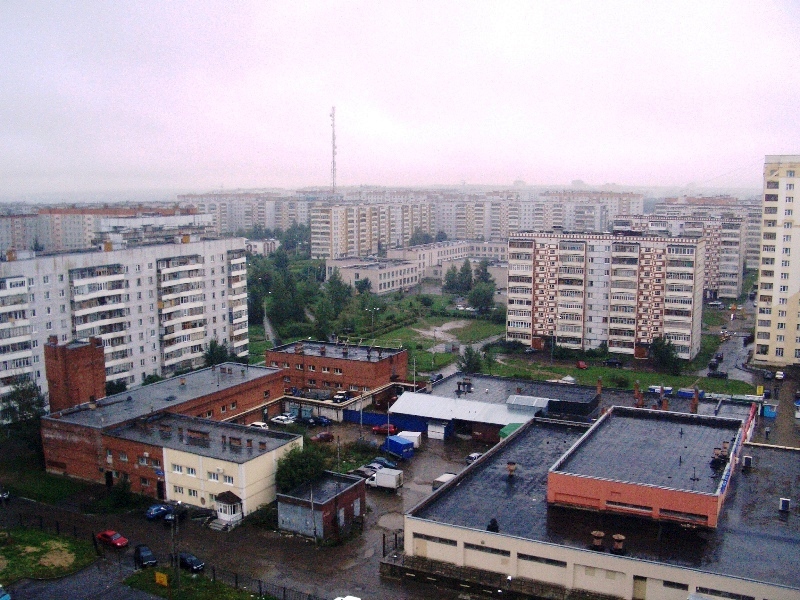
According to what I've read, McCain really wanted Joe Lieberman or Tom Ridge but was afraid the wing (actually the core) of his party that is obsessed with ending abortion rights would rebel at the convention. But how does this pick help him? For starters, it would seem to totally short-circuit his argument that Obama is not experienced enough to lead. Indeed, in making this pick McCain is either conceding that the number of years one has spent in government service doesn't matter after all, or else announcing that his only interest in selecting a running mate derives from her ability to help him win an election--what happens next be damned.
Perhaps McCain was thinking back to 1988, when another experienced Republican, George H.W. Bush, chose a relative unknown for a running mate. We all know how well that turned out, but at least Dan Quayle had some experience in national and foreign affairs. More importantly, George H.W. Bush was not only younger than McCain is today but was also in much better mental and physical shape.
Republicans are asking people this Fall to vote for a candidate who has often appeared confused and forgetful when discussing matters pertaining to foreign policy, his supposed area of specialization, and who would be eighty years old at the end of a second term. And, if he can't serve out his term, we get someone who owes her place on the ticket to her consistent opposition to abortion and a "balanced" approach to evolution, gravity, and other hot-button issues from previous centuries. Amazing.
The world is a dangerous place, and this year has become increasingly so. Is this really the best the best ticket the Republicans could come up with?
Tuesday, August 26, 2008, 10:29 pm
More Thoughts on South Ossetia
Well, the big story here is of course Russia's recognition of the independence of South Ossetia and Abkhazia. On Russian state television, the decision is being presented quite clearly as a response to the recognition of Kosova's independence earlier this year by the United States and the European Union. Indeed, an extended excerpt of a speech by Vladimir Putin in Germany last June in reaction to the recognition of Kosova's independence was shown on the news tonight. I'd never seen it, but in it he clearly says that if such rules apply to Kosova, then they can apply to countries all over the world.
Indeed, Russia's recognition today marks a reversal of a policy Russia had followed since the end of the Cold War, in which Moscow steadfastly insisted upon the principle of territorial integrity while the United States and the European Union recognized the independence of one state after another in the Balkans. While Russian support for Belgrade was often presented in the Western media in terms of some kind of mystical Orthodox brotherhood between the two countries, in fact Russia supported Yugoslavia's territorial integrity because the Russian Federation is itself divided into republics and autonomous regions which could likewise break apart--and which appeared to be, for much of the 1990s. Thus, despite the fact that the Russian government for years supported the breakaway republics in Georgia, it never went as far as to recognize their independence--until now.
But Russia is playing a dangerous game. In adopting the approach of the United States and Europe in recognizing--when it suits their interests--the independence of such 'mini-republics,' Moscow has won a battle. But does the Russian government really want to go down this road? Russia today is far more stable than it was in the 1990s--Chechnya has largely been quieted, and Moscow has reasserted control over republics like Tatarstan and Bashkortostan. But, in buying into the logic of independence for 'mini-republics,' could the Russian government be creating bigger problems for itself in the future?
For the United States and Europe, meanwhile, I think damage control in Georgia has to be accompanied by a new strategy in Ukraine--where the Republic of the Crimea could emerge as a potentially disastrous flashpoint between Russia and the West in the coming years. In Ukraine, ethnic Russians almost unanimously oppose--often quite passionately--the idea of Ukraine joining NATO. George W. Bush's efforts to extend NATO membership to Ukraine could thus precipitate a real crisis, leading to efforts in the Crimea (where the population is overwhelmingly Russian) to secede from Ukraine and a possible Russian recognition of this independence. No matter what, all talk of Ukraine's entry into NATO has to come to an end.
Indeed, the most obvious lesson to be learned from the events of this month is that the White House's policy of beefing up the Georgian military and encouraging NATO membership has been very counterproductive. Even without Saakashvili's disastrous decision to attack South Ossetia, Georgia's entry into the alliance would have precipitated a crisis with the two breakaway republics, whose governments and populations were steadfastly against taking part in any kind of anti-Russian military alliance.
Entry into the European Union, on the other hand, would have been welcomed by a significant proportion of the populations of both republics. Imagine how things might have worked out if, instead of pursuing NATO memberships and attacking the two republics, Saakashvili had managed to make serious progress towards membership in the European Union. Would South Ossetia and Abkhazia really have continued to prefer independence--as opposed to, say, a high level of autonomy within Georgia--in the face of provisional Georgian membership in the EU?
It's too late for Georgia, but this lesson needs to be applied to Ukraine. If the United States and Europe wish to extend their influence in Ukraine without provoking a showdown in the Crimea, the less risky path would be to quietly accelerate Ukrainian ties to the European Union and to abandon the idea--at least for now--of NATO membership.
Of course, getting the Europeans to agree to this is another question--especially given the generally low level of esteem with which our current president is viewed in influential European capitals. However, the Europeans are also disturbed by what occurred in Georgia this month, and will perhaps be more receptive to suggestions which seem constructive and unlikely to provoke.
But first, it will be necessary for Americans themselves to make a break with the policies which have led us to this situation.
Monday, August 25, 2008, 11:34 pm
The lead story tonight on the news was the decision today by the Russian parliament to recommend to Russian President Medvedev to recognize the independence of South Ossetia and Abkhazia. The presidents of both republics came to Moscow for the vote, which in both cases was unanimous. It won't be long now--the big question is how the US and Georgia will react once Russia officially recognizes their independence.
Saturday, August 23, 2008, 9:34 pm
Beating the War Drums Again
On the one hand, things have quieted down in South Ossetia. This is a good sign--especially as I still hope to research in Georgia next month.
On the other hand, things don't look so good for the longer term. As I predicted in an earlier posting, Georgia has emerged as the new rallying cry for American neocons, while Vladimir Putin is slowly being fitted to play the role of the next Adolf Hitler. That role has been vacant ever since we captured and executed Saddam Hussein, who five years ago was being described by the neocons in precisely the same terms.
As in the United States, journalists in Russia have been doing their best to stir up public indignation. Tonight on the state-run Rossiia channel there was an hour-long documentary on "Georgian aggression" and the history of "genocide" against the Ossetians. Every three or four minutes, the United States and George W. Bush were invoked in sensationalistic and rather unflattering terms.
According to the New York Times, Russia is paving the way towards recognizing the independence of South Ossetia and Abkhazia. Indeed, on the news two nights ago, a lot of attention was paid to the "declarations of independence" made by leaders of both republics on Friday, even though the two republics had actually declared their independence back in the early 1990s.
Back in the States, McCain crony Lindsey Graham has been ratcheting up the rhetoric against Russia, calling on NATO to "stop war-gaming on tables in Brussels" and begin conducting military exercises in Europe. Like many other Americans beating the war drums against Russia, Graham was brazenly deceitful about the circumstances leading up to the crisis in South Ossetia, which began when Georgian forced launched an unprovoked attack on the breakaway republic, killing at least several hundred civilians. "It is clear that the Russians tried to create this provocation," declared Graham, ignoring the fact that the Russian government had consistently supported the status quo, in place since the early 1990s, of de facto (but not de jure) independence for South Ossetia and Abkhazia under Russian protection.
Even more disturbing was Graham's claim that Ukrainian leaders had told him that the Russian government has already issued passports to 75,000 ethnic Russians living in Ukraine. If this is true (it might be), I would be interested to learn how many of those passports had been issued to residents of the Crimea. Indeed, as I wrote about on August 13, the Crimea could end up being a potentially disastrous point of conflict between the United States and Russia.
Indeed, the Crimea was on the Russian news tonight, with state television showing dozens of people waving Russian flags to greet the Russian Black Sea Fleet, which is based in the Crimea until 2017, back to Sevastopol.
I'm not the first person to say this, but I agree with the statement completely: were it not for the fiasco in Iraq, surely the destruction of what were--eight years ago--generally sound relations with Russia would go down as the major foreign policy debacle of the Bush administration.
Then again, there's still time.
Super-Tired
Whew! I'm pretty tired. After moving into my new (old) place on Esperanto on Monday, I've pretty much done nothing other than sit in this apartment and work on my article. Oh yeah--on Monday, I bought a new simcard for my phone--but that's been about all the fun I've had.
For the past three days I've just been sitting at this little table, looking out at the birch trees, working about twelve hours a day in front of the computer. The article is finished, at least theoretically--I'll look at it with fresh eyes in a day or so, then hopefully send it off.
The good news is that I've found a decent internet place--of course, it's at the post office (the one on Pushkin St., not the main one on Kremlevskii). The last time I went online at the Kazan post office a couple of years ago, they only had two computers (like in Ufa today). Now they've got twenty computers and a very good connection. It's also much cheaper than any of the other places in town, so clearly it's the place to be.
Anyway, I'm heading down to Bauman Street now. It's too beautiful out to spend any more time inside.
Sweet Home Esperanto
It looks like I'll be on the move again--heading to a different apartment in Kazan. When she picked me up at the bus station on Thursday, Lolla explained to me that she had in fact sold the apartment, though she didn't know when exactly the new owner would want me out (she'd warned me this might happen). Yesterday I learned that I'd have to leave on Monday, although Lolla knew a woman who would be willing to rent a room to me in her apartment. This was fine as a back-up plan, but since I prefer to live alone I called a number of old contacts and found a place to live on Esperanto Street. Indeed, I've lived in this apartment before, when I rented it from a woman named Marina in the summer of 2006. Now I'll be able to stay there for two weeks, since Marina has sold this apartment and the new owner will take possession on September 1.
Indeed, everyone appears to be selling their apartment these days. For years the housing market was booming in Kazan, and everyone expected the bubble to burst at any moment. The bubble hasn't burst, but the boom has stabilized somewhat, which I think is why a lot of people are selling--including the place on Esperanto, four of the five apartments I've rented in this city have been sold in the last two years.
My own plans after September 1 are up in the air. I had originally planned on flying from Moscow to Tbilisi in early September, something which is no longer possible. Now I'm looking into changing my ticket back to Istanbul (I currently have a return ticket for October 14, but could perhaps head back there in September). If things settle down in Georgia in the next week or so, perhaps I will still go there, flying from Moscow to either Baku or Yerevan, then traveling to Tbilisi by train or bus. It's all a little complicated right now.
A Busy Week
I'm in Kazan, now. It's been an incredibly busy week, as my final days in Ufa involved a lot of work and numerous courtesy calls. Now I'm looking forward to settling down again and getting some more work done in Kazan.
As I mentioned earlier, I spent the first part of the week working in the archive of Rizaeddin Fahreddin, someone who was much involved in Muslim activist circles in the late imperial period and later became the second mufti of the Soviet Union. Fahreddin's archive is useful not only for the material relating to Fahreddin himself, but also for its wealth of documents pertaining to the Orenburg Muslim Spiritual Assembly. Indeed, Fahreddin spent much of his time as mufti going through documents in the Orenburg Spiritual Assembly's archive. In some instances, he recopied materials into his notebooks, but many of the documents here are originals.
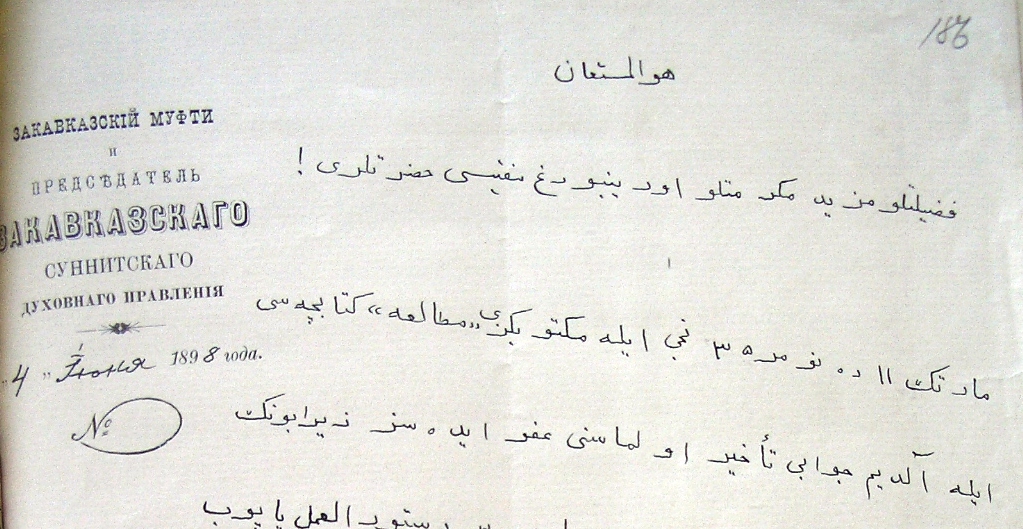
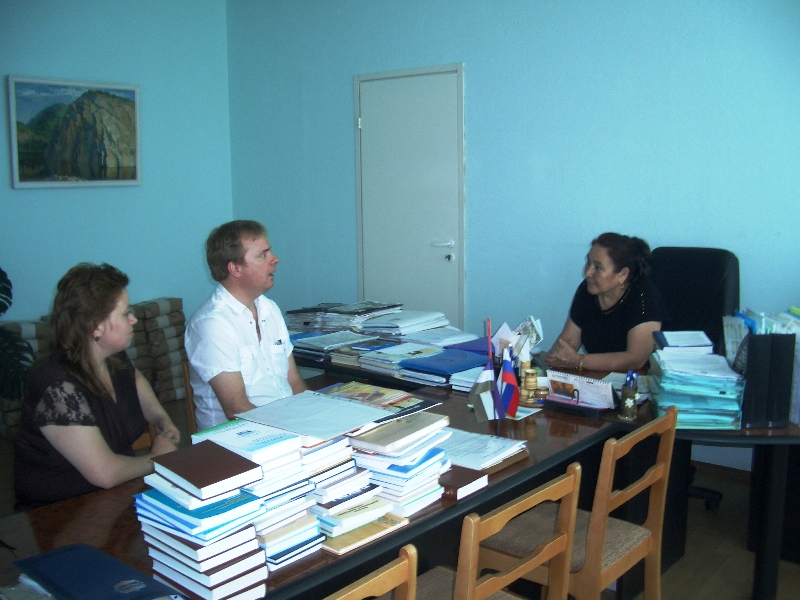
In Kazan I was picked up at the bus station by Lolla, the woman from whom I'm renting an apartment here. Lolla is orginally from Abkhazia, and like everyone else I've ever met from the Caucasus is extremely hospitable. Indeed, this morning she was taking her children to the "Blue Lakes" outside Kazan and called to ask if I wanted to go. They're quite interesting--today was my first time there. Due to mineral deposits they are a deep blue-green color, and for some reason are extremely cold--no warmer than the mid-forties, in my estimation. When I jumped in the first time, I felt my heart contract and thought I was going to die for sure. It was so cold I could barely feel my toes after just a few seconds. The most anyone could do was swim from one side of the pond to the other--a distance of about forty feet. It was definitely refreshing, though, and fun.
Come freeze in the Blue Lakes!
In the afternoon on Friday I worked for a couple of hours at home until heading down to Bauman Street to meet Igor, my old landlord from my Fulbright year. Igor has since sold the apartment I used to live in and is planning to emigrate to South Africa, but for the time being is renting a place on Tatarstan Street. Both he and his girlfriend, Sveta, love going to Ikea, which is located in the enormous Mega shopping center on the edge of town. I drove out there with them, and we sat in Ikea for a few hours, drinking tea in the Ikea cafe and chatting about people we know. Then we were joined by a couple of Igor's friends, who were also hanging out at Mega.
A friend of mine, Ramil, owns an apartment out near Mega, so after leaving the shopping center Igor dropped me off there, where I had dinner with Ramil, his cousin, and his sister. After speaking with Igor and his friends in Russian all afternoon, it was fun to switch into Tatar, something which reminded me of one of the reasons why I like this city so much.
At eleven I got up to leave. In Kazan the public transportation shuts down pretty early, so I had to go home by "taxi"--meaning I flagged down someone in a car and came to an agreement with him on a price.
I remember taking a "taxi" like this for the first time, when I lived in Kazan in 2003-2004. I was really anxious about it, and only did so after having spent a couple of months here. Ultimately, climbing into the car of a complete stranger in the middle of the night--or at dawn--became second nature, making small talk in Russian or Tatar as we sped down the road listening to techno on the radio.
Anyway, the guy who picked me up was a recent graduate of the Law Institute here, and we started to chat. He asked me my name, told me his was Timur, and by the time we got to my apartment near Sovetskaia Ploshchad' he asked me if he could take my picture. "No one's gonna believe this" he said to himself after snapping a couple of photos.
Whatever, I guess all of this sounds a bit self-aggrandizing--and it's not as if people here automatically go nuts upon meeting a foreigner. But all the same, there aren't nearly as many foreigners here as there are in St. Petersburg and Moscow, and people here are less stand-offish about making conversation than they can be in the capitals. Indeed, one of the great things about living in provincial Russia is that it is much easier to make contact with people.
The other great thing about living in Kazan is getting the chance to hear two languages constantly throughout the day. Indeed, while bilingual signs (Russian and Bashkir) are more present in Ufa than in Kazan, it seems to me that I hear a lot more Tatar on the street here than I hear Bashkir or Tatar in Ufa. In Kazan, I feel like I can live in both worlds, a feeling I think I've only really had elsewhere when I was a student in Montreal. Two languages, two religions, two great civilizations.
Granted, there are a lot of things about living abroad--and particularly about living in Russia--that I can find exasperating, things that I tend not to write about here. Especially at times like this, however, I feel really, really lucky to have been able to have the kind of experiences I've had over here.
South Ossetia and the Fate of the “Mini-Republics"
Something about the recent crisis in South Ossetia that needs to be underscored is the absolute necessity of the next US president coming to some kind of understanding with Russia over the fate of the mini-republics, the “national” republics within states which have been the conflict zone of Eurasian space since the end of the Cold War. Chechnya, the republics of the former Yugoslavia, Nagorno-Karabakh, Abkhazia, and South Ossetia are all examples of such “mini-republics,” regions which had their own state apparati--usually autonomous regions or republics within Yugoslavia or the republics of the former USSR. As I discussed in my post yesterday, the question of when to recognize the independence of mini-republics and when to support the territorial integrity of larger state entities has never been answered consistently. Indeed, after years of insisting upon the sanctity of respecting the territorial integrity of states, Russia has now become more aggressive in defending separatism when it suits its interests. The United States, which for years has supported separatist movements when it felt like it, is now up in arms over Russia's support for South Ossetia.
While all eyes have been on South Ossetia this week, the breakaway region of Georgia may only be a preview to what could be a larger, and far more dangerous, conflict over the Crimea—yet another “national” republic within a larger state. The Autonomous Republic of Crimea is predominantly Russian, living rather grumpily within Ukraine, a country with NATO ambitions. The Crimea, moreover, is home to Russia’s Black Sea Fleet, but only for another nine years. According to the treaty concluded between Russia and Ukraine after the breakup of the Soviet Union, Russia gets to lease its base in Sevastopol only until 2017, at which point it is supposed to revert to Ukraine.
The possible repercussions for the Crimea of the events taking place now in Georgia are hardly lost on the pro-American government in Kiev, which has announced that it might not allow the Russian Black Sea fleet back into the Crimea should they participate in the fighting in Georgia—a declaration which invited a furious response from Moscow. Unlike South Ossetia, which hardly anyone in Russia cared about until last week, people in Russia would love to have their government take a stronger stand on Crimean independence. Indeed, the Crimea is the one part of the former USSR that Russians clearly pine for, often referring to it in conversation as “the south of Russia.” Whereas South Ossetia only became an issue for Russians after the Georgian attack on the region, retaking Crimea would be a popular move in many quarters in Russia even without a Saakashvilian pretext.
It's thus important for both the United States and Russia to start being honest--at least in private--about the opportunism and hypocrisy that has characterized the foreign policies of both countries with respect to mini-republics. In this context, John McCain's bellicose rhetoric--blaming Russia alone for the crisis and placing these events within a broad and simplistic historical sweep--is particularly unhelpful.
Something else that is worth keeping in mind about the mini-republics is that the problem is not simply "nationalism." Indeed, while there has been ethnic conflict in many regions of the Balkans and former Soviet Union over the past twenty years, full-scale war tended to break out only in those regions where a mini-republic was involved. This is because in the mini-republics, you don't simply have nationalism, but also a state apparatus devoted to expanding its autonomy or becoming independent altogether. Thus, rather than simply shrug our shoulders and chalk up the violence to "ancient hatreds," it's necessary to try to be proactive about these conflicts because we can see where they might be heading next.
Georgia is not Czechoslovakia
As I predicted in my posting of August 9, the crisis taking place in South Ossetia has prompted much anti-Russian vitriol in the American media. Robert Kagan was especially overheated, invoking Czechoslovakia and the Münich appeasement and comparing Russia to Nazi Germany, with William Kristol likewise blaming the crisis on "Russian aggression."
John McCain, meanwhile, called on the UN Security Council to take up the question of "Russian aggression."
Americans wishing to spend August vacationing with their families or watching the Olympics may wonder why their newspapers and television screens are filled with images of war in the small country of Georgia. Concerns about what occurs there might seem distant and unrelated to the many other interests America has around the world. And yet Russian aggression against Georgia is both a matter of urgent moral and strategic importance to the United States of America.
But Georgia is not Czechoslovakia, and South Ossetia is not the Sudetenland. Indeed, this crisis began when the Georgian army attacked a largely stable and peaceful region where a clear majority of the population does not want to be part of Georgia. For all the talk about "Russian aggression," this fighting is the result of a calculated decision, made in Tbilisi, to draw international attention to a previously non-violent test of wills that had absolutely no reason to go in this violent direction.
Lost amid all of this hyperventilating about Vladimir Putin being the second coming of Adolf Hitler (and weren't these folks making these same analogies about Saddam Hussein five years ago?) is recognition of the fact that Russia is doing nothing in South Ossetia that the United States hasn't been doing in the Balkans since the early 1990s. Indeed, American calls for the territorial integrity of Georgia signal an interesting change of tune in Washington, which has supported separatist “self-determination” in the former Yugoslavia for more than fifteen years. In 1992, the United States and the European Union recognized Slovenian and Croatian independence from Yugoslavia before Belgrade turned to genocide in its effort to maintain control of its borders. In 2008, the United States supported independence in Kosova, which was part of Serbia. In all of these cases, it was Russia which insisted on the importance of respecting Yugoslavia's territorial integrity, while it was the Americans and Europeans who supported separatism.
Indeed, even in Kazan, Tatarstan, which ten years ago ‘suspended’ its earlier declaration of independence from Russia, the United States for years financed a branch of “Radio Liberty” bearing the highly provocative name of Radio Azatlïk—a word which translates more closely to “freedom” than “liberty,” and which in fact carries connotations in the region of political independence. What if there were a region within the United States which had declared its independence from Washington--how do you think Americans would react to a foreign power setting up a radio station within that region with a name like that? Moreover, all of this occurred while Russia was fighting a war of secession in Chechnya.
The United States has been playing this game for two decades—partly by design, partly in response to events over which we had no control. For whatever reason, however, we’ve placed ourselves in a position where we have very little credibility when it comes to defending the territorial integrity of our allies--or protesting Moscow's actions. And now, in the face of obvious Russian opportunism, Georgia is paying the price.
So what is the reason for America’s support of Georgia’s ‘territorial integrity’ when the United States has consistently supported the independence of separatist governments in Yugoslavia and the former Soviet Union? Oil, of course. The Baku-Ceyhan (“jay-han”) oil pipeline goes through Georgia, since neither Azerbaijan nor Turkey would abide by its passage through Armenia--which is still occupying fifteen percent of Azeri territory. In order to keep the region’s oil from Moscow’s influence, the United States must keep a pro-American government in power in Tbilisi. The US doesn’t care about South Ossetia—the pipeline runs through Georgia proper, not the breakaway republic—but Georgian President Saakashvili is Washington’s man and he’s got Georgian territorial integrity on the brain. No matter what, he knew he could count on American support.
But in attacking a breakaway region whose government's separatist policies reflect the sentiment of people living in the region, Georgia is doing what Serbia did when it attacked Slovenia and Croatia in response to their (US supported) declarations of independence fifteen years ago. Indeed, Georgia is doing what Russia itself has done in Chechnya.
American support for Georgia and Russian support for South Ossetia have nothing to do with morality and everything to do with their geopolitical interests. Georgia has no less right to attempt to defend its national boundaries than any other country, but this is a problem that Saakashvili has gotten himself into by attacking a region which has powerful friends. Russian support for South Ossetia is cynical and opportunistic, but it is a card Moscow is playing only in response to America's nearly identical undertakings--and American support for Kosova in particular.
So what does this mean for the US? Continue to support Georgia diplomatically--but please, let's cut out the over-the-top rhetoric. The last thing this country needs is another president who thinks that posturing with bellicose rhetoric is a suitable substitute for diplomacy. We've had that for the past eight years, and the results have not been particulalry encouraging.
A Little Bleary in the Archives
Well, it's been a long day but a good one. I was supposed to call the Academy of Sciences first thing this morning to see if they had decided to let me research there or not. Two weeks ago when I applied for permission they told me I'd find out within a week, but when I called them last week they had hemmed and hawed and told me to call back a week later. I therefore had assumed that it wasn't going to work out, and so went out to a bar last night with Albert and a few of his friends.
Indeed, I'd only been out a couple of times in Ufa since arriving here a month ago, and I'll be leaving later this week. I figured it was time to do something other than sit inside all day in front of my computer. So, in the daytime I walked around town taking photographs, and in the evening called up Albert and proposed getting a few beers at Ogni Ufi, a complex consisting of a number of bars and an outdoor terrace not too far from my apartment.
It was good to go out, and I wasn't expecting to have to go anywhere today anyway. However, when I called the History Institute this morning they told me that I should come over right away, they were expecting me. This was good news, of course, but all the same I wasn't in the best of moods as I dashed out of the house, head pounding, to spend a day working in the archive of the Academy of Sciences.
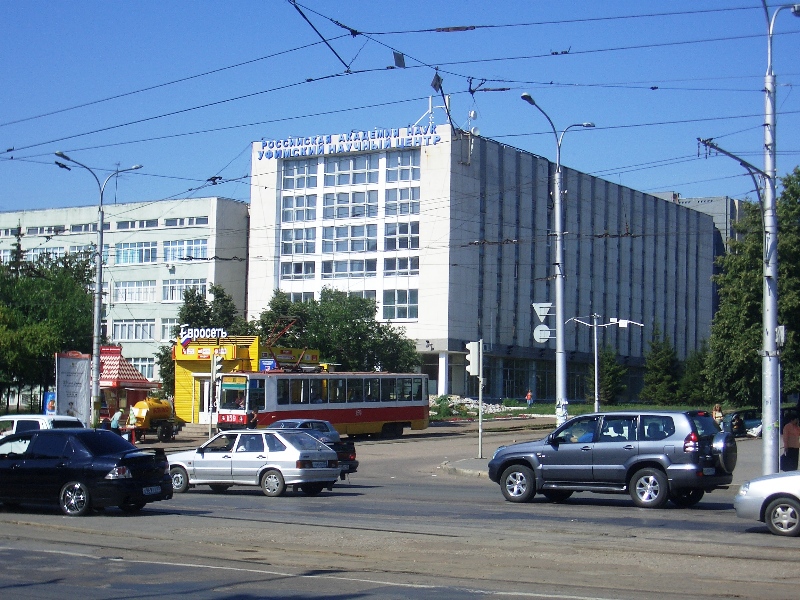
Indeed, while getting into archives in Russia almost always involves some bureaucratic activity, this was really over the top. The reason, I think, is that this place doesn't really get many foreign researchers, so things were being done by the book. Whatever, it was no big deal and everyone was very nice to me. Finally, at two o'clock in the afternoon (after getting treated to lunch in the archive cafeteria!), the reading room re-opened and I was able to get to work.
The fond that I'm working on in this archive is the personal file of Rizaeddin Fahreddin, the second mufti of the Soviet Union and an important activist figure in the late imperial period. Most of the materials are not terribly useful--collections of published newspaper and journal articles of Fahreddin which can be much more easily accessed elsewhere. There are some letters, but nothing of interest so far. I have, however, found a history of Muslim spiritual administration by Fahreddin that appears to have been written in the 1920s. This appears to be an updated version of the history he published during the imperial period, and includes references to events taking place in the final years of the empire and early years of the Soviet Union. It's a handwritten document in Arabic-script Tatar, and as far as I know has not been published.
Despite all of the back and forth involved in getting permission to work there, conditions inside the reading room are pretty relaxed. Indeed, most of the time today I was left to work completely unsupervised. More importantly, they're allowing also me to photograph documents with my digital camera, which is enormously helpful.
Anyway, I hope to finish up within another day or two. I've only been given permission to work there for this week, but given the relatively small amount of material I'm interested in (and the fact that I can photograph it!) I expect things to pass pretty quickly.
Now all I have to do is read all of this!
The Surge: Defining Success in the Long-Term
Much has been made over the past couple of months over how John McCain was ‘right’ about the US escalation in Iraq (or ‘surge’), and Barack Obama was wrong. Not many of the people making this argument, however, have given much indication of what the criteria for measuring this success should be. For them, I think, the surge’s success is self-evident. Fewer Iraqis and American soldiers are being killed, and since this reduction in violence occurred in the wake of the surge, the surge must therefore be the reason behind it.
Elsewhere, other commentators have argued that the surge might not be responsible, or solely responsible, for this decline in the death rate. It is argued, for example, that Shiite and Sunni neighborhoods had been largely ethnically cleansed in Baghdad before the surge, meaning that the death-rate would have declined, anyway.
Yet on both sides of the ‘surge’ argument, attention has been paid mostly to events taking place during the period of the surge itself (March 2007 until mid-2008, roughly). Less focus has been placed upon how the surge might ultimately figure into American interests in the region, or the interests of the Iraqis American troops are ostensibly protecting.
What are the goals of the United States in Iraq? Is our objective to occupy that country as long as possible with a minimum of casualties? If so, then the surge can likely be judged a success. But if the United States had begun to withdraw from Iraq in 2007, rather than send still more troops over there, we would be largely out of that country by now. Think of it: no more American soldiers dying in that country at all, and no more billions of dollars wasted each month in the cause of...what was the cause again?
People argue, of course, that the Iraqis need us. Without American soldiers, “ancient” Sunni and Shiite tensions will rise to the fore again, sending them to one another’s throats. Please. Shiite and Sunni Iraqis have lived together for centuries without Americans there to help them. It was the American invasion which transformed sectarianism in Iraq into an issue worth killing over.
Whatever the reasons for sectarianism, however, it is also clear that it is an issue in today's Iraq—no matter how peaceful things may be today relative to one year ago. The United States must therefore ensure that its eventual withdrawal from Iraq is orderly, and that a withdrawal doesn’t contribute to a serious escalation in violence. Some kind of security arrangement—perhaps involving soldiers from other countries and certainly involving Iraqi power brokers—must be put in place before we go.
Which leads me to my last point with respect to the surge. During the months immediately after the US invasion, we had a period of relative stability in Iraq, before the insurgency and Sunni-Shiite fighting began in earnest. Instead of quickly drawing up a timetable for withdrawing most of our troops (we wanted to inspect suspected WMD facilities and capture Saddam Hussein, we said, but how many soldiers would that have required?), we disbanded the Iraqi Army and otherwise made it clear that we were there for the long term.
Today, we likewise have a window of opportunity to begin withdrawing from Iraq from a position of strength, for it will be much easier to leave that country during a period of ‘stability’ than one of absolute chaos. But the ‘success’ of the surge, I fear, has led to a dangerous complacency among Americans, who are now more concerned with gas prices than Iraq.
This window of opportunity won’t last forever. Iraq is not going to be like postwar Germany or Japan. It hasn’t been so far and this isn’t going to change. Sooner or later, resistance to the American presence is going to become widespread again, which could lead to a much more complicated scenario for withdrawal.
So has the surge served American interests? Well, it has prolonged the American presence in Iraq, and its supposed ‘success’ has greatly diminished the sense of urgency Americans felt in 2006-2007 to begin a withdrawal. So, for the Bush administration, I would say, the surge clearly has been a success.
But for the rest of us? I don’t think so.
Russian Media Coverage of the Fighting in South Ossetia
Well, it's not looking good right now in South Ossetia, a republic that Georgia and most of the rest of the world recognizes as part of Georgia, but which the South Ossetian and Russian governments consider independent. Russian troops have been stationed in South Ossetia for years, where the Russian rouble is the currency and where most people have been given Russian citizenship. Today, some of their soldiers were killed when Georgian troops attacked in an apparent effort to retake the region. Russian troops then responded in force, sending tanks across the border. I won't go into details about what is actually happening there, since the facts are in dispute and my only access to news right now is Russian television. However, I can make a few observations.
First of all, it is no small coincidence that Russian media has been comparing this conflict so frequently to the breakup of Yugoslavia. Indeed, Russia has been following a policy not unlike the policies followed by the European Union and the United States vis-a-vis Yugoslavia in the early 1990s. Russia recognizes South Ossetian independence, and for years has stationed its soldiers there as "peacekeepers." The message seems to be pretty clear: what's good for the goose is good for the gander. If the United States and Europe are able to detach Croatia, Slovenia, Bosnia, and--most recently--Kosova from Yugoslavia, then Russia can detach South Ossetia from Georgia.
Secondly, considerable bitterness towards the United States is being exhibited on television. State-run television in Russia has commented a number of times on the presence of a large number of retired American generals--many of whom, it is emphasized, had experience fighting American wars in the Balkans in the 1990s--operating as military consultants in Georgia. Russian television has also been complaining about "propaganda" in the American and British media coverage of the war, pointing out that CNN, the BBC, and other news organs have emphasized the story of Russian tanks entering South Ossetia, rather than the fact that Georgian troops had entered South Ossetia first.
Thirdly, as cloyingly patriotic and ridiculously one-sided as Russian state television has been during this crisis, what I find most depressing about listening to those hacks is the extent to which they remind me of the their American counterparts. It's one thing for stooges working in government-owned media in Russia to act this way, but what's the excuse of the American media?
Images from Russian television
I expect to see a lot of anti-Russian vitriol in the American media in the upcoming days. Indeed, I'm already seeing a lot of anti-American vitriol in the Russian media. My main hope is that the vitriol comes to an end and people can go back to their lives.
Also--maybe I've just been brainwashed by Russian media, but I don't believe that Saakashvili would have done this without an American green light. It's hard to believe that Washington could exercise such bad judgment, but I wouldn't put anything past this administration.
One thing that everyone has to keep in mind is that the United States and Russia have, for fifteen years, been fighting proxy wars for influence in the Balkans and the former Soviet Union. While in the United States we view American policies vis-a-vis the former Yugoslavia as having been undertaken in the interests of protecting human rights and national rights of self-determination, Russians tend to see American actions in this regard as cynical acts of naked aggression.
Sound familiar? If it does, it's because that's how most of the American media will no doubt portray Russian actions in South Ossetia. I'm not saying that what the Russians are doing is right--but why should Slovenian or Croatian self-determination in 1993--or Kosovar independence in 2008--be more inherently just than South Ossetian self-determination? On the other hand, if Russia is allowed to defend its national integrity in Chechnya, why can't Georgia do the same thing in South Ossetia?
There are, of course, double standards on both sides. Russia and the United States are both following what their leaders consider to be their national self-interest, and neither side has exactly cornered the market on moral international behavior. Everyone should therefore do themselves a favor by not getting carried away with their rhetoric and doing their best to work this problem out before things get out of hand.
I guess it's a good thing I haven't bought my Moscow-Tbilisi plane ticket yet.
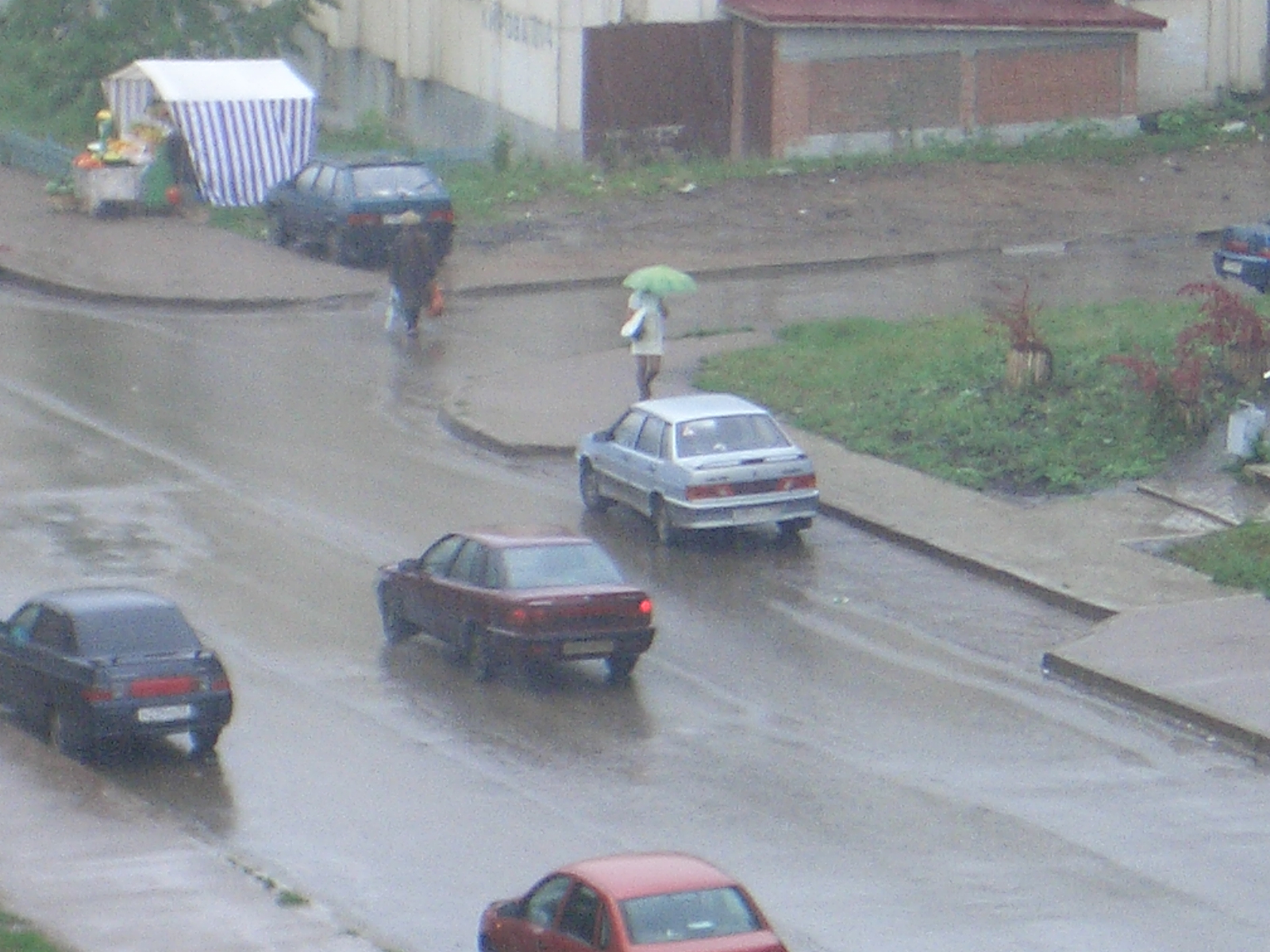
By the time I post this message, all of the photos from the 2008-2009 album should be working. Feeling inspired by the fact that I'm finally able to post photos again, I went through and fixed some of the problems in my other albums--especially photos in the Crimean, Russian, and Turkish albums which wouldn't expand when clicked on, or which wouldn't expand into a new window. Once I finish the article I'm working on, I also hope to organize the last two albums from my scanned photos, which are still just a mess of shots that haven't been put into order or properly captioned.
Anyway, I'm about to sit down to lunch but hopefully I'll have a chance to hit the Post Office later today in order to update the site. If you see this message, that means I'll have done it.
By the time I post this message, all of the photos from the 2008-2009 album should be working. Feeling inspired by the fact that I'm finally able to post photos again, I went through and fixed some of the problems in my other albums--especially photos in the Crimean, Russian, and Turkish albums which wouldn't expand when clicked on, or which wouldn't expand into a new window. Once I finish the article I'm working on, I also hope to organize the last two albums from my scanned photos, which are still just a mess of shots that haven't been put into order or properly captioned.
Anyway, I'm about to sit down to lunch but hopefully I'll have a chance to hit the Post Office later today in order to update the site. If you see this message, that means I'll have done it.
Ufa Weather Report
When I first arrived in Ufa nearly three weeks ago it was hot and incredibly stuffy and humid. I had even contemplated buying a large oscillating fan, despite my basic cheapness and the fact that I was going to be here for just a short while. After about a week, however, it rained for a couple of days and became much more comfortable. But now, for the past week or so, it has become quite cold.
Indeed, the weather here is not unlike that of Kazan, where it likewise fluctuates between stuffy-unbearable and freezing cold in the summer. In both of these cities, I eventually end up wearing every article of clothing I bring with me in my suitcase. This summer, I started out wearing t-shirts, shorts, and flip-flops, now I'm wearing corduroy trousers, sweatshirts, and raingear. I even have two pairs of sneakers that have both gotten lots of wear--a "nice" pair, and a less attractive pair that I wear on rainy days, when the sidewalks turn into muddy streams.
Inside, I do what I can to stay warm. The apartments I live in are usually quite small--just a kitchen, bath, and combo living room/bedroom--so boiling water in the kitchen in large pots usually helps to heat the entire apartment. Two years ago I did this so often in Kazan, that after a couple of weeks a sandy residue had developed at the bottom of my water-boiling pot. Not quite sure what it was, but it did make me glad I'd been drinking bottled water.
My one concern now is that the hot water may have been cut off. In most cities of the former USSR, the municipal administration cuts off the hot water for a month every summer in order to perform repairs on the pipes. Last night, no water was flowing from the hot water tap at all. This morning there was water flowing from the tap, but it was lukewarm. Now it is ice-cold. So, I guess that's not a very good sign.
Looks like I might be doing a lot more water-boiling for the rest of my time in Ufa. I'll try to keep the sandy residue out of my eyes when I shampoo.
A Loser's Bet
Hardly anybody is talking about it in the American media, but the implementation of new regulations by the US Department of Homeland Security has made the nightly news in Russia two nights in a row, where it has been criticized as a "violation of human rights." The measures allow US customs agents to copy any and all data on people's electronic hard drives, and even confiscate people's computers.
To what depths have we sunk when Russian state television is able to chastise the US government--and rightly so--for its intrusions into people's personal freedoms?
In Russia, where the state and business are closely intertwined, concern about this law revolves mostly around the possibility it produces for commercial espionage. They have a right to be concerned. They also have the right to impose similar laws with respect to Americans entering their country. Countries impose reciprocal visa duties upon one another's citizens all the time--indeed, Russia just recently increased the cost of a Russian visa for Americans in response to the rising cost of American visas for Russians. Can reciprocity with respect to the invasion of privacy of travelers be far behind?
Apologists for the new regulations will argue, of course, that this applies only to people entering the country. After all, they say, when flying planes Americans regularly undergo searches they normally wouldn't be subject to.
But this has nothing to do with making planes safe. They're not checking your hard drive for explosives, but rather searching through and possibly copying your personal data. All of this, it is argued, is being done to make us safer in the long run--so that "terrorists" don't bring in data on their computers relating to attacks in the US.
Somebody ought to inform the Department of Homeland Security that it is possible to move data across borders by means other than simply carrying it by hand. Indeed, it's hard to believe that a would-be terrorist, having managed to receive a visa and enter the United States, would be willing to risk detection by carrying incriminating evidence through customs, regardless of what the rules for searching laptops are. Why take that risk when you can go to any computer terminal in the country, log on as 'guest,' and download your data electronically?
Regulations like this do absolutely nothing to make us safer. But when they are proposed, nobody wants to speak out against them. Any regulation, it is thought, no matter how ineffective, is still preferable to doing nothing.
I disagree. In the United States, we have a constitutionally guaranteed right to privacy against unwarranted searches of our homes, our papers, and our persons. Seven years after September 11--and after the Patriot Act and warantless wiretapping--our government is still invading our privacy and diminishing our civil rights.
The Democrats won major gains in Congress in 2006 at least in part because Americans are fed up with this kind of deep-state paranoia. But now it seems the Democrats are just too afraid of appearing soft on terrorism to make a stink about this issue--after all, most Americans hardly travel abroad anyway, especially this year with the dollar dropping by the week.
But it's a loser's bet for the Dems to keep trying to gain political power without first taking political risk--voters won't respect it, and in the absence of political leaders articulating the need for policy changes people will continue to view the Democrats as shaky on matters related to protecting the country. A change in mindset is indeed necessary, but the onus is on the Democrats to explain why that is so.
Issues pertaining to our constitutional rights do matter to people--even many (libertarian-leading) Republicans and certainly many independents have major problems with the Bush administration's approach to privacy issues. If Obama wants to expand his base, this is precisely the sort of issue he and the Democrats should be talking about.
This country has made all too many loser's bets over the past eight years-diminishing our civil liberties, destroying people's lives, and wrecking our economy in the process. My fear is that, in the absence of enough well-articulated explanations for why 'change' is truly necessary, Americans might just make another loser's bet this November.
Tuesday, August 5, 1:53 am (updated Thursday, August 6, 1:18 pm)
Pudgeless in Tigertown
I can't overstate how bummed out I am by the Pudge Rodriguez trade. The guy is hitting .300, is a great fielder, knows how to manage the game--and people think Brandon Inge is going to be able to replace him? Um...does anybody remember how the Tigers played the last time Brandon Inge was their starting catcher? I like Brandon Inge--he's a great 3rd baseman and is one of the 'glue-guys' on the team. But as a catcher, he's a backup. Inge hates catching and is a much worse hitter when he catches than when he plays 3rd base. So, basically we've downgraded from a .300 hitter to someone who will hit .250 maximum....in exchange for Kyle Farnsworth, whom the Tigers traded to New York just four years ago for Zach ("Major") Miner.
I understand that the Tigers need pitching...but trading Pudge for a middle reliever? Even if his contract was due to expire this season, couldn't they have tried to re-sign him for a couple of years? I guess the Tigers assumed--perhaps rightly--that Scott Boras would just send Pudge off to the highest bidder, no matter what, so there was no point in even trying to keep him. But Farnsworth's contract is expiring at the end of this season, too, so what's the difference?
The Tigers may need pitching, but not at this price.
And by the way, why is it that the Tigers need pitching? Oh, I guess that has something to do with the fact that the traded away pitching for hitting over the winter! Thank you, Dealing Dave Dumbrowski!
I had been planning on going to the wifi disco this afternoon (a club not too far from my apartment where they have free wifi--they're open in the afternoon). When I woke up this morning I was already thinking about the article I've been working on, and soon sat down to work on that instead. At around two-thirty I got a call from Xavier, who had promised to help me find some documents I've been looking for. It ended up being a wild goose chase, but it was good to get out of the apartment all the same. This was especially the case since there was an eclipse this afternoon--I'd forgotten about it. It wasn't really noticeable, although we did detect a vague dimness to the light, which was pretty cool. Some people were out on the street looking at it through an old floppy disk, and they let us borrow it.
My daily excursion finished, I then headed back home and have been working again on the article ever since. If I can get through this article by mid-afternon tomorrow, I'll try to head to the wifi disco then and maybe I'll be able to post all of this.
I'll miss you, Pudge!
Well, today was my birthday--and a great day it was. For the last ten days or so, I've been working a lot not only in the archives, but also on an article that's been a part of my life for too long. Today, like most days, I spent the morning working on the article before heading off to the archive. I came home again at around four in the afternoon, sat down and started working again on the article. I didn't get up again until after eleven.
And now, the article is pretty much finished! I'm going to send it off to some friends of mine, see what they think about it, then look at it again myself in a week or so. Hopefully I'll be able to submit it before too long.
Another special thing about today was that it was my last day in the archive, which closed this afternoon. The archive here is a good place to work. Other than the fact that readers are limited to ordering five documents a day, it's all right. They let people use digital cameras, which is nice.
On Monday, I'm supposed to start work at the History Institute, where they have a personal archive of Rizaeddin Fahreddin, the second mufti of the Soviet Union and an individual who figures rather prominently in my current work. The archive is closed now, but opens on Monday. The folks at the History Institute say they'll let me in on Monday, so hopefully things will work out.
All in all, I'm really happy with the way things have been going in Ufa. I haven't felt this productive since I was living in Turkey, back before graduate school. In particular it's been really great not having internet at home. Instead of wasting my time online, I've been working 8-10 hours a day, working about 5-6 hours per day on the article and a few hours each day in the archive and at home reading the archival material. The rest of the time, I'm mostly just going into town and back, or at home watching TV or messing around with this site.
Anyway, I guess I could be having a more exciting time, but I'd basically been on vacation for a month before coming out here and I was ready to get back to work. Moreover, I finally looked at a map and realized that there are beaches in Georgia that are still under government control--maybe if I can get a lot done between now and the beginning of September, I'll be able to take a small vacation again then.
Book Review: Robert D. Crews’ For Prophet and Tsar
Robert D. Crews’ For Prophet and Tsar: Islam and Empire in Russia and Central Asia (Harvard University Press, 2006) is one of the more interesting and thought-provoking works to emerge from the growing list of studies that have been produced over the past two decades with regard to the Muslim communities of late imperial Russia. Following on the heels of the work of Danil’ D. Azamatov (in particular, his masterly Orenburgskoe Magometanskoe dukhovnoe sobranie v kontse XVIII-XIX vv.), Crews’ study is an examination of the role of “official” Islam in the Russian Empire, and of the Orenburg Muslim Spiritual Assembly in particular.
There is much to like about this book. It is well-written and very provocative. In my opinion, the book’s principal strength lies in its depiction of the undertakings and objectives of tsarist officials. Whereas much of the historiography prior to Crews viewed Catherine the Great’s creation of the Orenburg Assembly through the prism of Enlightenment and tolerance, Crews perceptively zeroes in on the strategy behind toleration: control. In so doing, Crews moves this work beyond simply a study of Islam in Russia to interrogate Enlightenment thinking more generally. Despite various shortcomings (described below), For Prophet and Tsar constitutes an important contribution to scholarship relating to the efforts of the tsarist state to administer a vast and diverse population. Indeed, Crew’s conceptualization of Russia as a “multi-confessional empire” is itself a significant contribution to ongoing efforts among historians of the Russian Empire to better articulate the nature of imperial Russia.
That being said, even with respect to Crews’ treatment of the state—which is the book’s main strength—there are some problematic aspects to this work. While the dissertation from which this book was adopted was mainly a history of the Orenburg Spiritual Assembly, For Prophet and Tsar tackles the much more ambitious project of discussing relations between the state and Islam in all of Russia. This is a much more complicated task, particularly since there was not just one Muslim spiritual assembly in Russia, but four. Indeed, each of these four assemblies were governed by their own rules and traditions, and each of them shared distinct sets of relations with both state officials and their own local Muslim populations. Moreover, other regions of the empire were effectively without any formal spiritual assembly jurisdiction, and were administered in much different ways. Yet for Crews, the “Muslims” discussed in For Prophet and Tsar appear to be mainly the Muslims of the Volga-Ural region, whose experiences have been generalized to cover all of Russia. While there are certainly many similarities with respect to the various arrangements under which the diverse Muslim communities of Russia were governed, there were also many important differences, none of which are well described in this book.
Just as Crews often generalizes the experiences of Volga Muslims onto the Muslim populations of the empire more generally, he also generalizes with respect to time. Indeed, there is little sense of overall historical change in this book, with each chapter jumping from one era to the next and back again. In particular, the importance of the Great Reforms to the administration of non-Muslim communities is ignored altogether. Instead, the Nikolaevan period appears to have been taken as a model to be beamed across the expanse of the nineteenth century until the Revolution of 1905.
While Crews’ discussion of the tsarist state is insightful and, in some ways, even path-breaking, his discussion of Muslim populations in Russia is considerably more problematic. This is particularly the case with regard to Crews’ depiction of the attitudes of Muslims towards the state.
Crews’ argument is that, for Muslims, “religion came to depend on the institutions of the state” (10). Using the state to advance “true religion” (21), Muslims “solicited the intervention of courts and police to correct behavior that they judged to be contrary to the Sharia.” (95). “Threats to Islam,” argues Crews, “came more frequently from within the community” than from the state (96). The documents that Crews draws upon in making this argument are petitions written by Muslims to various authorities in the civil administration. The problem with For Prophet and Tsar is that Crews reads these petitions literally, rather than as discourses employed by Muslims for use in communications with tsarist officials.
Speaking to power, Muslims adopted the multi-confessional discourses used by the state while petitioning state officials. In a “multi-confessional” system of administration where the state held pretensions to both defining and upholding “Muslim Law” (including a state-based monopoly over the use of Sharia courts), it is not surprising that Muslims would likewise employ “Islamic” discourses when presenting their cases to state officials. In Russia, Muslims were obliged to have cases pertaining to marriage, divorce, and the division of property decided by the Sharia-based rulings of the Orenburg Spiritual Assembly. Why, then, would Muslims not emphasize the merits of their cases in Islamic terms when petitioning state officials?
But the fact that Muslims emphasized Islamic discourses in making their cases to tsarist officials hardly means that Muslims viewed the state as an Islamic authority or a defender of their religion. Rather, it means that Muslims—particularly those in the Volga-Ural region, who had been living under multi-confessional administration since the late eighteenth century—had learned to speak the multi-confessional language of tsarist officials when making their case to government offices. Indeed, this kind of vocabulary was a staple of Muslim administration in the Russian Empire, where such Islamo-administrative discourses originated with the state, not with its Muslim subjects.
Even more disturbing is the fact that in making his case Crews ignores crucial aspects of the historiography of Muslims in Russia, particularly episodes that call into question his rather benign view of Muslim-state relations. Over the course of two decades (1878-1897) at the end of the nineteenth century, Muslims in hundreds of villages across the Volga region—the very region upon which most of the research of For Prophet and Tsar is based—protested repeatedly, in the name of "Islam," against a number of newly implemented tsarist regulations. These protests took the form of petition campaigns, which likewise employed “Islamic” discourses, and were occasionally accompanied by violent public protests. For years, rumors repeatedly circulated across the region alleging that Muslims would be forcibly converted to Orthodox Christianity. At the very least, it would seem that these events—which constitute a major component of the regional historiography of the Volga region--would complicate Crews’ view that Muslims saw tsarist officials as "agents" of Islam (165), and would merit some attention. It would also have been nice to see at least some mention of some of the major works of regional historiography pertaining to Muslim communities in the empire, which appear to have been largely ignored in this study--perhaps a consequence of Crews' efforts to immunize himself from the "nationalist dictates that color the writing of history in the [Volga-Ural] region" (449).
It also needs to be noted that the "Islam" about which Crews writes in For Prophet and Tsar is basically that of official institutions (in particular the Orenburg Spiritual Assembly), which represented the Islam of the state. There was, however, an enormous and diverse Islamic civilization in Russia beyond the confines of the state which Crews hardly touches upon. While the Orenburg Assembly and other institutions of official Islam can, without question, constitute an excellent subject of research, Crews is mistaken in equating (even if only by omision) official Islam with Islam in the empire more generally. Although Crews does make the occasional acknowledgement of the existence of Islam beyond the scope of state institutions, most of the many generalizations he makes in For Prophet and Tsar about Muslims, the state, and "Islam" in Russia are directed primarily towards a discussion of official Islam, and not Islamic civilization in the empire more generally.
This is a 'big' book, which in many ways is a good thing--it goes beyond the particulars of events and endeavors to comment upon the nature of tsarist administration more broadly. Such efforts are bound to result in various omissions, mistakes, and generalizations. At issue in For Prophet and Tsar is not the mere presence of omissions, mistakes, and generalizations, but rather their scale and relative importance to the subject matter at hand. Big can be good, but only if a scholar is up to the task of presenting the issues at hand in a 'big' way. While this book has many fine qualities, and Crews' 'big' approach often works with respect to his treatment of the state's intentions, it ultimately founders on Crews' handling of the relationship between the state, Muslim communities, and Islam.
All in all, For Prophet and Tsar is a book I would nevertheless recommend to people interested in an introduction to Islam in Russia and Muslim administration. Indeed, it's one of the most interesting and intelligently-written books to come out on Russian imperial history in recent years. For those of us concerned with the question of how Muslims viewed the state, however, the book has some important flaws. I would therefore recommend For Prophet and Tsar with the strongly emphasized caveat that it be read critically and in conjunction with other studies on the region.
Novaia Volna
I've been watching "Novaia Volna" on television--it's a (mostly) post-Soviet song contest held in Latvia every year. Call me a cynic, but whenever I watch it (this is my third year in a row) it seems fixed. There are always a few contestants who are in a completely different league from the others. This year there's a contestant named Ani something who sings her own songs, has back up singers, dancers, choreography--the works. Then, the next contestants up are a duo from Macedonia who offer up a lame cover of that Eric Clapton song from the 1990s (the one about his dead son--"If I saw you in heaven" or something like that). How can these two acts even be in the same competition? It's like taking an act from Las Vegas and making them compete against someone performing in the Karaoke bar down the street. And what about that group from Minsk who did the lame version of "Back in the USSR?" with the furry Russian shapkas? This is really one of the best groups they could find among the thousands of entries they supposedly received? They elicited about as much excitement as Avtograf did when they performed (via satellite) at Live-Aid.
(By the way, when I first came to Russia in 1993 and 1998 I asked everybody I met about Avtograf because they were the only Soviet band I'd ever heard of up until then--but nobody knew who they were. Who were they? Were they an invention of the Kremlin especially for Live-Aid? Were they made up by MTV? We may never know).
My theory is that the Novaia Volna folks choose the winners in advance, then set them up to compete against a bunch of losers in order to ensure that the winner really is one of the best acts in the competition.
(One other aside: Turkish musicians are definitely a lot better at pretending to play their instruments to canned music than Russians are. Half the time when the camera zooms in on a guitar or piano solo, the musician seems totally taken by surprise and scrambles to make a go of faking it. It reminds me of when I saw Ibrahim Tatlıses in concert in St. Petersburg in 2004. His warm-up act was a wretched one-hit wonder calling herself "Azeri kızı," who lip-synched throughout her performance. She came out a second time while Ibrahim was taking a break, and in the middle of her performance he came back on stage, turned off her CD player, and tried to get her to sing a duet with him. She fled the stage, and Ibrahim took over. Say what you will about the man, but Ibo's a real professional, and he sang the whole way through).
Anyway, tonight the professionals are on, so I get to watch my man Phillipp Kirkorov instead. At least he's not covering a Beatles tune that's older than I am.
One nice thing about living in an apartment with no internet connection is that it allows me to get a lot more work done. Other than watching the news and "Novaia Volna," a kind of Eurovision song contest for post-Soviet space, I've been pretty much living an internet and television-free life here. Consequently, I've been getting a lot done. Today I woke up around 10:30 and have spent pretty much the entire afternoon working on an article I've been writing. The absence of distractions has been, I have to say, very nice in this respect.
For now, however, I'm off. It was raining earlier today, but now the sun is out and I feel like doing a little tourism--as well as visiting the post office in order to indulge my internet habit, at least for a little while!
Today is my Dad's birthday---happy birthday, Dad!
Well, I've finished my first week of work in Ufa and it has been really great. The folks in the archive have been friendly, and I've been able to get through a good amount of material here without being overwhelmed. All in all, there wasn't all that much that I needed to look through here, since I'd worked here for a few weeks back in 2005. However, there had been a number of questions which had come up since then and which I wanted to investigate here, and I think the two weeks that I'll end up working in the archive this month will be enough time to find whatever the archive has to help me answer them.
Today started off with some good news. Through a friend of a friend I was able to locate the personal fond of Rizaeddin Fahreddin, who features prominently in my work. I'd heard, through a number of channels back in Kazan, that his papers were located here somewhere, but I'd been given conflicting reports as to where. It turns out they're in the History Institute, which opens up on August 4. That works out well, since the archive closes at the end of July. From what I understand, most of the material here was produced during the post-revolutionary era, when Fahreddin was the (second) müfti of the Soviet Union. Thus, the material probably won't be too much help for my current project (which is on the late imperial period), but could prove helpful later on. Indeed, I've been collective material on the Soviet muftiate for some time, and might do something more serious on this topic at a later date--although I guess whether or not that happens will probably depend upon someone thinking I'm good enough to be given a job somewhere.
Since the archive is closed on Fridays I went to the "National" Library instead. Like the National Library of Tatarstan in Kazan, it's basically a municipal library which was transformed into a national institution once Bashkortostan became a republic in the immediate post-Soviet era. Also like the National Library in Kazan, the National Library in Ufa doesn't really have all that much of interest to me. I looked through their manuscript guidebook--they've actually got a number of manuscripts that would be of interest to scholars working on Islamic jurisprudence, but not too much that relates to the work I'm doing now. As far as their (Arabic script) book holdings are concerned, I still don't know what they've got, since the catalogues are closed right now (they're doing repairs in the catalogue room). However, Ildar--the director of the rare book and manuscript reading room--brought me a sampling of books that they had, and promised that the rare book catalogues would be open by Monday. That's fine with me. Among the books Ildar brought me, one of them--an 1897 history of the Orenburg Assembly by Muhammadselim Ishmuhammadoğlu--seems useful, and I made a copy of it.
The rest of the time I just chatted with Ildar, who was the first person here that I was able to engage in Bashkir conversation. I don't really know Bashkir, of course, but it's close enough to Tatar that I can speak Tatar and fake the grammatical endings while pretty much understanding what is being said to me. As I may have mentioned in an earlier post, I've been watching Bashkir television this week and haven't had too much trouble comprehending things, and Ildar was easy to talk to. He's a Turkologist who did his BA and master's degree in Ankara, so he speaks Turkish and knows Tatar as well. He was also good about correcting my Tatarisms and speaking to me mainly in Bashkir, which was nice. We talked for a while and then, after the library closed, he took me to a couple of bookstores in search of Russian-Bashkir dictionaries and other works on local history. I bought a couple of books--one on Bashkir grammar and a dictionary--and looked at a bunch of others. The bookstore scene here isn't nearly as good as the one in Kazan (where the government of Tatarstan subsidizes a thriving book publishing industry, and late imperial history is an especially popular subject), but they still had a number of interesting works. Ildar says that there are some even bigger bookstores elsewhere in the city, so I'll refrain from buying until I've had the chance to check them out as well.
One week into things I feel like I've settled in pretty well. I like my routine, for one thing. I've been getting up early, working for a few hours at home, and then heading off to the archive (or to the library, as I did today) for the afternoon. After work I've been going to one of a couple of different cafes in town for a late lunch/early dinner. My current fave is a place called Mado, which sells ice cream but I think has no relationship to the famous ice cream chain in Turkey. This Mado, moreover, has lahmacun and kebab and other foods, and while the food isn't quite what one would expect in Turkey, it is very clean and quite good. There's also an American-style diner in town which has a great patio and serves B- hamburgers and pizza. The diner has draft beer (Mado is alcohol-free), which can be nice after a day reading archival documents.
The weather has been very hot, in the low 90s every afternoon, low 80s at night. I've been walking a lot and having only one big meal a day, eating a lot of watermelon (the ones I've bought have all been from Kazakhstan). I've lost a few pounds, which has been good, and generally feel pretty positive about the way things have been going here so far.
Just a quick update now while I'm on online. Things are going well. I've been working in the archive the past few days--they're treating me nicely. As was the case when I worked here in 2005, they allow unlimited (and free) use of digital cameras, which makes the work go faster. I've been looking at some of the opisi of the Orenburg Spiritual Assembly that I didn't get a chance to look at last time, as well as some other materials relating to the provincial governor's office and other branches of regional administration.
The apartment is working out nicely. It's pretty clean now, and has begun to feel like home. More generally, Ufa is growing on me quickly. I didn't get a chance to see much of it the last time I was here, but this time I'm doing a lot of walking and am spending more time talking to people. It's a really green city, and pretty quiet. It's not the most exciting place in the world, but it's got a rhythm that appeals to me. I also like the fact that the sun sets really late--at around 11 pm.
Compared to Kazan, where it's hard to forget you're in the capital of Tatarstan, Ufa feels like a pretty ordinary Russian provincial city. I watch the Bashkir news on television, and there's a Tatar music station on the radio, but it's rare that I hear anything other than Russian on the street. Written Bashkir is very visible, however, and bilingual signs are everywhere.
I've settled into a nice routine. In the mornings I work at home, reading the material that I've photographed at the archive and working on an article that has been part of my life for all too long. In the afternoons I'm in the archive. Since the archive has a five document per day limit, and since they let me photocopy whatever I want, I'm just spending a few hours a day there. On Friday I'm going to check out the library at the Academy of Sciences and see what's going on there.
Anyway, it's time to head home and relax--it's been a long day.
Sunday, July 20, 2008, 9:08 pm
Greetings from Ufa, capital of Bashkortostan!
As I have no telephone line at home, I won't be able to regularly update this website. So, I'm just going to make the posts as always and will update when I can. Thus, there will probably be times when no posts appear for days or even weeks, followed by the sudden appearance of several postings all at once. I don't think there's any other way, at least until I'm back in Turkey. We'll see.
The trip to Ufa went well, but it's been a long day all the same. My flight was at 7:30 in the morning, so I called a taxi company last night in Moscow and ordered a taxi to arrive at my hostel at 5:30. Everything was going well--I got a few hours of sleep in, and then my alarm went off at 5:00. I got up, showered, moved my stuff into the hallway, and had been waiting for the taxi for a few minutes when I noticed the clock on the phone read 4:20. My alarm clock was still on Istanbul time! I had gotten up an hour early! While it was nice to be able to go back to bed for an hour, I knew I wouldn't get back to sleep.
No sooner had I gone back to bed when the phone rang. I ran back into the living room to pick it up, thinking it was the taxi (when you order a taxi in advance in Russia, the driver calls when he gets to your house, and he usually gets there at least 15 minutes early).
Instead, it was some British kid who was staying at the hostel. He'd been out all night and had forgotten the code to get back inside the building. I went downstairs and let him in and he seemed grateful and relieved that he hadn't received a fiercer reaction. I could hardly be that upset with him anyway, given the fact that I was already up thanks to my own boneheadedness.
Just as soon as I lay down again, the phone rang a second time. This time it was the taxi, and I watched the sun rise as we drove off to the airport.
The flight was fine. Mostly I was worried about the two bottles of rakı that I'd bought in Turkish duty-free on my way to Moscow. Fearful that I wouldn't be allowed to board my plane with liquids (there was no reason--that doesn't seem to be a problem at least with domestic flights here), I had packed them inside my suitcase, while carrying with me anything that could have gotten destroyed by a liquor spill. Nothing happened, fortunately, as all of us arrived in Ufa in one piece.
I took an airport bus into town from the airport for 25 rubles (a bit more than a dollar), then went into Gostinnyi Dvor, a glistening air-conditioned shopping center, where I bought a SIM card for my telephone (Russia's cellphone providers are all regional, so I didn't buy one in Moscow). At the phone place I met a couple of Turkish construction workers, with whom I started chatting. They invited me to join them for some tea once my phone business was taken care of, as they were enjoying a day off in the air-conditioned splendor of Gostinnyi Dvor.
We started talking and one of the guys showed me the pictures he had stowed on his phone, including a number of photos of various family members posing with a large handgun. They asked me if I liked drinking, so I told them about the rakı I'd been schlepping around. At this point, the other fellow got serious and told me that he doesn't drink at all. He didn't have that kind of habit, he said, except for the occasional beer whenever he calls a prostitute.
Armed with my telephone and fortified by the tea, I called Albert, a friend of my friend Xavier, who had told me he had an apartment I could stay in. Indeed, the apartment is free--something I still have trouble wrapping my head around. Albert met me in front of the Hotel Bashkortostan and we took a taxi to the apartment together.
The apartment is quite good, but since it hadn't been occupied for a while it needed a serious cleaning. I spent most of the afternoon scrubbing it from top to bottom, and once I can get a fan in here I think it will be pretty comfortable.
Anyway, it's been a pretty long week. It's hard to believe that just seven days ago I was drinking beer at my sister's house, watching my nephew's Willie Wonka performance on DVD. Two days before that, I'd been swimming in Lake Michigan and drinking gin and tonics on the beach while I watched a (nearly) 10 pm sunset. And now---I'm here, wondering if I'm going to get eaten alive tonight because the kiosk downstairs was out of the anti-mosquito tablets I put in my burner.
For the time being, however, there are more important things to worry about--like dinner. I've got two bottles of rakı, after all. One will go to Albert when I move out of this place, and the other is going to get opened right now. Şerifinize!
Saturday, July 19, 2008, 11:34 pm
Hostel Territory
Ever since my old standby hotel in Moscow, the Rossiia, was demolished (here's a clip of the implosion--it's too short but gives you an idea of the immense size of this place) I've been without a regular place to stay in this town. The Rossiia was a dump but it was an enormous dump, so I could always get a room there. It wasn't a bad deal--for about $40 it was possible to stay right across the street from Red Square.
Hotels in Moscow are really expensive, so for a while I tried staying at the Izmailovo Gamma-Delta Hotel, but I just got sick of it. Not only is the Gamma-Delta as much of a dump as the Rossiia was, but it's also rather pricey in its own right and is just too far away to be much fun.
I therefore decided this time to try staying in a youth hostel. I hadn't stayed in a hostel since my trip through Asia in 1999. Not that I was really looking forward to doing so again, but since I was looking at spending three nights in Moscow it seemed like the prudent option, especially as--thanks to our wildly successful president--the US dollar now buys thirty percent less abroad than it did just a few years ago.
So, I went online and looked to see what was available. I'd stayed in a hostel once in Moscow--some place near Prospekt Mira where I'd stayed back in 1998. That place was closed, but to my surprise I found several listings for places, all of them offering a bed in a six-person room for about $30 a night. I made a reservation for two nights at a place called the Sweet Moscow Hostel on Arbat street, but had to book my third night at a different place, since the Sweet was full on Saturday.
To put it mildly, the Sweet was not so sweet, but I guess it was a good enough deal, considering most of the alternatives. The good part about it was the location--right on Arbat Street, close to the action. But man, it was really packed. My six-person room actually contained nine people, and the room was really small and cluttered with people's belongings. On the plus side, they did give us storage lockers where we could put valuables. On the negative side, I think I slept about thirty minutes my first two nights here.
The place where I'm staying now is more expensive--$40--but is considerably better. Because of the price and location (a bit farther out, near 1905 Revolution Street station), it's less crowded. There are seven beds in a large room, but only three of them are occupied. They've got wireless internet which is good, and which is the reason why I've been able to update the site today. All in all, I'd probably even stay here again.
Both of these places are unofficial hostels. They are basically just apartments with loads of beds in them. There are no markings outside, nor are there any other indication that they are hostels. Neither of the places I've stayed in appear to register passports, either.
All in all, however, the 1905 place is pretty good. Only two of the rooms have beds in them, and the living room is comfortable and a good place to hang out. The building is new, and the kitchen and bathrooms are well-appointed and very clean. The guy who runs it, Karim, was also very friendly, and I actually enjoyed spending time here, so go figure.
Anyway, Ufa awaits me with a 7:30 flight tomorrow morning, so I must be getting some sleep. For those of you who haven't been there, Ufa is about 900 miles east of Moscow, north of Kazakhstan. I was there for a few weeks in 2005 and liked it pretty much--I'm hoping that at least I won't be sleeping nine to a room there!
Saturday, July 19, 2008, 12:47 pm
I've been having trouble updating my site from Russia. I've found a new way to do it with the connection I'm currently using, but there's no telling if this will work when I'm in Ufa or Kazan. So, if there aren't any posts here for a long time after today, you know the reason why.
For the first time in my life I was a witness to the famous 'money-dropping' scam last night. Back when I was doing the Fulbright here during graduate school, we had an in-country orientation in which folks from the US Embassy came by and talked about all sorts of scams that get pulled on foreigners here (interestingly enough, all of the examples they gave us involved US Embassy employees as victims). In the money-dropping scam, one person drops a huge wad of money on the street right in front of you. You are expected to pick it up, either to give it back or take it for yourself. A second person then stops you, calls over the first person, and they demand the money back. Only when you give them the money back they say that some of the money is missing, threaten to go to the police, etc.
Anyway, last night I was walking up Tverskaia and a guy dropped a huge some of money in front of me. I didn't pick it up, but after walking a few more seconds I glanced back and saw the second guy pick it up and give it back to his partner.
To be honest it was a bit disconcerting, being 'marked' in this way, especially as I had been feeling really comfortable here. Most of my experiences in Russia have been in provincial cities like Kazan where I went out all the time, met all kinds of people, climbed into all sorts of cars driven by people I didn't know, and nobody ever tried messing with me. Maybe things in Moscow are a bit different, or maybe I just really looked like a tourist in a touristy part of town. In any case, I guess the Fulbright orientation paid off for me.
Friday, July 18, 2008, 8:22 pm
Well, I've made it to Moscow! It's a little hard to imagine that just a few days ago I was still in Ann Arbor. It's been a tiring trip, but really exciting. On Thursday afternoon I flew from Istanbul to Moscow--the first time I'd flown into Moscow since 1998. A lot has changed. Indeed, the last several times I've flown to Russia I've arrived in St. Petersburg and (more frequently) Kazan, and my waiting time in customs and passport control has always ranged between one and three hours. This time, in contrast to my last arrival at Sheremetyevo airport in 1998 (when I waited three hours and didn't get out of the airport until five am), I breezed through passport control in just a couple of minutes. Then, I boarded Sheremetyevo's brand new airport train, which goes from the airport to the Savyolovskaia train & metro station in about twenty minutes. Here is a shot of the inside of the train, and here is a photo of some of the scenery that I passed through en route into town.
Even though I was complimenting myself on my brilliance in taking the train into town instead of a taxi, it was, in fact, a difficult trip from Savyolovskaia onwards. In fact, I should have known better but, as usual, ended up making the same old mistakes anyway. Getting off the train I immediately regretted my cavalier decision to leave my train ticket in the trash bin on the train. Of course, I was asked to produce it upon exiting the station (I felt like an idiot, especially as I always bring a little zippered bag to hold all of the slips of paper that I'm inevitably asked to produce to authorities in Russia--I guess the intoxication of the easy trainride from the airport had clouded my judgment). Anyway, the folks at the train station were nice, and allowed me to leave without incident.
Taking the metro was a lot harder than boarding the train at the airport. Again, I should have remembered the stairs, the packed metro stations, the general hassle, but again--I can be an idiot at times. In any case, I made it to the hostel where I'm staying, and the fact that it only cost about $13 from the airport to my hotel eased the pain and made all of the blood, sweat, and tears seem worthwhile. It was, after all, mid-afternoon, and it felt really, really great to be back in Moscow again.
After arriving at the hostel, I had some tea, showered, and then headed out into the city. My hostel is on Arbat street, just a few minutes away from the old Hotel Belgrade (I think it has a different name name), where I stayed during my first visit to Russia fifteen years ago. It is, of course, very crowded and not the most comfortable environment, but the price is right and the location is terrific. There's also a view of the Kremlin from the hostel's kitchen, which is nice.
.JPG)
Today was spent running around dealing with registration issues, one of the less enjoyable aspects of spending time in Russia. I won't go into details, but it took a few hours. I also had a really gross breakfast at the Starlight Diner--I'd remembered that place as being halfway decent, but I think these judgments depend a lot on where you're coming from and where you've recently been.
The highlight for today was going to the Lev Tolstoy house-museum. I'd already been there a couple of times, but it had been ten years. The first time I'd visited Tolstoy's winter house (his summer residence was in Yasnaia Polania, which I really hope to visit sometime during this trip), the entrance had been just a few pennies. Now it cost more than four dollars. Of course, part of the cost increase has to do with the falling dollar--today there are 23 rubles to the dollar, while it was 30 to the dollar just a few years ago.
Indeed, the falling dollar is a bummer that I won't be able to shake during this trip. Spending billions of dollars a month occupying Iraq has a way of degrading your currency.
Here is a shot of Tolstoy's house from the outside, and here is a shot of Tolstoy's study. I also enjoyed seeing Tolstoy's bicycle and was intrigued by his "Chinese billiards" table, an early form of pinball. As an avid cyclist and pinball player, it felt nice to feel connected to one of my favorite authors in two more ways.
While I was in Michigan the last couple of weeks I scanned a bunch of old photographs that I'd taken in the 1990s. I've posted them to the photos page on this site, including shots from Turkey, Russia, the Balkans, the Middle East, Central Europe, India, and southeast Asia. Since I'm pretty sure the internet connection in Russia won't be strong enough to support the uploading of so many photos, I've already posted them even though most of the albums haven't been properly organized or captioned yet. In the coming weeks I hope to organize them better.
Well, it's been a pretty wild ride since my last posting. On July 1 I left Providence in a rental car and drove to Michigan with all of my remaining possessions. After a couple of days in Ann Arbor I went up to Castle Park, where my parents have a cottage on Lake Michigan. I spent the 4th of July up there, then returned to Ann Arbor on Friday the 12th. On Monday morning I flew from Detroit to Istanbul, which is where I am right now.
If you're interested in seeing some photos from Castle Park, click here, here, here, and here.
I had a good flight over to Istanbul. The flight was about twelve hours from Detroit, a couple of hours less than the time it took me to drive from Providence to Ann Arbor two weeks ago! I'm staying in Arnavutköy now--I've posted a couple of photos here and here. There are also a few older shots of Arnavutköy in the Turkey album elsewhere on this site, so I'm not going to add too many more right now.
On Thursday afternoon I'm flying to Moscow, where I'll stay until Sunday morning. On Sunday I'm taking another flight to Ufa, capital of Bashkortostan. I'll be researching there for at least two weeks--the archive in Ufa closes on August 1, but I might stick around longer if there are other places where I can work there.
Okay, that's all for now. Time to head into Beyoğlu for some kebab and a bit of rakı!
Fans of Providence's Russian sub will be interested to hear that the submarine, which has been stuck at the bottom of Providence harbor since sinking last year during a storm, is being raised. However, they apparently won't be re-opening the old Russian Submarine 'museum' at Collier point park.
I was one of the few people who actually visited the submarine when it was open for tourism, back when my daughter visited RI in 2003. It wasn't exactly the most impressive tourist site I'd ever visited, but I liked it. Mainly, I just thought it was really cool that Providence had its own Soviet submarine. I mean, how many American cities can make that claim?
I've updated my bio, in case anyone is interested. I've also added slideshows to my Turkey and Japan photo albums.
When do we get to stop hearing 'God Bless America'?
The other night I went to a Pawsox game with some friends. As has been the case at stadiums throughout the country since September 11, the seventh inning stretch featured a rendition of 'God Bless America.'
Look: I like the song as much as anybody. Indeed, unlike our national anthem, 'God Bless America' is really positive and stirring and doesn't celebrate war. It's a beautiful song.
However, the seventh-inning stretch is something that each stadium has traditionally celebrated in its own way. At Tiger Stadium, they'd always play "Thank God I'm a Country Boy," for some reason. They probably still do at Comerica Park.
After September 11th, and particularly during the world series of 2001 (in which the New York Yankees played), it became common for stadiums to play this song. This is fine--temporarily. But can we please decide when this can come to an end? Is 'God Bless America' for the Iraq War? The War in Afghanistan? Or is it for the never-ending "Global War on Terror"?
There is a time and place for openly manifested group-oriented displays of patriotism. What I object to is the extent that these public and semi- obligatory displays of patriotism have crept into our lives in ways that would have been unfathomable before September 11th.
Most of us have shaken our heads clear of post-September 11th panic and fear. But many elements of it remain. The flack Barack Obama received for not wearing an American lapel pin is one example. Military fly-overs at big games are another example. The American flag patches on NCAA basketball players come to mind, as do the air force jets that buzz my parents' cottage on Lake Michigan while 'patrolling' the Great Lakes. All of them are reminders: we are at war, people! We are all a part of this!
Except we're not all a part of this. Indeed, separating the voting, better-educated, better-connected parts of society from those people who are actually doing the fighting has been a strategy of the Bush administration since September 11th. Our job was to shop, to get the economy moving again. Okay, George! No problem, whatever you say!
No wonder Bush was so popular then.
If people in this country want to get serious about not forgetting the troops and the fact that we are at war, then they should instate a draft and bring some equality to a deplorable situation in which the poorest and most poorly-connected are sent to fight in the interests of the oil companies. That, I think, would bring an end to the war very quickly.
Playing 'God Bless America' endlessly makes me feel that I, along with everyone else, am being asked to put myself on a war footing, but only in a civilian way: by shutting up, standing up, taking off my hat and, for the second time in about two hours, prove my patriotism.
I think that we can prove our patriotism by, at the very least, sending our troops into battle with decent equipment, not stop-lossing them, giving them first-class medical and psychiatric treatment, increasing their benefits, and through countless other tangible measures (immediately beginning a withdrawal from Iraq would actually be my highest preference). The screaming airplanes and mandatory displays of patriotism I can do without.
'Secularism' and Turkish Democracy
The other day Roger Cohen of the International Herald Tribune had a column in the NYT about Turkey. There were some things about the column that I liked, and other parts of it that I felt a little uncomfortable with.
Like a lot of people who write on Turkey, Cohen describes the country as a “bridge,” and emphasizes the extent to which Islam in country does not fit in with George W. Bush’s conception of the world.
The first question I have, however, is: what country is made for ‘Bushworld?’ The comments above are indeed true for Turkey—but they are also true for most Muslim (and non-Muslim) societies in the world.
Secondly, Cohen mirrors the views of a lot of Turkey observers with regard to his understanding of “secularism” in Turkey (I put ‘secularism’ in quotes, because Turkey’s form of laicism, which emphasizes state control over religious institutions, bears little resemblance to secularism as it is practiced in the United States, where the emphasis is upon a separation of state and religious institutions). Like many other people who write on Turkey, Cohen sees Turkey’s relatively (compared to most Middle Eastern countries, and indeed compared to most Muslim-majority states) high levels of social and political freedom as resulting primarily from “secularist” policies adopted during the early years of the Republic.
‘Secularism’ is, of course, along with ‘Republicanism,’ one of the two most important of the six principles of the Republic. But, in the twentieth century, many states with majority Muslim populations undertook secularist projects not unlike Turkey’s. Syria is an example. Iran is another. Egypt a third. In the Middle East and elsewhere in the “Muslim World,” ‘secularism’ (usually laicism) was hardly the exception in the twentieth century, it was quite common.
Which leads me to believe that Turkey’s laicism is not the only variable behind the country’s relative social and political freedom. There are other factors involved, one of the most important of which being Turkey’s status as the successor state to the Ottoman Empire’s legacy dating back to 1300. Indeed, parliaments, political demonstrations, a largely free press, and other staples of an open political society existed in the Ottoman Empire before the creation of the Turkish Republic in 1923.
Don’t get me wrong: I’m a fan of secularism, too. However, the Turkish state’s hard line vis-à-vis the open practice of Islam should not be confused with secularism as it is practiced in this country, and nor should it be seen as the only, or even the main, reason behind Turkey’s political openness. Indeed, if anything, 'secularism' as it is practiced in Turkey has, more than once, given the country's military and bureaucracy an excuse for intervening in politics. People can disagree on whether or not Turkey's various military and bureaucratic interventions into politics have been healthy for the country or not. (Indeed, this was a topic I looked into in my Master's thesis at Princeton). However, it's an issue that deserves to be debated, rather than short-circuited or ignored.
Indeed, Cohen’s column appears against the backdrop of the latest such intervention. As I discuss in a June 6 posting, the country's constitutional court has agreed to hear a case calling for the ruling AK Party to be shut down and for dozens of AK Party members (including Abdullah Gül and Tayyıp Erdoğan, the president and prime minister) to be banned from politics for up to five years.
Cohen says that he would be against the ban, but that he wouldn’t be very sorry if it occurred.
The fight for Turkey’s soul is not about to abate: it’s salutary as long as it remains open. The West should do all it can to safeguard that openness — and that may involve an occasional dose of “secular fascism.”So, I guess that Cohen's argument is that democracy is a good thing for Turkey, except for when it isn't. And indeed, lots of Turkish people--including most of my Turkish friends--would agree with this view. Like Cohen, they are apparently optimistic that Turkish voters who supported the AK Party and its earlier permutations will continue to be patient. I hope they're right.
I've been working on converting my photo albums into online slideshows. I've already completed slideshows for the Azeri, Crimean, and Russian albums, and will soon do so for the Turkish and Japanese ones.
Bold Tiger talk
Maybe it's just that the basketball season has ended, but I'm coming down with a serious case of Tigers fever!
Detroit has won eight out of ten, and the Tigers are now just six and a half games behind division-leading Chicago.
All of this is starting to feel vaguely like 2006, only with Detroit in the role of Minnesota. On June 19, 2006 the Twins were eleven games behind Detroit! As was the case with Detroit this year, in 2006 everybody had picked the Twins to do well, but a sluggish start combined with a suprising Detroit surge kept them way behind the Tigers and White Sox (who are now playing the role of Detroit in 2006, but who will fade much sooner) for most of the season. Ultimately, the Twins won the division (on the last day of the season, no less, and at the expense of the Tigers).
Anyway, if the 2006 Twins could do it, why not this year's Tigers?
June 19, 5:01 pm
To be honest with you, I find it a little disconcerting that the slogan of the company which manages my Columbia health care is "beyond benefits."
The oil companies and Iraq
An article by Andrew E. Kramer appearing on the website of the New York Times last night reports on the awarding of no-bid contracts to Exxon-Mobil, Shell, Total, BP, and Chevron.
While the contracts are not large, they are considered important by industry analysts for establishing position with respect to a series of lucrative new contracts which are expected to open up soon.
“The bigger prize everybody is waiting for is development of the giant new fields,” Leila Benali, an authority on Middle East oil at Cambridge Energy Research Associates, said in a telephone interview from the firm’s Paris office. The current contracts, she said, are a “foothold” in Iraq for companies striving for these longer-term deals.
One question: since the oil companies are obviously benefiting from the American occupation of Iraq, when are they going to start paying some of the war's costs?
Something else: since the 2003 invasion, I've spent more than two and a half years abroad, mostly in Turkey, Russia, and Azerbaijan. The vast majority of people I've spoken to about the war in those countries were convinced that the principle reason behind the invasion was America's desire to seize Iraqi oil.
Call me naive, but I've always found such arguments simplistic. As tempting as it may be to see the war only in terms of a massive petro-conspiracy, it is important to look at broader contexts in the years preceding the invasion: the widespread assumption (even among people against the war) that Iraq was working on weapons of mass destruction and the increasingly militaristic and unilateralist policies of the United States (see Grenada, Libya, Iraq '91, Panama, and Yugoslavia) in previous administrations were at least as important in convincing Americans (both policymakers and otherwise) that problems could and should be solved through armed conflict. Most important of all, of course, was the enormous sense of fear that enveloped this country after 9/11. What's naive, in my opinion, is to assume that this fear did not also extend to people in the position of influencing policy.
But when it comes to taking another country's resources, I guess there's never a bad time. There may have been other reasons for invading Iraq, and for staying there, but oil is nevertheless a big part of the picture. For those who believe that oil is the entire picture, the policies of the occupation authorities and their Iraqi partners do little to complicate this narrative.
As upset as I was a few days ago to be leaving New York, I can't say how great it is to be back in Providence! I rented a nice one-bedroom apartment on Transit Street between Brook and Hope. It's furnished and very quiet. Anyone who has spoken with my on the phone or skyped with me when I was living in New York knows that it often sounded as if I were living next to a motor speedway.
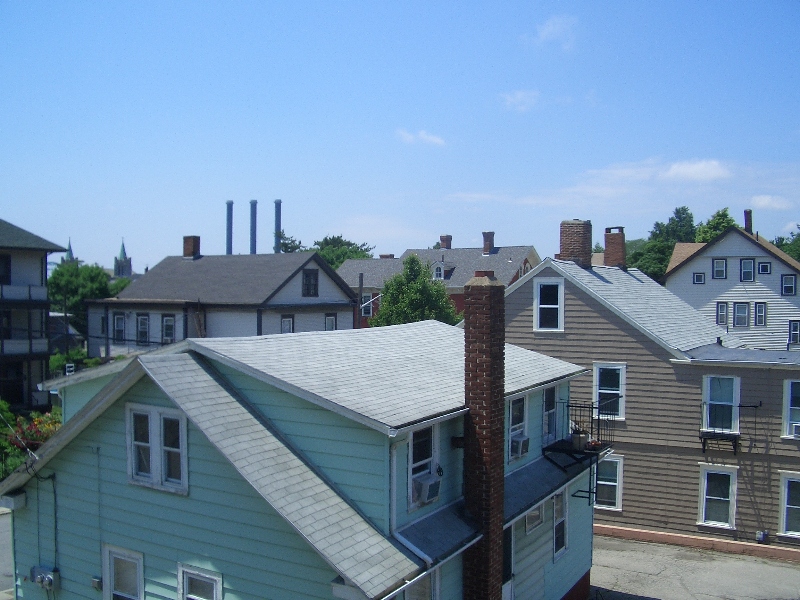
One day (hopefully before I leave for Turkey next month) I'll get around to posting albums of New York and Rhode Island on the photos page of this site, but for now I'll just put up a photo of the stacks from my kitchen window.
Ismail from Bursa wrote in yesterday to correct a mistake I'd made with my photos from Azerbaijan--one of them was a shot of Istanbul! The correction has been made and I've also added a few photos in case anyone is interested. Thanks, Ismail!
Privatizing profit, socializing loss
Last week the Senate voted down a proposal to increase the tax burden of oil companies. The vote was 51-43, nine short of the 60 votes Democrats would need in order to override a presidential veto.
The measure would have repealed $17 billion in tax breaks for oil companies as well as levying a 25 percent windfall profits tax. Companies could have avoided the tax by investing the money in renewable energy development or in new refineries.
According to Bernie Sanders, a supporter of the bill, the five largest oil companies have made $600 billion in profits since George W. Bush became president.
When I was a kid growing up in Michigan, US taxpayer money was used to bail out Chrysler because the move was deemed necessary for the larger good--keeping Americans employed. When I was in college, President George H.W. Bush agreed to bail out the Savings and Loan industry (and his son Jeb, whose Savings and Loan had gone bankrupt), again with taxpayer money. Now, more government money is being used to bail out the mortgage industry, including Bear-Stearns.
It's an old adage, but it's true: American companies are opposed to socializing profit, but have no problem with socializing loss. If Exxon and the rest of the oil industry were on the brink of bankruptcy right now, don't you think they would be looking to the government for help?
I say: what's good for the goose is good for the gander.
Hi everybody--
I'm in Rhode Island now, where I'll be spending the next two weeks. While I'm here I'll be relaxing and (weather permitting) spending some serious time by the ocean, but also planning my upcoming trip to Russia. It looks like I'll be arriving in Russia around July 18th. In all, I'll spend about two months there, one month each (or so) in Kazan and Ufa.
I'm posting queries for accommodation on a number of listservs, but thought I might as well include something here: if anyone reading this has any contacts in Kazan and (especially) Ufa who could help with accommodation, I'd really appreciate hearing about it. Just drop me a line at jim@jhmeyer.net. Also, if anyone is going to be in the neighborhood (or if you know someone who is), please drop me a line!
Thanks,
Jim
I've uploaded some more pictures from Turkey (a short trip from February of 2008). They can be found here.
Last day in Morningside Heights
I'm leaving New York tomorrow, unfortunately. Don't get me wrong--I'm looking forward to spending the next two weeks in Rhode Island. But at the same time, I already feel nostalgic for the year that is coming to an end tomorrow.
When I received the Harriman fellowship last year, I originally told them that I could only do it for one semester. I'd already received the NEH-ARIT fellowship for seven months in Turkey, and decided to spend one semester in New York and then the second semester in Istanbul.
Fortunately, smarter people than I got wind of my plans and advised me to defer my Turkey research until this summer and spend the entire year at Columbia. The folks at ARIT were kind enough to agree, and so I arrived in Morningside Heights last September with a full ten months in New York ahead of me.
I can't say that it feels like I have really been living in New York since then--it feels more like I've lived in Morningside Heights, which is where Columbia is located. I didn't really go downtown that much, or have a very wild nightlife. Mostly I worked, or went to the gym, or biked, or walked around my neighborhood, or traveled, but I never felt like I was living a very "New York" lifestyle. On those occasions when I did go downtown, I always felt like that was the "real" New York, while Morningside Heights (sometimes called "Boringside Heights") was just Columbia.
So, other than the places I could walk to (Morningside Heights, Upper West Side, and Harlem), I didn't hang out much in New York. But nevertheless, I grew attached to my neighborhood, to the doormen and janitors in my building, to everyone I met at Columbia. I especially loved riding my bike through Central Park, and it was also pretty cool that the Columbia gym had a sauna.
Mostly, I really liked my job. The Harriman Institute basically let its postdocs (there were four of us this year--three in the Russia-Islam project) do what we wanted. We all had a set of nominal tasks, but mostly we were allowed to further our own research in whatever way we wanted. For me, this was a much appreciated gift. I was given a cubicle to work in, which I appreciated, but I mostly worked at home because my housemate (a postdoc in biology) stayed at the lab all day and until three o'clock every morning.
So, I was able to get a lot done this year. I gave a number of talks--two at Columbia, a couple in Japan, one in New Orleans, another in Istanbul, as well as a couple of others I can't remember right now, and also did a lot of other fun things. Mostly, I talked about various parts of my work to different people at different times. This helped me a lot when trying to figure out what to do with my dissertation. Hopefully during the upcoming year I'll be able to get a lot of these plans down on paper, and make some inroads into doing what I want to do with it.
When I was in graduate school, I always thought that life would never get easier. While grad school usually doesn't pay much, it does give you plenty of time. This year at Columbia, however, has been even better. Never mind the generous salary, the amount of time I was given to work entirely upon my own research was fabulous. The work that I was asked to do was also stimulating, and involved making the acquaintance of lots of amazing people. All in all, it's been a super year.
So now, my travels begin. Two weeks in Rhody, followed by a trip to Castle Park, followed by Istanbul, then Russia, then Georgia, then Russia again, then Turkey, then the US, then Turkey again, then the US again, then Turkey again, then Russia--all by next Summer, and that's not including vacations.
So, it's saddening to leave New York, and I must admit at my age I'm getting tired of living on the road. But you have to do what you have to do, and I'm sure the next year will be enjoyable and educational.
For now, though, even though the weather has been not just sticky, but adhesive, and my apartment couldn't be louder if I lived in the middle of a racetrack, I'm really going to miss this place.
End of the Exile?
It looks as if the Exile, which was once (at times) one of the funniest and most interesting expat publications anywhere, is shutting down. After eleven years of publishing in Moscow, the newspaper that mixed punk rock with political analysis is apparently on the brink of getting closed by Russian authorities. Mark Ames, the editor and founder of the Exile, has written on his tribulations in Radar (here and here), while Exile contributor (and National Bolshevik leader) Eduard Limonov has likewise posted a piece on the closing at grani.ru.
While the Exile has lately been only a shadow of its former self, it's a real shame to see the paper close down. Editors Mark Ames and Matt Taibbi did their best to prevent the paper from being taken seriously by political analyst/international relations types, but the Exile has nevertheless often been a great source of original and detailed analysis of politics in the former USSR. In particular, Ames and friends have been very good at exposing the hypcrisy and double-talk surrounding much of the American media coverage of Russia, including the Moscow-based foreign press corps.
I don't know about other folks who work on Russia but I'll miss reading the Exile, even in its current truncated form.
Dominik Hasek retired from professional hockey today, for what seems like the fifth time in the past six years. The announcement is playing second fiddle in the Detroit papers today, because the Pistons have also announced this afternoon that Michael Curry has been hired to replace Flip Saunders as coach.
Since I was living in Turkey for most of the nineties, I missed the first two Red Wing championships of the modern era (that is, the first two cups they won after the 1950s). I saw the third one, though, in 2002, when Hasek played strong through the playoffs and led the Wings to their third championship in six years. Watching the 2002 Stanley Cup finals with my brother at his home in Los Angeles remains one of my favorite sports memories of all time.
This year, Hasek traded goaltending duties with Chris Osgood all season long, but was our starting goalie going into the playoffs. After a couple of wins against Nashville (I still can't believe the NHL actually has franchises in places like Nashville, Tampa Bay and Carolina), Hasek dropped a couple of games and was replaced in net by Osgood. Osgood played well throughout the playoffs and Hasek never appeared in another game.
Good luck, Dominator! Thanks for the memories!
More on America's proposed long-term alliance with Iraq
McClatchy is reporting that the United States is demanding fifty-eight military bases as part of a military agreement between Washington and Baghdad which would facilitate America's long-term occupation of Iraq. Currently, the United States operates about thirty major bases in the country.
The current UN mandate through which the US is occupying Iraq expires on December 31 of this year. American officials are therefore reportedly determined to conclude the alliance with Iraq by July 31, in order to allow time for parliamentary deliberations in Iraq.
No such interest in parliamentary concerns will likely emerge in the United States, however. By not officially classifying the alliance as a "treaty," the Bush administration apparently is planning on bypassing the Senate's constitutional right to review and approve any treaties between the United States and other countries.
While the proposed alliance has been roundly ignored by the major newspapers and television stations in the United States, it has elicited widespread protest in Iraq, the subject of a May 31 posting on this site.
As far as I know, Juan Cole has written more about this than anyone else in the American print/internet media.
The Bush administration is attempting to set up a long-term military alliance with Baghdad. According to Patrick Cockburn of the Independent, the alliance will include no formal treaty, so Bush will not be obliged to submit it to the Senate for approval. Cockburn also reports that, in order to convince the Iraqi government to accept the deal, Washington is holding more than fifty billion dollars of Iraq's money hostage.
Why are the media not talking about this? Is this not a newsworthy story? As Juan Cole points out in his Friday posting, widespread protests taking place last Friday across southern Iraq in opposition to this alliance were hardly reported upon at all by newspapers and television channels in the United States.
Recent Events in Turkey
Turkey's Constitutional Court ruled nine to two yesterday to overturn constitutional amendments adopted by the Turkish parliament in February allowing women to wear headscarves in class at the country's universities.
The headscarf issue has been a bone of contention in Turkey for years. In the 1990s, universities were allowed to set their own rules regarding the wearing of headscarves (meaning only a scarf tied under the chin--full-length chadors have never been allowed). After the government of Necmettin Erbakan was overthrown in 1997, however, headscarves for students at universities were banned altogether under the new and more aggressive secularism embraced by the state as part of the so-called "February 28 administration."
In February of this year, the ruling AK Party of Turkey tabled a bill--which passed with the votes of 411 deputies or 80 percent of the Turkish parliament--allowing women to wear headscarves at universities.
The ruling overturning this law is hardly surprising given Turkey's current political climate. In March of this year the Constitutional Court accepted a case filed by the country's top prosecutor asking that the AK party be closed and that seventy-one party members--including President Abdullah Gül and Prime Minister Tayyıp Erdoğan--be banned from politics for a period of five years. A decision on the closure of the AK Party and the exclusion from politics of the seventy-one members is expected later this year, probably in the early Fall.
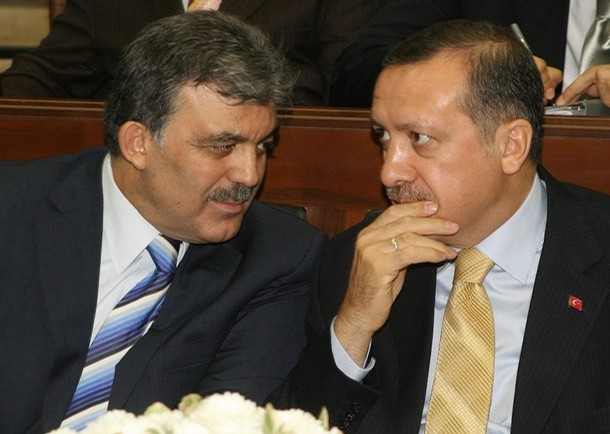
Indeed, over the last decade every time a party branded as "Islamist" was closed in Turkey a new, more "moderate" party was allowed to open in its place. After Erbakan's Welfare (or Refah) Party was closed in 1998, a new party--called Fazilet (or Virtue)--was allowed to open (without Erbakan) the following year. When Fazilet was itself banned in 2001, the AK party (the initials stand for "Adalet" and "Kalkınma," or Justice and Development) was allowed to open shortly thereafter, with Gül and Erdoğan (who had been considered to be among the more "moderate" spokesmen for Refah and Fazilet) as party leaders. Once again, the country's "secularists" are banking on the patience of the supporters of Refah, Fazilet, and AK, whose parties have consistently won large blocs of votes in elections (including two straight majorities for the AK Party in parliament). This, however, is in my opinion a dangerous assumption to be banking upon. One wonders how long people in Turkey will support the concept of democratic change after seeing one government after another removed from power by such means.
One final word: when discussing these issues, it's important to be careful about the terminology we use. Gül, Erdoğan, and other AK Party leaders are often referred to in the media (such as here) as current or former "Islamists," whatever that means. Meanwhile, their opponents are branded as "secularists" (without the quotation marks). This dichotomy can be rather misleading, however. Indeed, whereas in the United States we understand the concept of "secularism" to mean a separation between religion and the state, in Turkey the concept is based upon the French concept of laicism and state control over religious institutions. For Turkish "secularists," the state must be involved to engage and counteract religion whenever Islam (and Islam is the only religion which frightens Turkish secularists) is thought to have become too influential. Turks who oppose such measures are, in Turkish political discourse and in western media reporting on Turkey, referred to as "Islamists."
This concept of secularism is thus very different from the concept of secularism held in the United States. By the same token, individuals considered to be "Islamists" in Turkey are often (though not always) targeted because of their efforts to lessen state control over the public observance of practices considered to be "Islamic." These are distinctions worth keeping in mind as political maneuvering in Turkey continues towards the Constitutional Court's ruling on the future of the AK Party (and, by extension, the current government) later this year.
Detroit sports round-up
Well, they did it. Even after losing what Bill Simmons would describe as a "stomach-punch game" in game five of the Stanley Cup finals, the Detroit Red Wings managed to win game six on the road in Pittsburgh and claim their first cup since 2002. I couldn't be happier. Particularly impressive was that the road win came after their brutal defeat in game five at home (see posting below), after the Wings had been 35 seconds away from capturing the cup in Detroit. You really have to hand it to the Wings' experience. A younger team might have cracked after that bummer of a game five, which Detroit lost in the third overtime. And the final two minutes of game six were almost unbearable to watch, especially after Jiri Hudler's penalty with 1:47 to go. The final Crosby to Hossa shot on Osgood in the closing seconds reminded me a little of the Tennessee Titans losing to St. Louis in Super Bowl XXXIV when Kevin Dyson was tackled at the one-yard line. Close, but we got out of it!
Games five and six were two of the best hockey games I'd seen in a long time. Indeed the first overtime period of game five and the third period of game six were probably the two most competetive and exciting periods I've watched since college (which isn't saying much, because I didn't watch a lot of hockey when I was living in Turkey--and since I've been back in the US the NHL has mostly been on cable channels I don't get). Anyway, it seemed clear that the teams were quite evenly matched, and for a lot of the time they raised one another's performance--a really nice change from watching the Pistons!
Speaking of the Pistons, there's all sorts of talk in the Detroit media about who among the starters will be traded (see here and here). Rasheed and Chauncey are the two most frequently mentioned. Even though Rasheed is my favorite player, I think it's time to bring things to an end with him. The Pistons don't need a seven-foot jump shooter. We need a hungry, semi-veteran power forward or center who is willing to bang bodies without being too much of a drop-off from Rasheed's defense. But you don't replace somebody with nobody. There's no point in trading Rasheed unless it's actually going to make the Pistons better.
I think the Pistons should hold off on trading Chauncey until the second half of next season. As good as Rodney Stuckey looked at times in the playoffs, that's not much to serve as a basis for trading away Chuncey Billups. While Stuck has often been impressive offensively, I'm not sure I trust him to run the offense yet. Lindsay Hunter as player/coach and Rockin' Rodney are not, I think, capable of running things. Stuckey should get another half-season of tutelage, then perhaps the Pistons could try to deal Chauncey.
The one player who shouldn't be traded is Tayshaun Prince. Prince is a "glue guy," someone who helps the team in a lot of intangible ways. He's the one player remaining who, in my opinion, best exemplifies the "spirit of 2004." Like Joe D. was for the Bad Boys, Prince is the one player I'd like to see stay around after the team is broken up to teach incomers what it means to be a Piston.
Depending on what we get in return, Rip Hamilton might be expendable. Same for Antonio McDyess, although it would be a real shame to see him go. Poor Dice--he might have been better off if he'd ditched Detroit after last season to sign with Cleveland. But hopefully, Joe D. will spend his assets wisely. There's no need to blow up the core, but I do think that by the end of next season forty-percent of the starting lineup should be different.
In an article about Bill Clinton's role in the Clinton campaign, Clinton campaign aides are reportedly unhappy about what they consider to be the bad press the former president often received on the campaign trail.
Mr. and Mrs. Clinton’s aides have complained all year that the former president has received uneven coverage in the news media, with attention mainly focused on flare-ups and gaffes and not on his daily successful campaigning.
"Ninety-nine point nine percent of the time, he has been the happy warrior on the campaign trail,” said Terry McAuliffe, the Clinton campaign chairman and a close confidant of Mr. Clinton’s. “The other stuff doesn’t make news.”I wonder if one reason why the press focuses so much upon Bill Clinton's gaffes is because people find it unseemly that a former president would campaign so actively and so negatively in a Democratic primary.
Stomach-Punch
I'm not yet able to talk about last night's game. In fact, it traumatized me so much that I've spent the last hour or so just sitting and working on the Turkey photos for this website, which I've posted here. They're not finished, but I thought it would be better to finally put some up.
The Wings were thirty-five seconds from the Stanley Cup. They had the cup in the building and then boom--the Penguins scored.
The first overtime was so great, so exciting, I started feeling thankful just to be watching it. Of course, the Wings were taking most of the shots. The Penguins were down, having lost a couple of players to injury in the final minutes of regulation. I thought a few times about where I was the last time the Red Wings won the Stanley Cup, in 2002--I had been visiting my brother in Los Angeles at the end of a cross-country drive. We cheered the Wings and then drank to Detroit, the city made so happy by the victory. But then I also started thinking about an acquaintance of my sister, a Red Sox fan whose hands had literally been on the champagne bottle in 1986. Would this game end that way? It seemed unlikely, given the absurd number of shots the Wings were getting. But for every six or seven shots Detroit would take, Pittsburgh would get one or two, and all it takes is one shot.
And, towards the end of three overtimes, that shot came. There was no Igor Larianov to save the day this time.
In the latest issue of the Central Eurasian Studies Review (Vol. 7/ number 1), Sean Pollock writes a summary of two workshops held at the Harriman Institute this year as part of the Russia-Islam project I was working on. One was entitled "Russia and Islam in the Archives of Eurasia: An International Workshop," and is discussed on pages 20-23 of the issue, and the other was called "Russia and the Ottoman Empire: Transregional and Comparative Approaches," and is reviewed on pages 30-33. I was the organizer of the second of these workshops.
Today is all about the Wings, but I'm wearing a Nordiques shirt
Today is the fifth and hopefully clinching game of the Stanley Cup finals, which features the Detroit Red Wings and the Pittsburgh Penguins. I really wish I had a Wings shirt to wear today, and I've wanted to order one throughout the playoffs, but the only ones I've been able to find online were red, and I want a white one. Also, I don't like the ones which have "Detroit Red Wings" written on it, to clue in anybody who can't understand the wheel and wing logo. I just want a simple white t-shirt with the Wings logo on it. Is that so hard?

I'm sure the Nordiques had good reasons for leaving. I don't know--I was in Turkey when it happened. But for me, their move represents a lot of terrible changes that have occurred in the NHL since I was in college. Maybe other people can think of crimes that go back earlier, but the first major bummer that the league inflicted upon its fanbase was allowing the Minnesota North Stars to leave its devoted fanbase and depart for Dallas, where they became the Dallas (south?) Stars. Now, I have nothing against the Dallas Stars--they're a good team and they've had some success over the years. But I could never understand how the league could allow the North Stars to leave, especially on the heels of their galvanizing eighth-seed trip to the finals, where they lost to Mario Lemieux's Pittsburgh Penguins in six games? It was a true bummer, and the transfer of the team would foreshadow subsequent stinker moves, like the Nordiques from Quebec City (1995), the Winnipeg Jets to Phoenix (1996), and the Hartford Whalers to "Carolina" (1997).
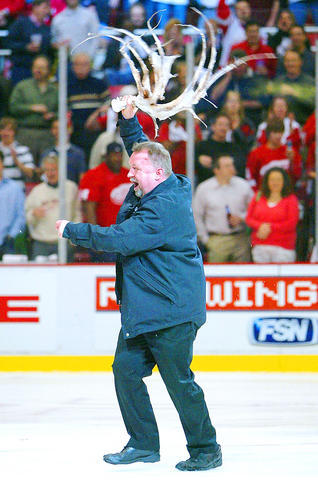

The damage that has been brought upon the league is, in my opinion, largely the fault of the commissioner, Gary W. Bettman.The first American commissioner of the NHL, Bettman has inflicted considerable damage upon the league since getting the job in 1993.
So I've got the Nordiques shirt on instead of the wings shirt I wish I had right now. I know, it's a pretty lame substitute, but still--it's my own fault for being a fair-weather fan.
Nevertheless, it's a nice looking shirt and logo. Moreover, I've always had a special fondness for defunct sports teams and leagues (don't get me started about the Michigan Panthers).
In any case here is the main message: despite Bettman's incompetence, the Red Wings have gotten me excited about hockey again! Go Wings!!!
The non-legacy of Larry Brown
Last night the Pistons lost game 6 of the Eastern Conference championship to the Boston Celtics, and thus lost the series. Like a lot of Pistons fans I'm disappointed, but not surprised. How many of us really believed we had a shot at the title this year, anyway? Nevertheless, I was hoping we could at least get past Boston. As I wrote in an earlier post, in Boston we had the perfect matchup for the team's weakest link, Flip Saunders. Indeed, Celtic coach Doc Rivers was probably the only coach left among the final four teams against whom Flip had a fighting chance.
The coach is important in the NBA, even more important than in other sports. Mediocre coaches win super bowls, NCAA basketball titles, the world series, whatever. But rarely in the NBA. The winning coaches from the past two decades are all people who've struck me as smart and capable of motivating a team: Gregg Popovich, Pat Riley, Phil Jackson, Larry Brown. (I don't really know too much about Rudy Tomjanovich, who coached the Rockets to two championships during the MJ interregnum--I was in Turkey at the time. Perhaps he's an exception, I can't say.)
The Pistons had a coach that I liked, years ago. Rick Carlisle took a Pistons team that was supposed to finish last in their division and instead won fifty games with them two years in a row. In 2003, the Pistons made it to the conference finals, only to be swept by New Jersey. Nevertheless, it was an astonishing turnaround.
Carlisle was fired--I think the official reason was that he was rude to people--and Larry Brown was brought in. Larry was a coach I immediately liked. So smart, articulate. Moreover, everyone on that team seemed to add a wrinkle to his game under Larry. Chauncey started acting like a real point guard, Ben Wallace started shooting (under Carlisle, Wallace had been forbidden from shooting, but Larry forced him to). In 2004, the Pistons won a championship, then lost in seven to San Antonio in 2005.
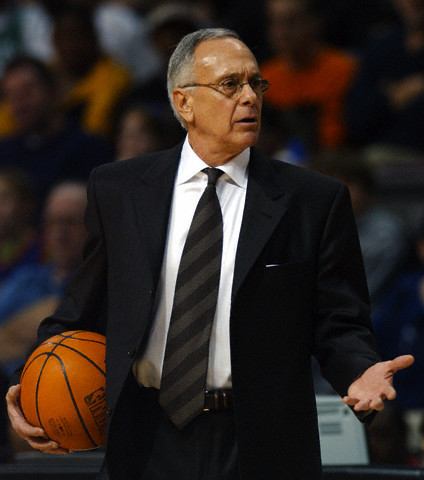
Could the Pistons have won another championship with Larry? Nobody knows, of course. What we do know is that the Pistons fired Larry, hired Flip Saunders and things haven't been the same since. The point is: good coaches are rare, and in the NBA it is almost essential to have a good coach in order to win the title. When you've got one, you should try to hang on to him. Hindsight is 20/20, of course, but it now seems pretty obvious that the Pistons made a monumental mistake in getting rid of Larry Brown.

Maybe we can wait a year until Larry leaves Charlotte.
Or maybe this team has just missed its chance.
The BBC is reporting that a customs official working at Tokyo's Narita airport placed 142 grams (about five ounces) of marijuana in the side pocket of a bag belonging to a passenger arriving at the airport. This was part of a test to see if the airport's drug-sniffing dog would be able to detect the scent. They weren't, but when the time came to retrieve the weed, the customs official--who was apparently suffering from some sort of short-term memory loss--could not recall in which bag he had put it.
Anyone finding the package has been asked to contact customs officials.
"This case was extremely regrettable. I would like to deeply apologise," said Narita International Airport's customs head Manpei Tanaka.
No one has yet stepped forward to return the contraband.
Iraqi Protest against Proposed Security Deal
The Washington Post is reporting that thousands of Iraqis are taking to the streets in opposition to a proposed US-Iraq security pact that would keep American soldiers in Iraq for years.
"No, no to America. No, no to the occupation," demonstrators waving Iraqi flags and banners chanted after afternoon prayers in Sadr's Baghdad stronghold of Sadr City. "Yes, yes, Moqtada. Long live al-Sadr."
Chanting "No, no to America. No, no to the occupation," Iraqis burned an effigy of Iraqi Prime Minister Nouri al-Maliki, which they dressed as Saddam Hussein.
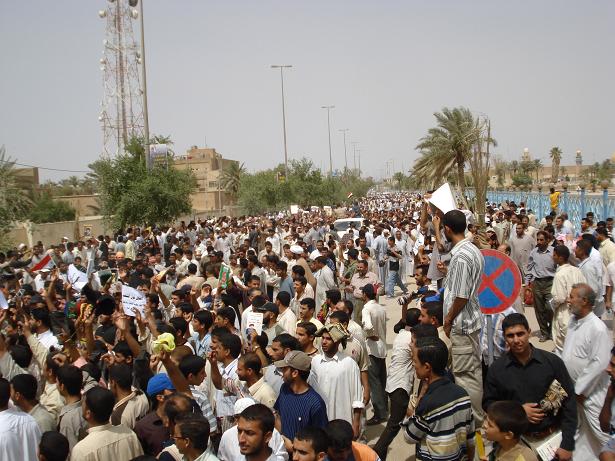
[ps. Juan Cole has posted a detailed analysis of these protests in his May 31 posting on Informed Content]
McCain and Iraq
Barack Obama has criticized John McCain for (once again) making factual errors with respect to the foreign affairs of the United States, McCain's supposed strongpoint. On the heels of confusing Shiites with Sunnis and arguing that Iran is hosting anti-Shiite al-qaeda sympathizers (which the media now ubiquitously refer to simply as "al-qaeda"), McCain is now asserting that US troops are at pre-escalation (or pre-"surge") levels.
However, as the Washington Post points out in this story
All of this is true, but seems a little beside the point. The important part of this story, in my opinion, is McCain's belief that, despite the fact that "it's hard and it's tough and there will be setbacks," the US occupation of Iraq is going to conclude peacefully.
There will, of course, be intervals of less violence during the course of the occupation. People get tired of fighting, after all. However, it is short-sighted to think that, even if violence trails off at times, that we are headed towards an Iraq that is tangibly more peaceful than it is today.
Indeed, the continued American presence in Iraq is a polarizing one, and it is polarizing Iraq in two important ways. As is often the case with foreign interventions, the introduction of the United States into Iraq has heightened tensions which previously were not very pronounced. The one thing about Iraq that our government and media "knew" prior to the invasion was that there was no such thing as Iraqis. From day one, we have approached the country as a sectarian jigsaw puzzle composed of Sunnis, Shiites, and Kurds. Why then would Iraqis act any differently when articulating their needs to Americans, or to each other? People speak to power in the discourses that are imposed upon them. Power leaders in Iraq looking for support employ these discourses and now Iraqi politics is largely dominated by them. The American presence has created tensions where they did not exist beforehand.
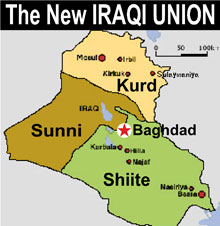
If we stay in Iraq for four more years, there will certainly be quiet periods. The months immediately following the American military escalation of last year constitute one such period. But McCain is out of touch if he sincerely believes that this mission is ever going to be "accomplished." One way or another, we will leave. The question is how much long-term damage we will have inflicted upon the Iraqi people during the course of our occupation. In my opinion, the longer we stay there the worse they'll be in the end; more divided, and more embittered against one another not only with respect to sectarianism, but also with regard to the question of who gained power (and money) via the Americans and who didn't.
Book review: Nicholas Breyfogle's Heretics and Colonizers
I've been pretty busy lately preparing to leave New York, and one of the many tasks I've been tackling has been returning to Columbia's library the dozens of books I've got stacked all over my apartment and office. There are a number of books about which I'd like to write a few lines, without going through the bother of writing a full review, and this site seems like a good place to do it.
Nicholas Breyfogle's Heretics and Colonizers: Forging Russia's Empire in the South Caucasus (2005) focuses mostly upon the experiences of Dukhobor colonizers in the south Caucasus, although other Christian sectarian groups, such as the Molokans, are also discussed. There were a lot of things about this book that I really liked, and in general I believe that the appearance of so many studies in recent years which examine the empire from the perspective of the regions has been a great development for the field of Russian history. However, there are also a couple of points about this book that I'd like to bring up, mainly with respect to its depiction of the relations between the sectarian colonizers and the indigenous populations.Over the past couple of decades, there has been a great expansion in scholarship pertaining to the more peripheral regions of the Russian Empire and their (often non-Russian) populations. In Heretics and Colonizers, Breyfogle discusses the changing relationships between the tsarist state and a number of pacifist (Christian) sectarian communities in the nineteenth and early twentieth centuries. The communities are send to the newly conquered Caucasus as colonizers, originally as a punishment for their non-conformist behavior. As Breyfogle writes on p. 46:
Over time, however, tsarist officials working in a variety of departments came to depend upon the sectarian communities in the realization of their imperial project. Sectarian villages were instrumental in the setting up of the regional postal system (p. 132), provided material and medical support to Russian troops in the region (139), and dominated the regional transportation trade (104-107), in addition to farming the land and providing sundry other services to tsarist administrators and officers. In return, sectarian communities often became quite wealthy.
The main problem with Breyfogle's treatment of sectarian-indigenous relations is that the colonialist narrative is the only one presented. When violence occurs between colonizers and indigenous populations, the colonialist undertaking itself is ignored while violence is presented as having originated with the native response to colonization. Thus, incidences of violence between native populations and sectarian colonizers are described primarily in terms of native violence and colonial response. The Dukhobors, writes Breyfogle, abandoned their pacifist ideals and "started to meet their attackers on their own violent terms" (194). The colonizers "began to fight back" (194), appropriated "local forms of violence" (197), and "reacted" with aggression towards Muslims in the region (197), a "response" which, Breyfogle writes, was undertaken with the hope of "ward[ing] off future mistreatment" (197).
The issue that I have with all of this lies in Breyfogle's presentation of this violence as originating with the native populations, while the violence inherent to colonialism itself is, for the moment, left to one side. Tsarist forces had taken the region by force of arms and had brought in Russian populations to settle the region. Land which had once been freely used by native populations was now the property of the colonizers and the state. This was all part of the violence of colonialism, yet in Breyfogle's account it appears as if the violence all began with the Muslims.
My point here is not to put all of the blame upon the sectarians for this violence, and absolve the indigenous populations of any responsibility for it--I'm not interested in engaging in that sort of scholarly finger-pointing. However, the violence of colonialism itself cannot be ignored when discussing the types of response it engenders.
Indeed, Breyfogle's discussion of colonialist-indigenous violence in this respect is not terribly different from the attitudes of the colonial administrators in Russia and elsewhere responsible for administering colonized populations. This sort of narrative is also common to many accounts of violence between Israel and the Palestinians, in which Palestinian violence against Israel is presented as an opening salvo, rather than as a response to conditions that have been imposed upon them.
It seems to me that a far more compelling argument that Breyfogle could have made here would be one which relates to the nature of colonialism itself. I wish Breyfogle had used this information to argue that the violence of colonialism had managed to turn even these settlers, who had often suffered greatly for their steadfast adherence to pacifist principles, into violent colonizers. This, I think, is one of the great lessons of Breyfogle's book, but it is an argument that is never made. Rather than bending over backwards to absolve the sectarians of their violence by constantly presenting it as a reluctant response to the violence visited upon them by Muslims, Breyfogle could have served this topic much better by explicitly demonstrating how the violence of colonialism can corrupt even the most idealistic and pacifist of communities.
To conclude, there is a lot that I liked about Breyfogle's book, even if I haven't talked very much about the book's many good points here. Moreover, I should emphasize that the question of colonizer-native relations is a minor one in this book. The arguments that Breyfogle does make and the topics which receive greater attention from him are generally handled very well, and the book is a valuable contribution to Russian imperial historiography. Nevertheless, for people who work firsthand upon the colonized populations of the empire (or other empires), the issue of native-colonizer relations is an important one. Even if the non-Russian response to colonization is not of primary concern to Russianist historians, this issue must still be treated with more nuance.
Re my posting below on John Edwards, I do think that even if his endorsement is late, the timing is still good as it knocks Obama's (already largely ignored) WV defeat completely out of the news cycle.
NBA Chatter
The Celtics-Cavaliers game is all tied up with just a few minutes left in the third quarter. As a Pistons fan, I'm cheering for a three-overtime bloodbath. I'd like to see Boston come out on top tonight, followed by Cleveland winning a three-overtime slugfest at home, followed by Boston's ultimate triumph in a four-overtime heartbuster at home.
I'm not afraid of the Celtics. None of them have ever won anything and their coach is even worse than Flip Saunders. Imagine that--Flip Saunders in a coaching advantage this deep in the playoffs!
No, I remember last year. I don't care if the Pistons would get homecourt advantage versus the Cavs, it's just not worth it. LeBron is always capable of taking over, and no one in Boston can do that.
Then again, I was totally wrong re the Orlando series, so what do I know?
About last night: I really liked Rodney Stuckey's slashing. So good to have a slasher at last! Hopefully Flip won't bench him once Chauncey is back--but with Flip, anything is possible.
Edwards and Obama
Is anyone else as underwhelmed as I am by John Edwards' endorsement of Barack Obama? I mean, it's a bit late, isn't it? I liked Edwards and even vaguely supported him back when he was in the race--I liked the fact that he alone among recent Democratic candidates was interested in talking about poor people--but he could have had much more of an impact if he'd made this endorsement back when the result of the contest was in doubt. Superdelegates are trickling in for Obama, and before long the race will be over.
The good news for Democrats is that they have picked up a third straight seat in a Republican district, winning a special election in Mississippi's first district. This is a good sign for Democrats, and will perhaps offset what appears to be obvious racist opposition to Obama in many instances. Indeed, some of this opposition also appears to be anti-Islamic, based upon the lie that "Barack Hussein Obama" is Muslim.
NFL Whitewash
Goodell and the NFL are indeed doing a whitewash (see post below) but not everyone is convinced. On the other hand, here is a perfect example of the corporate (apologist) take that will most likely win out.
Goodell has decided that information provided today by spygate figure Matt Walsh falls within the list of offenses for which the Patriots have already been punished.
That's not surprising, especially as they had announced as much last week.
My prediction is that there will be some pressing of Goodell, especially since Senator Arlen Spector has gotten involved. Ultimately, however, this will all be forgotten. A country as messed up as ours is right now needs to prioritize.
I miss the USFL!
Nixon in Foxboro
Patriots coach Richard M. ("Bill") Belichick can probably look forward to getting off the hook again once NFL commisioner Roger Goodell finishes his job of whitewashing the New England cheating scandal known as 'spygate.' Indeed, according to an ESPN report, new tapes provided by former New England video assistant Matt Walsh have already been dismissed as having little importance.
Upon receiving the tapes last week, NFL spokesman Greg Aiello said: "This is consistent with what the Patriots had admitted they had been doing, consistent with what we already knew."
Goodell, whose league enjoys an anti-trust exemption from the US government, has been trying for some time to make this scandal go away. On September 20, the NFL announced that it had destroyed all of the tapes it had obtained during its investigation of the matter, and in his Super Bowl news conference on February 1, Goodell argued that New England's stealing of their opponents' signals had "probably" not benefited them anyway.
Oh really? All three of New England's super bowl victories were by just three points. They beat the Steelers by just seven in the AFC Championship in 2002--one of the games for which it is now clear they used stolen (videotaped) signals. It is preposterous to argue that knowing what play the opposing team is going to run was not a significant advantage, or that having such an advantage could not affect the outcome of a game. Of course it can, and it's precisely in order to avoid opening this can of worms that the NFL quickly rid itself of the incriminating tapes after receiving them from the Patriots last fall.
Obviously, it is impossible to go back in time and see what would have happened if the Patriots did not have this advantage. Would they have won three super bowls without the stolen signals? We'll never know. And this is what the Patriots and Bill Belichick have stolen from NFL fans everywhere. They have cheated us all.
As a penalty for violations for which Belichick has already admitted to, he was fined $500,000 and the Patriots were fined $250,000 and they lost a first-round draft pick. By comparison, Chris Andersen of the NBA had to sit out two years for using recreational (non-performance enhancing) drugs. Barry Bonds will likely go to jail for lying during his steroid hearings. And Belichick? He was named coach of the year.
But who has done more damage to the game they represent? Bonds and other players suspected of steroid use were under professional pressure to improve their production. Chris Andersen's offense had nothing to do with what he was doing on the court. Belichick, meanwhile, knowingly and repeatedly cheated. Unlike Bonds, who could at least claim that he was only doing what 90% of his colleagues were also involved with, Belichick and the Patriots appear to be the only ones who have been involved in this type of behavior (at least they are the only ones who have been caught). He wasn't doing it simply to keep up with the others, he was doing it to get ahead--and he did.
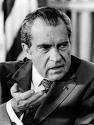
Some people will no doubt see it as ironic that Belichick and the Patriots would cheat, given the fact that they are perennially one of the best teams in the league. But there's nothing ironic about it. Belichick is a successful coach because he'll do anything to win. This also led him to compulsively use any advantage possible, even if it meant cheating. All of this, despite the fact that he probably would have won anyway. Sound like anyone you know?
Maybe we can't impeach Belichick and Goodell, and probably we can't do anything about this at all. Goodell will sweep it all under the carpet and the professional sportswriting punditry will likewise downplay or dismiss it (with Bill Simmons playing the role of apologist #1).
There are, of course, many more important acts of corruption and negligence that we should be devoting our attention to--things that have far greater significance than this. But as someone who has followed professional sports in this country since the mid-seventies, I resent Belichick's theft of something that rightfully belongs to all NFL fans--the chance to really know which team was best. In my book, Tricky Bill Belichick and Goodell the Lame are more of an embarrassment to sports than Andersen and Bonds will ever be.

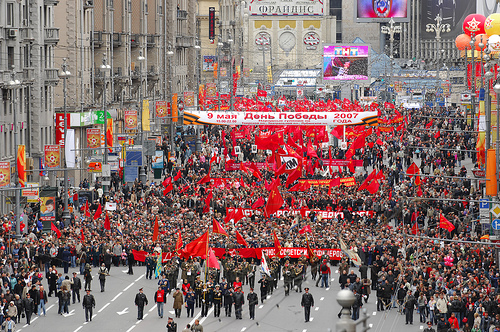
Today is Victory Day (den' pobedy), one of the most important holidays in Russia and elsewhere in the former USSR. The Voice of Russia will be broadcasting patriotic music for much of the day, if you're interested in listening. As most of you know, the Soviet Union lost approximately twenty million soldiers and non-combatants, and the war lives on in people's memories to a much greater extent than in the US.
More on the Dem Race
CNN is reporting that Hillary is pronouncing herself as the candidate of white Democrats.
Clinton cited an Associated Press poll "that found how Senator Obama's support among working, hard-working Americans, white Americans, is weakening again, and how whites in both states who had not completed college were supporting me."
This is really shameless, but unsurprising coming from the Clintons. I know that people will make apologies for her use of this kind of rhetoric, but I think it's totally inappropriate.
By now, I think it's become obvious that the Clintons will stop at nothing to win this contest. The only way to end matters is to force them out: the superdelegates have to jump ship, publicly switch their support to Obama, and push him over the top mathematically. Howard Dean is kidding himself if he thinks Hillary is going to drop out in June, after the last primary is held. The Democratic convention will not end until August 28, folks. Are Democrats really prepared to wait that long to choose a nominee?
BTW: State officials in Michigan and Florida, seeking to increase their influence in the presidential contest, lost their votes at the Democratic convention by holding their primaries early. Yet, in the Democratic race, it is the states holding their primaries at the end of the season which have been receiving a disproportionately high amount of attention. Nice job, people!
12:43 pm
Apropos my posting last night on the list of superdelegates currently pledged to Hillary, I should have also included the list of currently unpledged superdelegates. I didn't see any of my elected officials on this list, but if any if yours are there I suggest you get in contact with them.
By the way, today marks the sixty-third anniversary of the German surrender. In Russia (and much of the rest of the former USSR), Victory Day (den' pobedy) is a major holiday and is celebrated on May 9th (time zone differences on the day of surrender account for the discrepancy). Here is a YouTube clip from last year's celebrations on Red Square in Moscow. C днем победы! Happy Victory Day!
Contact your elected superdelegates
Not surprisingly, the punditry is declaring it the end of the line for Hillary. Hillary, however, has settled into "Bunker Hill" mode, insisting that she will keep at it until the convention. Part of this is probably bluster, and much of it depends on whether or not she will manage to seat delegates from Michigan and Florida. However, she has already raised the specter of a credentials fight on the floor of the Democratic convention.
She said she would seek to have the Democratic Party's rules and bylaws committee this month reinstate the outlawed Florida and Michigan delegations that support her -- and "if people are not satisfied with that, they go to the credentials committee" at the convention, she threatened.
In any case, the convention isn't until August. This thing needs to be resolved before then.
Here is a list of superdelegates publicly pledged to Clinton or Obama, written in alphabetical order by state. Obama needs roughly 200 more delegates to clinch the nomination, assuming the party does not change its mind about not seating the (in my opinion, illegitimate) Michigan and Florida delegations. What would most easily push Barack over the top, however, would be for Clinton's superdelegate support to erode. She currently has (estimates vary), approximately 270 superdelegates. If half of this number switched to Obama, as former Senator George McGovern recently has (unfortunately he's not a superdelegate), then the nomination fight could end quickly and easily. I have already written to my Michigan superdelegates (Granholm, Stabenow and Dingell, the three appearing on my election ballots), asking them to publicly throw their support behind Obama. It's probably futile, but then again these are politicians and I'm sure they see the writing on the wall. Although I'm sure there are a number of Truthers out there, I wouldn't be surprised if at least some superdelegates wouldn't mind having a good excuse to hide behind in ditching Hillary. Give them a reason: write your elected superdelegates today!
Put a Fork in it
Put a fork in this race already—it’s done.
Okay. Enough already. I am now officially fed up with Hillary Clinton---and I don't think I'm the only one. The media are growing tired of picking on Obama. The Reverend Wright business has run its course, and now that Barack has won NC I expect that we will start to see a slew of stories about how Obama is getting his mojo back, how the superdelegates are moving towards him in greater numbers, etc. The Washington Post is already running a late-night story on how the mayor of Gary, an Obama supporter,had predicted a "shocker," i.e. an Obama victory.
So now, any Obama victory in Indiana, no matter how small (even a moral victory through a close defeat?) is interpreted as a "shocker," a surprise win--even though Indiana was considered up for grabs not too long ago. The media have become bored with the current narrative, and now I think the stories will be mostly about the new "comeback kid." The end is near. Hillary is in the bunker. The only question that remains is how far she’ll take this. To the 'bitter' end, I imagine.
Speaking of the campaign, I liked Juan Cole's Monday posting on Hillary's "obliterate" comments regarding Iran. While I think Hillary, as the nominee, would offer Democrats a real alternative to Republicans with regard to domestic issues like health care, her perspective on the place of the United States in the world does not strike me as measurably different from that of the Republicans. In any case, threatening to 'obliterate' an entire country is really an appalling case of demagoguery and should have no place in mainstream political discourse.
Stingy Aid
I read today that the White House has announced that it intends to increase its disaster aid to Myanmar from its original offer of $250,000 to three million. This is for a catastrophe which has killed over 60,000 people. Don't spend it all in one place, people. $250,000? I know people who owe more than that in student loans. And is three million much of an improvement given the scale of the disaster? Then again, this stinginess isn't very surprising in the wake of the US government's miserly $2.1 million contribution to relief efforts in Bangladesh after the cyclone there last November. After so many billions of dollars wasted on destruction, this is the best we can come up with to aid people who had next to nothing to begin with? What a way to win the hearts and minds of people in the rest of the world!
What is 'moderate Islam' supposed to mean?
Sabrina Tavernise had an article in the New York Times this morning called "Turkish Schools offer Pakistan a gentler vision of Islam." It focused upon the "moderate Islam" emphasized by the schools of Fethullah Gülen, a Turk who has opened educational institutions across the world--including the former Soviet Union, the Balkans, and now, apparently, Pakistan and Nigeria. The point of the article appears to have been to offer a comparison between the approach to "Islam" of these schools with "Islam" in Pakistan (and worldwide?) more generally. Under one of the photographs in the article is the caption "Schools sow seeds of moderate Islam."
What exactly does the term "moderate Islam" mean in this context? Does it mean that the "default" Islam is one of extremism, while the Islam found in Turkey is somehow exceptional in that it is not violent or anti-western? Indeed, this concept of an exceptional "moderate Islam" is also a governing principle behind the approach to religion of the government of Tatarstan, an approach which has earned it praise in western media outlets.
Something else that I found interesting in Tavernise's article was the extent to which it soft-pedaled the hostility with which Gülen is viewed by the Turkish government and many "secular" Turks. Since 1998 Gülen has been living in the United States in unofficial exile, and he and his followers are viewed with extreme suspicion by most of the "secular" elite of Turkey. Yet in the Times article, this is referred to only obliquely, with the observation that "some Turks say Mr. Gulen uses the schools to advance his own political agenda."
Why the omission? It's hard to say. Perhaps Ms. Tavernese thought that making this point would be an unnecessary digression. Or perhaps discussing Mr. Gülen's persona non grata status in Turkey would have simply been too complicated for an audience used to hearing praise for Turkey's "moderate" (meaning "secular") approach to Islam. After all, if Gulen's "moderate Islam" is the "good" Islam in this story, then why would it create so much worry and fear in Turkey?
Maybe it's time to stop the search for a "moderate Islam" and instead come to the conclusion that all faiths are, for the most part, practiced in moderation. In Islam, as in other faiths, tolerance is the rule, not the exception.
Saturday, May 3, 2008
In the Daily Kos today, SusanG reviews Matt Taibbi's new book, entitled The Great Derangement: A Terrifying True Story of War, Politics, and Religion at the Twilight of the American Empire. Personally, I've found Taibbi's writing to be pretty uneven since he started writing for Rolling Stone, but as an original co-editor of the Exile he's no doubt due for some recognition, as well as some cash.
I heard on American Roots this morning that April 30th was Willie Nelson’s seventy-fifth birthday. I remember seeing him at a garden party thrown for Harold Shapiro just before Shapiro retired as president of Princeton in April of 2001. The university had brought Nelson in to play a special concert just for the university at a picnic they held on campus. The scene was a little bizarre—there we were, eating hamburgers and hot dogs, probably no more than a few hundred people there in all, with a few dozen folks dancing over near where the band was playing…only it was Willie Nelson! I can only imagine what a bummer it must have been for him to perform for that crowd, but he did a good job. Happy birthday, Willie!
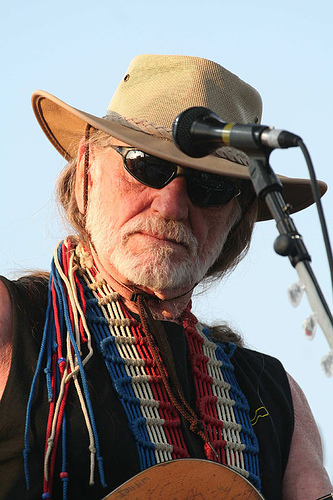
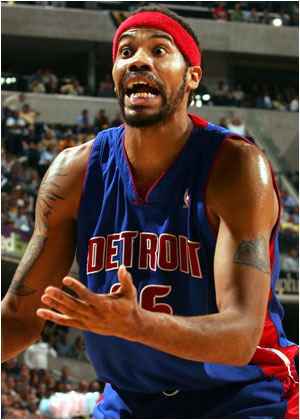
In sports news, Doc Rivers and Flip Saunders continue their duel to find out which shaky coach can run their team into the ground first. As a Pistons fan I hate to say this, but in the NBA it seems almost impossible to win a championship with a weak coach. Seriously—when is the last time this has happened? In the NFL, in baseball, in hockey, it’s possible to win even when your coach is a bonehead, but in basketball too many in-game adjustments are required, too many matchups need to be understood and exploited…good teams with mediocre coaches stand little chance of winning it all. On the bright side, Detroit’s first-round win over Philly marks the first time since Colonel Saunders became coach that the team has actually improved in a playoff series. Usually, Detroit storms out ahead, only to lose steam (see: the Cleveland 2007, Chicago 2007, Miami 2006) as the series progressed and the other team begins making adjustments. So, maybe there's hope...I’m worried about Orlando, frankly, and have been ever since it became clear they’d be Detroit’s second-round opponent. Stan Van Gundy was, after all, the coach of the Miami team that nearly knocked Detroit out of the playoffs in 2005.
I was pleased to see an article in the Detroit Free Press which reported on how even the Big Three is against the idea of "temporarily" suspending the gas tax. By the way, does anybody else remember the last time Republicans (and their Democratic enablers) passed a "temporary" tax cut, only to decide they wanted to make it permanent? Meanwhile, people in Turkey are now paying over ten dollars for a gallon of gasoline. Indeed, this is more than double the cost reported in a recent CNN survey, which--while grossly underestimating (at least in the case of Turkey) the cost of gasoline--was supposed to highlight the relatively light cost of gasoline in the United States compared to other countries.
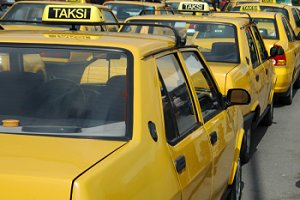
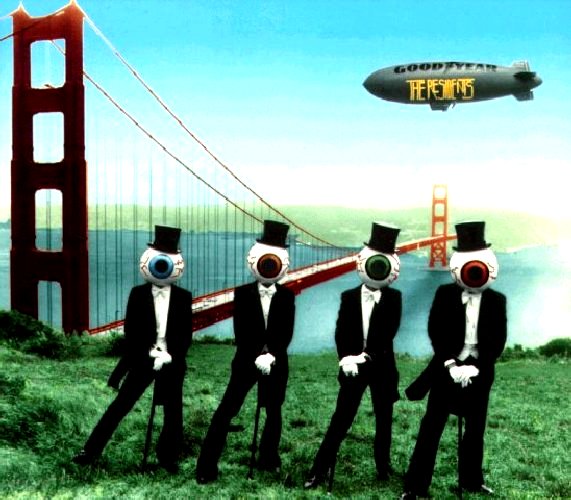
I received a few more records this week, including the rare red vinyl Pal-TV LP, by the Residents. This had once been one of the crown jewels of my old high school collection, which I foolishly sold off after I finished college. Over the past few years, I've been slowly re-acquiring vinyl, and this January I bought a new turntable (you can get new ones for about $75 online). The turntable is pretty much plastic, but it gets the job done and it is extremely satisfying to be able to play LPs again. I've bought about seventy-five records over the past three months, mostly in record shops in Ann Arbor and the village, but also on E-bay. It's nice to have vinyl and the Residents back in my life.
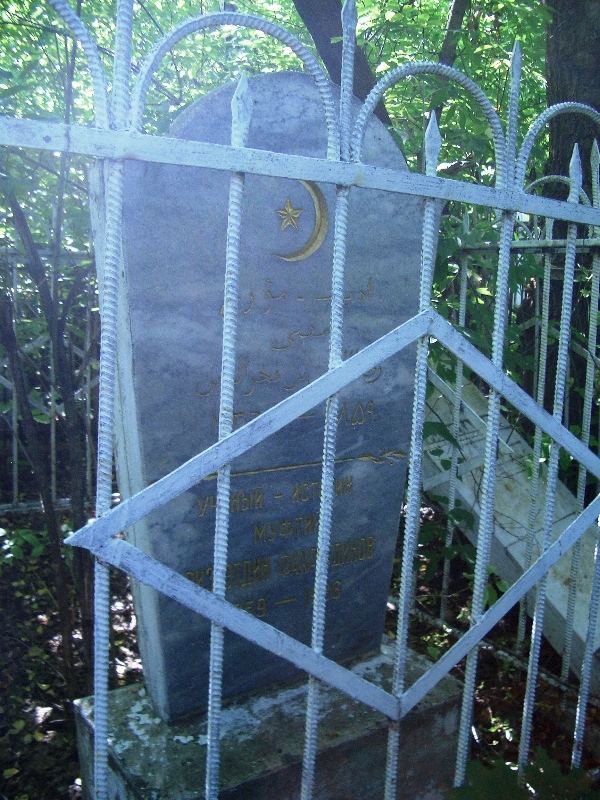
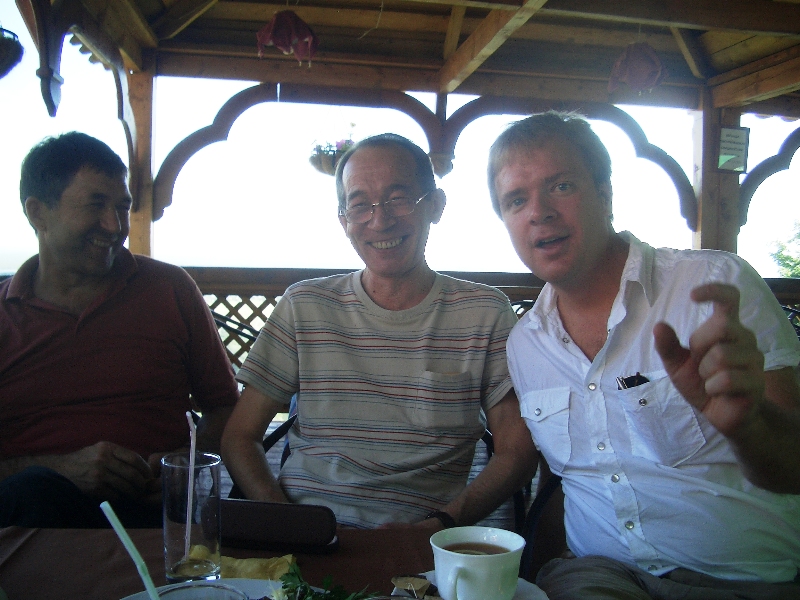
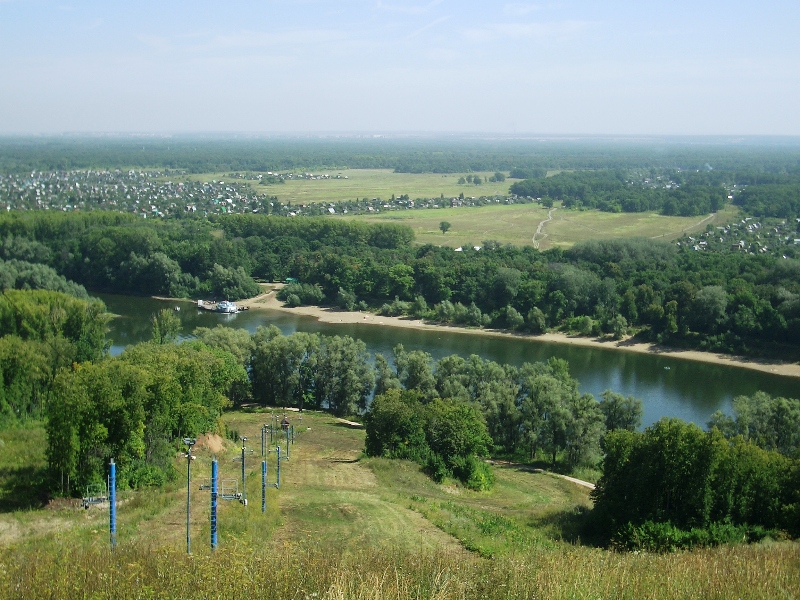
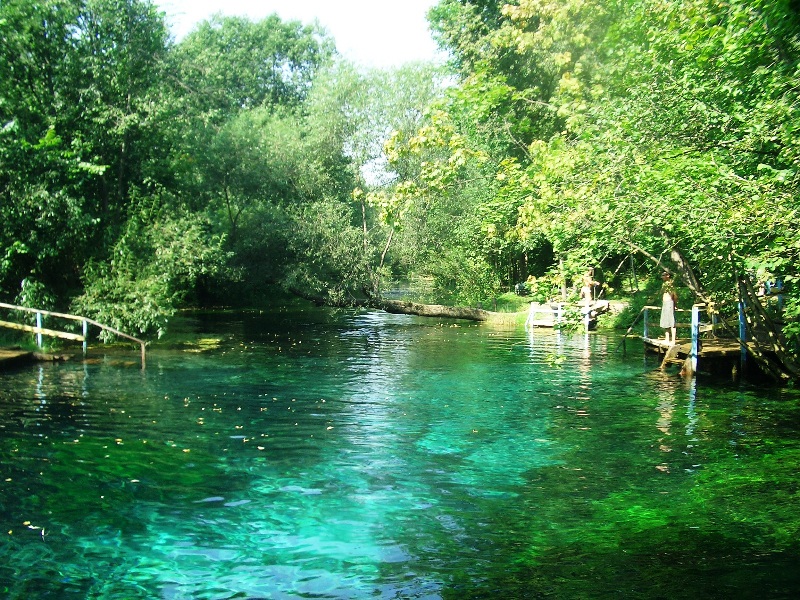
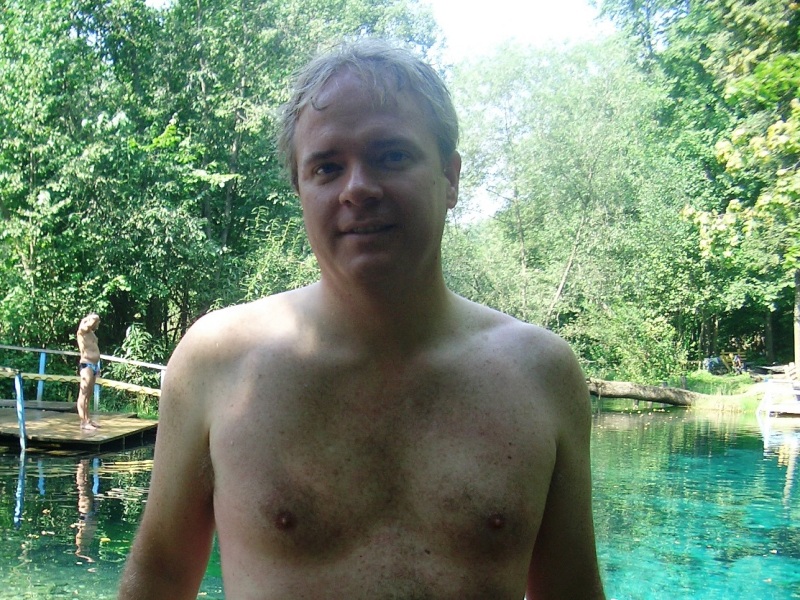
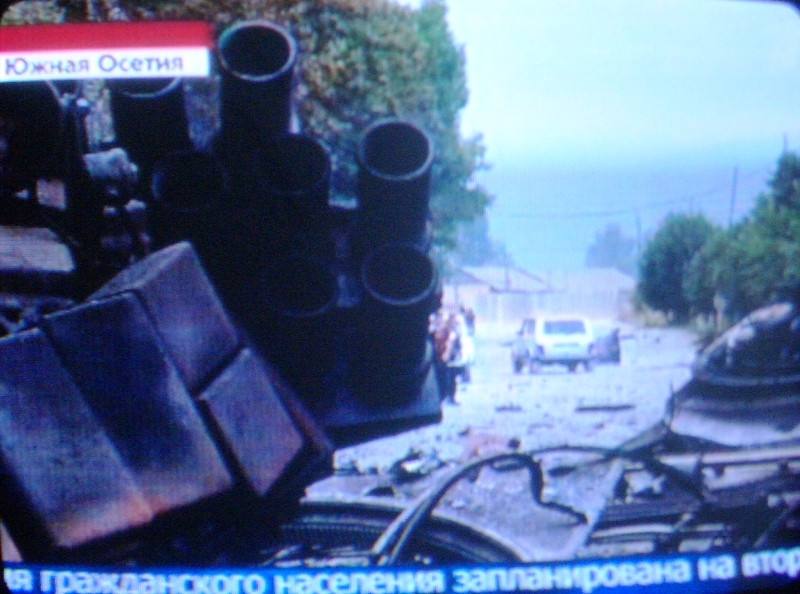
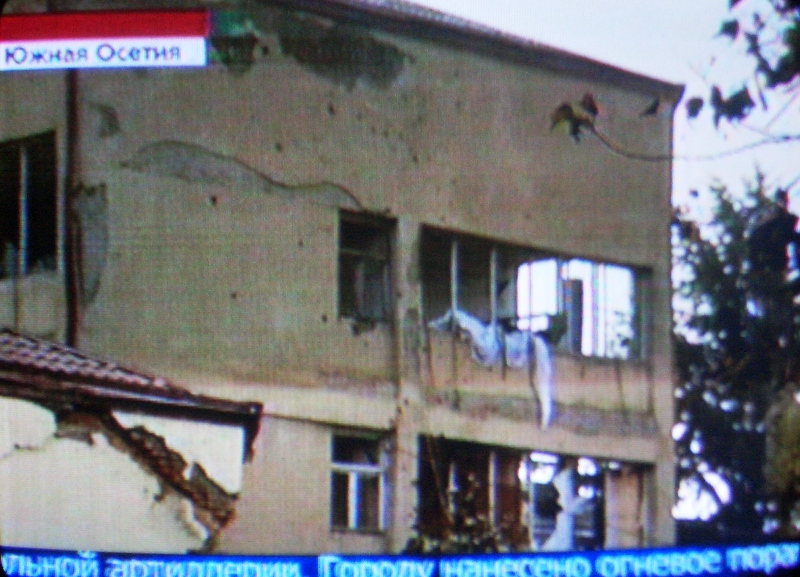
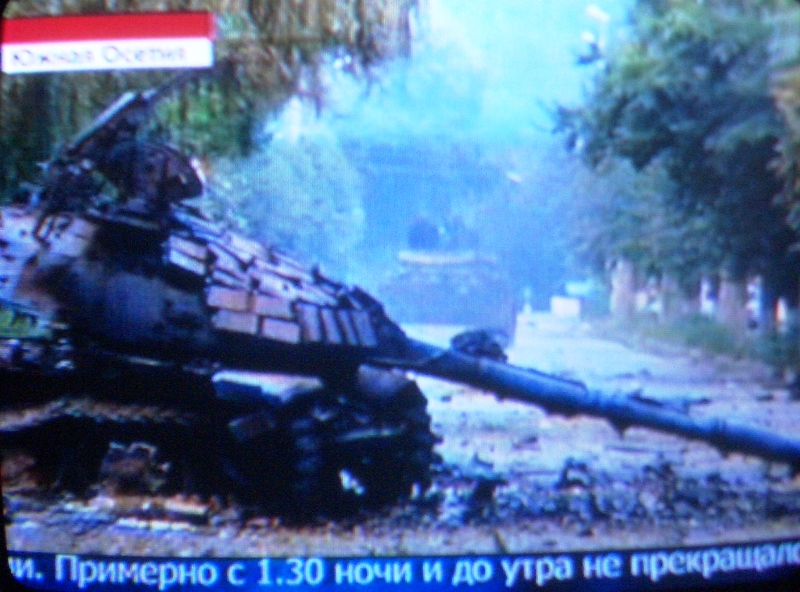
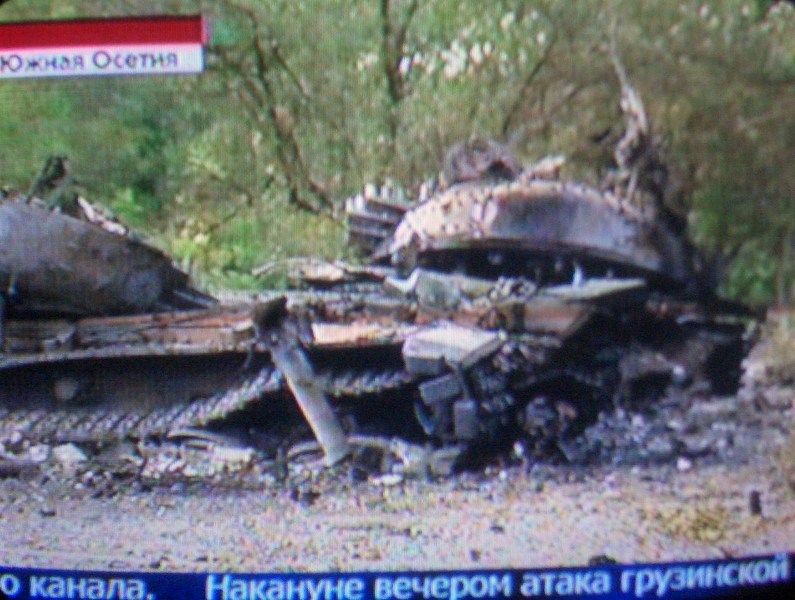
.JPG)
.JPG)
.JPG)