.jpg) 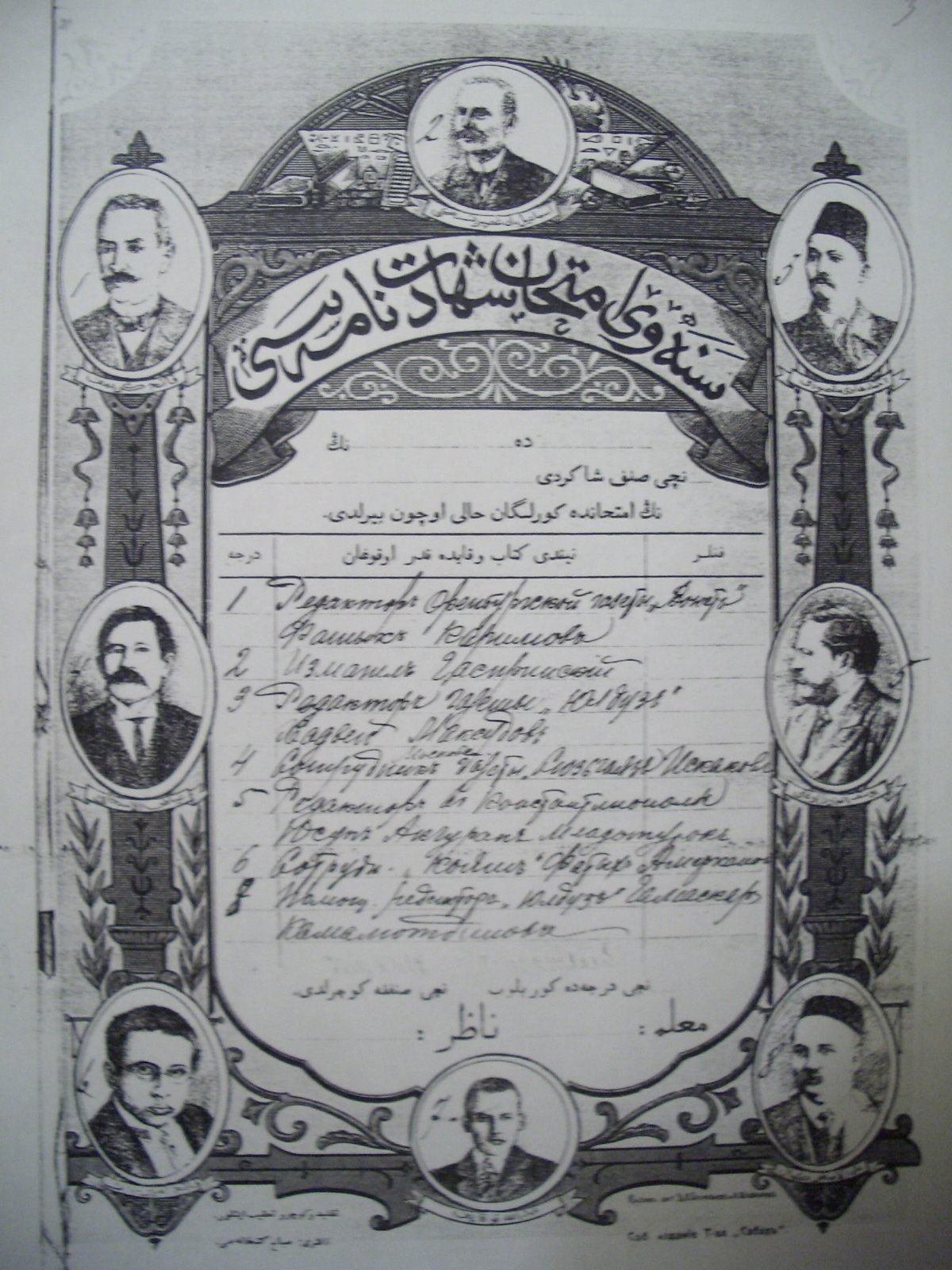   .JPG)    |
|
Attention: Links on this page only work if you click on them and choose "open link in new tab"
"Scandal in the Comintern: Border Crossers, the Closing Frontier, and a Turkish Communist Love Triangle in Wartime Moscow." Chapter from edited volume Mobility Dynamics between Eastern Europe and the Near East: Exploring a Cross-Regional Shared History (Stefan Rohdeward, Ed.). Franz Steiner Verlag, 2024.
"Echoes across the Black Sea: The Letters of Munevver Andac to Nazim Hikmet." Middle Eastern Studies, 56:4, 664-679, July 2020.
"Children of Trans-Empire: Nâzım Hikmet and the First Generation of Turkish Students at Moscow's Communist University of the East." Journal of the Ottoman and Turkish Studies Association Vol. 5/2 (2018), 195-218. This article deals with arrival stories--those of Nazim Hikmet and his friends, as well as of a broader population of Turkish communists who studied and worked at Moscow's Communist University for the Toilers of the East in the 1920s. This is part of an ongoing project that I'm working on in relation to Nazim Hikmet and other Turkish communists who came of age in the 1920s."Speaking Sharia to the State: Muslim Protesters, Tsarist officials, and the Islamic Discourses of Late Imperial Russia." Kritika: Explorations in Russian and Eurasian History 14,3 (Summer 2013), 485-505. This article appeared in the summer 2023 edition of Kritika: Explorations in Russian and Eurasian History. It looks at the ways in which Tsarist officials and Muslim protesters invoked similar discourses pertaining to Islam and Sharia in central Russia of the late nineteenth century. In particular, I was struck by the literal-minded manner in which some Russianist historians were reading petitions written by Muslims to state officials. By looking at the ways in which Muslim subjects and Tsarist officials both invoked Islam in their communications with one another, I argue in this article that the Islamic discourses they employed were as much a reflection of Tsarist state policymaking than self-evident expressions of Islamic piety.
"The Economics of Muslim Cultural Reform" Book chapter from an edited volume called Asiatic Russia: Imperial Power in Regional and International Contexts (2011, Uyama Tomohiko, Ed.). This chapter is about the issue of Muslim educational reform in late imperial Russia, and the name of the chapter is intended to invoke Adeeb Khalid's innovative and important study, The Politics of Muslim Cultural Reform. I talk about the practical implications, especially with respect to financial issues, that cultural reform had for people's lives. During an era of famine, teaching was one of the only sources of income that many in the ulema had available to them. The issue of reform was not only about intellectual debates, but also pertained to tangible factors relating to money, administration, and political power."For the Russianist in Istanbul and the Ottomanist in Russia: A guide to the Archives of Eurasia." Ab Imperio, 2008/4.The idea for the guide arose in the aftermath of a workshop Sean Pollock organized during the course of our year-long Russia and Islam project at Columbia University's Harriman Institute (2007-2008). Sean asked me to write a piece on the types of source material that would be useful to a Russianist wishing to research in Istanbul.Frankly, there isn't much that someone unschooled in Ottoman paleography could get out of the Ottoman archives. However, there are certain French-language documents in the Ottoman archives, particularly in the holdings of the Ottoman Foreign Ministry, which might be useful to a Russianist in Istanbul. And perhaps even more importantly, there are scores of materials that people with Turkic/Arabic/Persian skills would be able to access in the former USSR. So what I tried to do here was provide a kind of road map to people who are trans-imperial curious. For people who have received the technical training of an Orientalist but who are interested in perhaps making a foray into the former USSR, I discuss the holdings of libraries and archives in St. Petersburg, Moscow, Kazan, Ufa, Simferopol, and Baku. For Russianists who would like to try their hand at managing the French-language materials in the Ottoman archives, I've also provided information which hopefully will prove useful to them.“Division and Alliance: Mass Politics within Muslim Communities after 1905.” This was a Working Paper that I produced for the National Council for Eurasian and East European Research, and placed in NCEEER’s Toumanoff Library. October, 2009. The paper discusses fragmentation within Muslim communities during and after the Russian revolution of 1905.
"Immigration, Return, and the Politics of Citizenship: Russian Muslims in the Ottoman Empire, 1860-1914" (International Journal of Middle East Studies, Vol. 39, 2007, pp. 15-32).In this article I use archival sources from the Crimea, Baku, Moscow, St. Petersburg, and Istanbul to argue that, most of the time, tsarist authorities not only did not work to expel Muslims from Russia, but rather to the contrary struggled to keep them inside the empire. A second part of the article looks at the phenomenon of Muslims, particularly from the Crimea, returning to Russia and the response to this of tsarist officials. I then look at how the ambiguous "citizenship" ("subjecthood" would have been a better word) of Russian Muslims living in the Ottoman Empire often led to diplomatic tensions between the two states. Ultimately, my goal with this article was to show how states and subjects interacted in stretching the boundaries of subjecthood. When studying international relations, it's important to look not only at the relations between two governments, but also at how the people living in those states related to one another.
Doctoral Dissertation and MA Thesis
Dissertation: "Turkic Worlds: Community Leadership and Collective Identity in the Russian and Ottoman Empires, 1870-1914" (2007) My dissertation is entitled Turkic Worlds: Community Representation and Collective Identity in the Russian and Ottoman Empires, 1870-1914. Originally, I had approached this work from the perspective of late Ottoman intellectual history, and thought that I would devote just a cursory chapter to the pre-Istanbul careers of the well-known "pan-Turkist" intellectuals Yusuf Akçura, Ahmet Ağaoğlu, Ismail Gasprinskii, Ali Bey Hüseyinzade, and Mehmet Emin Resulzade--as well as anyone else I could find who seemed to fit in with this group. Ultimately, however, five of my dissertation's six chapters would take place in Russia. Rather than only focusing upon these figures as intellectuals, or "theoreticians" of nationalism, I sought to investigate their political (in terms of mass politics) activity in Russia, and the ways in which these activities related to their public articulations of various types of collective identity.
Over the course of three research trips in Russia, as well as other research trips to Azerbaijan, the Crimea, and Istanbul, my approach to this work began to change. Rather than focusing only upon these well-known figures, I became more interested in political movements more generally, and their relations with the communities they strove to represent.
Looking at two provinces, Kazan and Baku, from the years immediately following the Great Reforms until the beginning of World War I, I examine the institutions and individuals responsible for mediating between the state and Muslim communities with respect to a variety of issues which were increasingly seen (by both the state and Muslim populations) as important to the Muslim communities of the two regions. I then look at how systems and practices of speaking in the community's name vis-a-vis state officials were upended by the Revolution of 1905 and the emergence of mass politics. After 1905, I examine divisions taking place over the question of who, if anyone, should speak in the name of Muslim communities, and at political coalitions which took place between Muslim and non-Muslim groupings. My study ends with an examination of how these developments contributed to the emergence of the Turkist (or "Pan-Turkist") movement in the Ottoman Empire.
Based upon research undertaken in archives and libraries in St. Petersburg, Moscow, Kazan, Ufa, Simferopol, Baku, and Istanbul, this study employs a broad base of printed and handwritten sources in a variety of languages, including, among others, Russian, Arabic-script Tatar, Azeri Turkish, and Ottoman Turkish.
Master's thesis: "Memory and Political Symbolism in Post-September 12 Turkey: A History of the May 27th Debate." The "September 12" in question refers to the military takeover of 1980, and "May 27th" refers to the military takeover of 1960, which prior to the 1980s had often been considered a "good" coup. I look at the political rehabilitation of Adnan Menderes--who was overthrown in 1960--and at how opinions towards the "good" coup changed after the takeover of 1980 (which was particularly brutal), and--by extension--at the changing attitudes in Turkey regarding the military's role in politics.
Newspaper/journal articles published prior to graduate school
When I was living in Turkey from 1992-1999 I published a number of opinion pieces in newspapers and journals, mostly about current events in Turkey. They're not bad, although some parts of these articles make me cringe today.
- “Turks Smell a Rat as Amnesty Quake Rocks Country”. New Europe, September 13-19, 1999.
- “Çiller, Refah and Susurluk: Turkey’s Troubled Democracy.” East European Quarterly, XXXII, No. 4, Winter, 1998.
- “The Macedonian Enigma.” South Slav Journal, Volume 19, Spring-Summer 1998.
- “Çiller’s Scandals.” Middle Eastern Quarterly, Volume IV, Number 3, September 1997.
- “Turkey, Greece and NATO’s Integrating Influence.” Turkish Daily News, August 5, 1997.
- “Noisy Nights in Turkey as Opposition Grows Louder.” New Europe, March 16-22, 1997.
- “Interpreting Turkey’s Elections.” New Europe, January 14-20, 1996.
- “The Screaming Man of Istiklal.” Balkan News (Athens, Greece), July 14, 1995.